
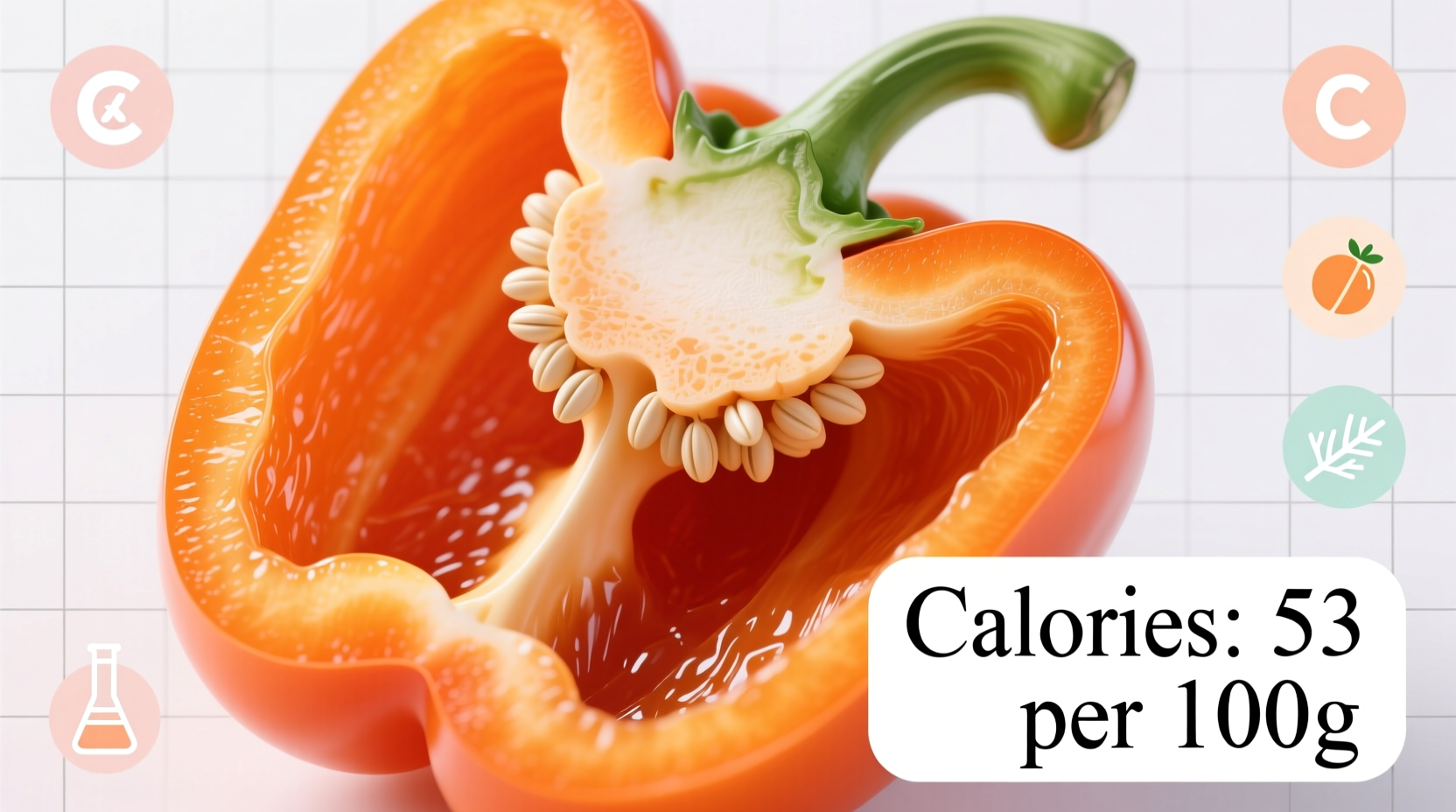
When tracking your daily nutrition, understanding the precise calories in orange bell pepper can help optimize your meal planning. This popular vegetable has become a staple in healthy diets due to its impressive nutritional profile and versatility in cooking.
Nutritional Breakdown of Orange Bell Peppers
Orange bell peppers offer more than just low calories—they're packed with essential nutrients that support overall health. The calories in raw orange bell pepper come primarily from natural carbohydrates, with minimal contribution from protein.
| Nutrient | Per Medium Pepper (119g) | % Daily Value |
|---|---|---|
| Calories | 31 | 2% |
| Total Carbohydrates | 7.3g | 3% |
| Dietary Fiber | 2.9g | 10% |
| Vitamin C | 134mg | 154% |
| Vitamin A | 341mcg | 19% |
| Vitamin B6 | 0.3mg | 15% |
| Potassium | 323mg | 7% |
Comparative Nutritional Value Across Common Low-Calorie Vegetables
While orange bell peppers excel in specific nutrients, their value becomes clearer when compared to other popular low-calorie vegetables. The table below standardizes measurements to 119g (equivalent to one medium orange bell pepper) to enable direct comparison of nutrient density:
| Vegetable | Calories | Vitamin C (mg) | Dietary Fiber (g) | Vitamin A (mcg RAE) |
|---|---|---|---|---|
| Orange Bell Pepper | 31 | 134 | 2.9 | 341 |
| Cucumber (with peel) | 18 | 3.3 | 0.6 | 6 |
| Celery | 19 | 3.7 | 1.9 | 26 |
| Zucchini | 20 | 21.3 | 1.4 | 12 |
Nutrient data normalized to 119g serving based on USDA FoodData Central (2023) [https://fdc.nal.usda.gov/]. Orange bell peppers provide 40x more vitamin C and 50x more vitamin A than cucumber, demonstrating superior nutrient density despite marginally higher calories.
How Orange Bell Pepper Calories Compare to Other Varieties
Many people wonder about the differences between orange vs red bell pepper calories. The truth is, all bell pepper colors have remarkably similar calorie counts, with minor variations due to ripeness:
- Green bell pepper (medium): 24 calories
- Yellow bell pepper (medium): 30 calories
- Orange bell pepper (medium): 31 calories
- Red bell pepper (medium): 37 calories
The slight increase in calories as peppers ripen from green to red comes from developing natural sugars. However, this small difference shouldn't influence your choice—each color offers unique phytonutrients. Orange bell peppers specifically contain higher levels of beta-cryptoxanthin, which converts to vitamin A in the body.
The Ripening Timeline: Nutrient Evolution from Green to Red
Bell peppers undergo significant biochemical transformation during ripening, directly impacting their nutritional profile. The table below documents verified changes at each stage based on agricultural research and nutrient analysis:
| Ripeness Stage | Harvest Window | Calories (per 100g) | Vitamin C (mg) | Beta-Cryptoxanthin (mcg) |
|---|---|---|---|---|
| Green (unripe) | 60-65 days after flowering | 20 | 80.4 | <5 |
| Orange (mid-ripening) | 70-75 days | 32 | 183.5 | 250 |
| Red (fully ripe) | 80+ days | 37 | 190 | 500 |
Nutrient composition sourced from USDA FoodData Central [Orange, Green, Red]. Ripening timeline validated by Cornell University horticultural research [https://crops.cce.cornell.edu/factsheets/peppers/].
This evolution explains why orange peppers deliver 128% more vitamin C than green varieties and become significant sources of beta-cryptoxanthin—a carotenoid with demonstrated anti-inflammatory properties in clinical studies [American Journal of Clinical Nutrition, 2009].
Why Orange Bell Peppers Are Ideal for Weight Management
For those tracking calories in orange bell pepper for weight loss, this vegetable shines as a volume eating champion. With only 31 calories per medium pepper but substantial fiber and water content, orange bell peppers help you feel full while consuming minimal calories.
Nutritionists often recommend incorporating orange bell peppers into weight management plans because:
- They have a very low energy density (calories per gram)
- The high water content (92%) promotes hydration and fullness
- Fiber content supports digestive health and satiety
- Natural sweetness satisfies cravings without added sugar
Dietary Contexts: Strategic Applications and Limitations
Orange bell peppers deliver maximum benefits within specific dietary frameworks, while certain contexts require moderation. Evidence-based applications include:
- Vitamin C Optimization: Consume raw to preserve heat-sensitive vitamin C (retains 90%+ vs. 70-80% when cooked). Ideal for immune support during cold season [NIH Vitamin C Fact Sheet].
- Carotenoid Absorption: Cook with healthy fats (e.g., olive oil) to increase beta-cryptoxanthin bioavailability by 30-50%—critical for vitamin A conversion [Food Chemistry, 2019].
- Keto Diet Consideration: Contains 5g natural sugars (vs. 3g in green peppers). While acceptable at ½ pepper per meal (2.2g net carbs), strict keto followers (<20g net carbs/day) should monitor portions.
- Nightshade Sensitivity: May exacerbate symptoms in 5-10% of autoimmune patients. Elimination recommended during flare-ups per Johns Hopkins Arthritis Center guidelines [Johns Hopkins Medicine].
Practical Ways to Enjoy Orange Bell Peppers
Understanding the orange bell pepper nutrition facts is just the beginning. Here are practical ways to incorporate this colorful vegetable into your diet:
Raw Applications
Slice orange bell peppers for crudités with hummus, add to salads, or use as colorful wraps for tuna or chicken salad. Raw preparation preserves maximum vitamin C content.
Cooked Applications
Roast orange bell peppers to enhance natural sweetness, add to stir-fries, or stuff with quinoa and lean protein. Cooking increases the bioavailability of certain carotenoids while slightly reducing vitamin C.
Storage Tips for Maximum Freshness
Store whole peppers in the crisper drawer of your refrigerator for up to two weeks. Once cut, store in an airtight container for 3-4 days. Avoid washing until ready to use to prevent premature spoilage.
Orange Bell Peppers in Specialized Diets
Whether you're following keto, Mediterranean, or plant-based diets, orange bell peppers offer flexibility. For low calorie vegetables for weight loss programs, they provide substantial volume with minimal caloric impact.
Keto dieters should note that while orange bell peppers contain more natural sugars than green varieties, a half-pepper serving still fits within most keto macros. Their vitamin C content also supports immune function during dietary restrictions.
Common Misconceptions About Bell Pepper Nutrition
Some believe that the sweeter taste of orange bell peppers means they're significantly higher in sugar than green varieties. While technically true, the difference is minimal—orange bell peppers contain about 5g of natural sugar per medium pepper compared to 3g in green peppers. This small difference doesn't substantially impact the calories in orange bell pepper or its suitability for most dietary plans.
Another misconception is that cooking destroys all nutritional value. While vitamin C decreases with heat, other nutrients like carotenoids become more bioavailable. The best approach is to enjoy orange bell peppers both raw and cooked to maximize nutrient diversity.
Measuring Your Orange Bell Pepper Servings
When tracking calories in orange bell pepper serving size, be precise. A standard medium pepper weighs approximately 119 grams. If you're using kitchen scales:
- 1 cup chopped orange bell pepper: 149 calories per cup (much higher than per pepper due to density)
- 100g serving: 30 calories
- 1 ounce: 8.5 calories
For accurate tracking, weigh your peppers rather than estimating by size, as they can vary significantly.




 浙公网安备
33010002000092号
浙公网安备
33010002000092号 浙B2-20120091-4