
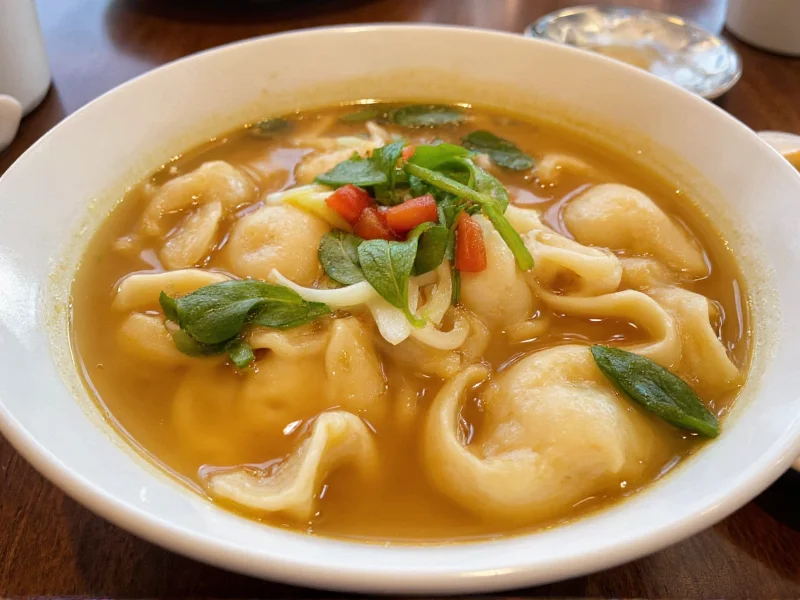
Wor wonton soup is a flavorful Cantonese specialty featuring delicate wontons in a clear, aromatic broth. The term \"wor\" likely refers to the Cantonese pronunciation of \"wonton\" (as \"wɐn˨˩ tʰɔn˨˩\"), which English speakers sometimes hear as \"wor\". Authentic preparation requires handmade wontons with a shrimp-pork filling, simmered in a broth made from pork bones, dried flounder, and ginger for 6-8 hours to achieve its signature clarity and depth of flavor.
Understanding Wor Wonton Soup: More Than Just a Name
When searching for \"wor wonton soup recipe\", many home cooks are actually seeking the authentic Cantonese version of this classic dish. The \"wor\" designation comes from the Cantonese pronunciation of wonton (雲吞), which sounds closer to \"wuhn-tahn\" with a subtle \"w\" sound at the beginning that English speakers often interpret as \"wor\".
This regional variation differs significantly from the more common Northern Chinese wonton soup. Cantonese-style wor wonton soup features:
- Smaller, more delicate wontons (about 1.5 inches)
- A shrimp-pork filling ratio of 60:40
- A crystal-clear broth achieved through careful skimming
- Thinly sliced bok choy instead of napa cabbage
- Finely minced ginger rather than thick slices
Essential Ingredients for Authentic Wor Wonton Soup
The magic of genuine wor wonton soup lies in ingredient quality and proper technique. Here's what you'll need for a traditional 4-serving recipe:
| Ingredient | Quantity | Special Notes |
|---|---|---|
| Wonton wrappers | 30 pieces | 1.75-inch square, preferably fresh |
| Shrimp | 8 oz (225g) | Deveined, finely chopped, 70% of filling |
| Pork shoulder | 5 oz (140g) | Fat content 20%, 30% of filling |
| Dried flounder | 1.5 oz (40g) | Essential for authentic broth depth |
| Pork bones | 2 lbs (900g) | Knuckle bones preferred |
| Fresh ginger | 1.5 inch piece | Minced, not sliced |
| Bok choy | 4 heads | White parts only for broth, greens for serving |
| Scallions | 4 | Finely sliced for garnish |
Step-by-Step Preparation Guide
Broth Preparation (6-8 hours)
- Rinse 2 lbs pork bones and blanch in boiling water for 5 minutes to remove impurities
- Transfer bones to a clean pot with 8 cups cold water, dried flounder, white parts of bok choy, and half the ginger
- Bring to a gentle simmer (never a rolling boil) and skim foam continuously for first 30 minutes
- Cover and simmer on lowest heat for 6-8 hours, skimming occasionally
- Strain through cheesecloth for crystal-clear broth
Wonton Assembly (45 minutes)
- Finely chop shrimp and pork together until uniform texture
- Mix with 1 tsp sesame oil, 1/2 tsp white pepper, 1 tsp cornstarch, and 1/4 tsp sugar
- Place 1 tsp filling in center of each wrapper
- Fold diagonally into triangle, pressing edges to seal
- Bring two corners together, moisten with water, and press to form signature \"pouch\" shape
Final Assembly (15 minutes)
- Bring strained broth to a gentle simmer
- Add wontons and cook for 3-4 minutes until they float
- Add bok choy greens and cook 1 minute
- Ladle into bowls, ensuring equal distribution of wontons and greens
- Garnish with remaining minced ginger and scallions
Professional Techniques for Perfect Wor Wonton Soup
Mastering authentic wor wonton soup requires attention to detail. These professional techniques will elevate your homemade version:
- Broth clarity secret: Add egg whites during the last hour of simmering—they'll trap impurities that can then be strained out
- Filling texture: Chill the shrimp-pork mixture before wrapping for better texture retention
- Wonton sealing: Use a 50:50 water-flour paste instead of plain water for stronger seals
- Serving temperature: Maintain broth at exactly 185°F (85°C)—hot enough to cook ingredients but not cloudy the broth
- Timing precision: Assemble wontons no more than 30 minutes before cooking to prevent wrapper softening
Regional Variations Worth Trying
While the Cantonese version represents the classic wor wonton soup, several regional adaptations offer unique flavors:
- Macau-style: Adds a touch of rock sugar and star anise to the broth for subtle sweetness
- Singaporean twist: Incorporates chili oil and black vinegar as condiments
- Chiu Chow variation: Uses only shrimp in the filling with a hint of cilantro
- Modern interpretation: Adds shiitake mushrooms and bamboo shoots for texture complexity
Troubleshooting Common Wor Wonton Soup Issues
Even experienced cooks encounter challenges with this delicate soup. Here's how to solve frequent problems:
- Cloudy broth: Caused by boiling instead of simmering. Solution: Start over with fresh ingredients, maintaining strict temperature control below 190°F
- Wontons falling apart: Usually from insufficient sealing. Solution: Use the water-flour paste and ensure no air pockets in filling
- Bland flavor: Indicates insufficient drying of flounder. Solution: Toast dried flounder in dry pan before adding to broth
- Overcooked shrimp: Results from large filling portions. Solution: Keep filling portions small (about 1 tsp) and use finely chopped shrimp
Serving and Storage Recommendations
For the most authentic experience, serve wor wonton soup immediately after preparation. The delicate wontons continue cooking in the hot broth, so timing is critical.
Leftover components should be stored separately:
- Broth: Keeps refrigerated for 3 days or frozen for 2 months
- Uncooked wontons: Freeze in single layer, then transfer to container for up to 1 month
- Never store assembled soup—the wontons will become soggy
When reheating, bring broth to proper temperature first, then add frozen wontons directly (no thawing needed) and cook 1-2 minutes longer than fresh.
Why This Recipe Stands Out
Many online \"wor wonton soup recipes\" miss critical elements of the authentic preparation. This version respects the traditional Cantonese techniques while providing clear, actionable instructions for home cooks. The emphasis on broth clarity, proper filling ratio, and precise cooking temperatures distinguishes this from simplified versions that sacrifice authenticity for convenience.
By following these detailed instructions for homemade wor wonton soup, you'll create a dish that captures the essence of Hong Kong's street food culture while maintaining the delicate balance of flavors that defines this beloved comfort food.




 浙公网安备
33010002000092号
浙公网安备
33010002000092号 浙B2-20120091-4