
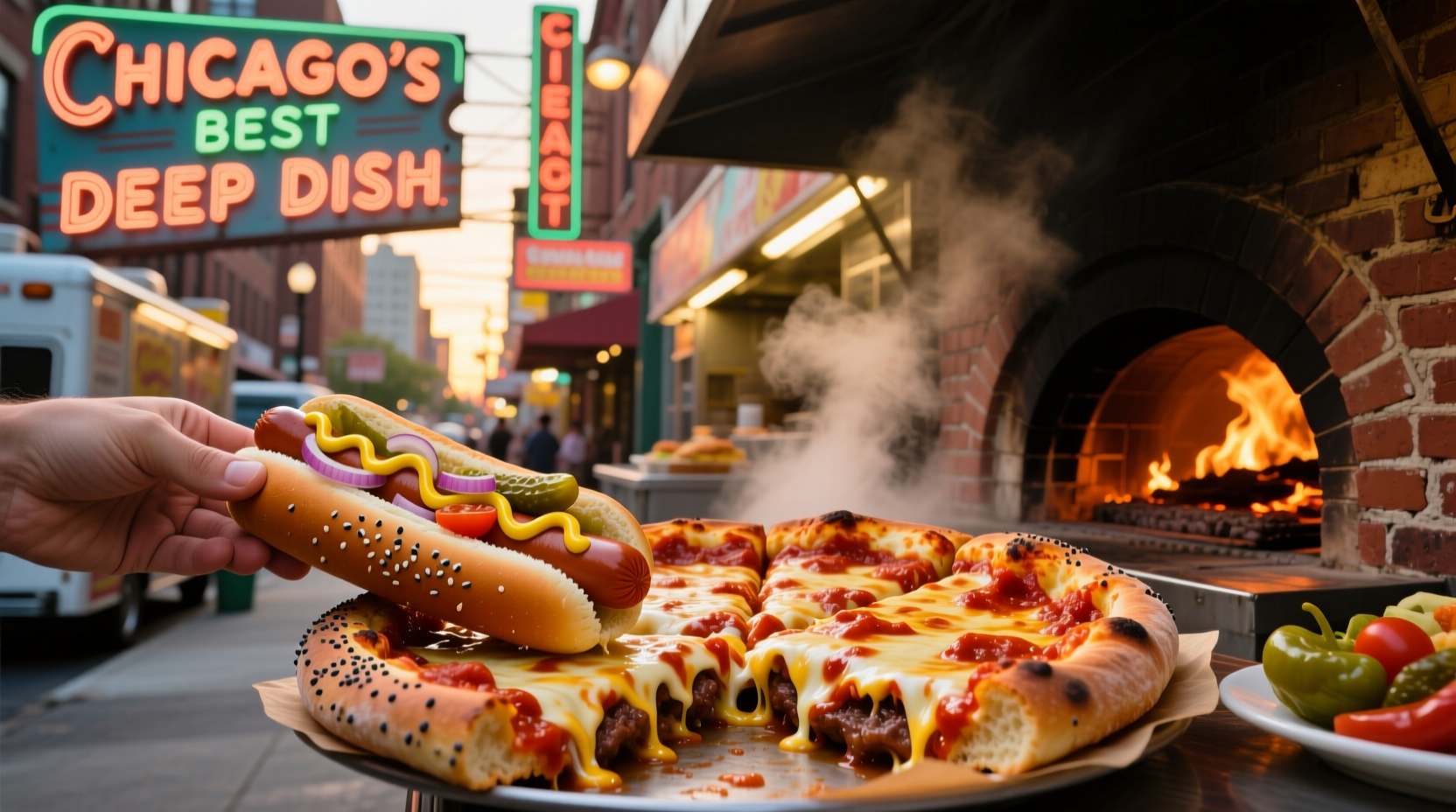
Discover Chicago's Culinary Identity Through Its Signature Dishes
When travelers ask what Chicago is known for food, they're seeking more than just menu items—they want to understand the soul of a city through its most beloved culinary creations. Chicago's food scene tells the story of immigrant communities, neighborhood traditions, and bold innovations that have created some of America's most recognizable comfort foods. This guide reveals not just what Chicago is famous for eating, but why these dishes matter to the city's identity.
The Deep-Dish Pizza Revolution
Contrary to popular belief, Chicago didn't invent pizza—but it transformed it into something uniquely its own. Deep-dish pizza emerged in 1943 when Ike Sewell opened Pizzeria Uno, aiming to create a heartier meal that reflected Midwestern tastes. Unlike traditional thin-crust varieties, Chicago deep-dish features:
- A buttery, pan-baked crust that rises up the sides of a deep steel pan
- Cheese layered directly on the crust (before the sauce)
- Generous amounts of chunky tomato sauce on top
- Baking time of 30-45 minutes for perfect cheese melting
Food historians note that deep-dish was initially controversial among Italian immigrants but gained popularity as Midwesterners embraced its substantial, meal-in-one format. According to the Choose Chicago tourism authority, over 5 million deep-dish pizzas are sold annually in the city.

Chicago-Style Hot Dogs: A Symphony of Toppings
Ask any Chicagoan what defines their city's food culture, and the hot dog will likely top the list. The authentic Chicago-style hot dog isn't just a sausage—it's a carefully constructed edible monument with specific rules:
| Component | Chicago Standard | Non-Negotiable? |
|---|---|---|
| Frankfurter | All-beef, natural casing | Yes |
| Bun | Poppy seed-topped | Yes |
| Mustard | Yellow | Yes |
| Relish | Neon green pickle relish | Yes |
| Ketchup | Never added | Strictly forbidden |
The precise assembly—"dragged through the garden" with onions, tomatoes, pickle, sport peppers, and celery salt—reflects Chicago's working-class roots where street food needed to be substantial and flavorful. The Chicago Hot Dog Council documents how this style evolved from Polish and German immigrant traditions in the early 20th century.
Italian Beef Sandwiches: A South Side Innovation
Created in Chicago's Little Italy neighborhood during the 1930s, the Italian beef sandwich represents the resourcefulness of Italian immigrants. When quality cuts were expensive, cooks began thinly slicing less expensive roast beef, seasoning it with garlic and spices, then dipping it in its own juices. Key characteristics include:
- Thinly sliced seasoned roast beef served on Italian bread
- "Wet" or "dipped" preparation where the sandwich is briefly submerged in jus
- Often paired with sweet or hot peppers
- Traditionally eaten with a fork and knife due to juiciness
According to culinary historian John T. Edge in Foodways of the American South, Chicago's Italian beef "represents one of America's great regional sandwich innovations, born from necessity but perfected through community tradition." The dish remains most authentic when prepared in neighborhood shops where the jus has been maintained for years, developing complex flavors through continuous use.
Maxwell Street Polish and Chicago's Sausage Legacy
While hot dogs get more attention, Chicago's Polish sausage tradition runs deep. The Maxwell Street Polish—a coarse-ground smoked kielbasa named after the historic market district—became popular among factory workers in the early 1900s. Unlike standard hot dogs, it features:
- Coarse texture with visible meat chunks
- Garlic-heavy seasoning profile
- Served grilled with grilled onions
- Traditionally eaten from handheld stands
The Encyclopedia of Chicago notes that Polish immigrants established over 200 meatpacking plants in the Back of the Yards neighborhood by 1900, creating the foundation for Chicago's meat industry that earned it the nickname "Hog Butcher for the World." This sausage tradition continues today at establishments like Jim's Original, operating since 1939.
Garrett Popcorn: A Chicago Snacking Institution
Since 1949, Garrett Popcorn Shops has defined Chicago's snack culture with its signature "Chicago Mix"—a blend of caramel and cheese popcorn. What makes this treat uniquely Chicagoan:
- Family-owned business with origins in Chicago's Old Town neighborhood
- Secret recipe developed during post-WWII sugar rationing
- "Chicago Mix" balances sweet and savory in equal proportions
- Still made using the same copper kettles since the 1940s
Unlike national chain popcorn, Garrett's version uses a specific moisture content that prevents the caramel from hardening—a technique perfected over decades. The Chicago Tribune documented how this local favorite survived multiple ownership changes while maintaining its distinctive preparation methods.
Chicago's Food Evolution Timeline
Understanding what Chicago is known for food requires examining how historical events shaped its culinary landscape:
| Era | Key Developments | Food Impact |
|---|---|---|
| 1830s-1890s | Mass immigration from Germany, Ireland, Poland | Establishment of meatpacking district; foundation for sausage traditions |
| 1900-1920 | Great Migration brings Southern African Americans | Introduction of Southern cooking techniques; evolution of barbecue |
| 1930s-1940s | Great Depression and WWII | Creation of Italian beef; resourceful use of inexpensive cuts |
| 1943 | Ike Sewell opens Pizzeria Uno | Birth of deep-dish pizza as Chicago's signature dish |
| 1949 | Garrett Popcorn Shops founded | Development of Chicago Mix caramel cheese popcorn |
| 1970s-present | Growth of food media and tourism | Commercialization and standardization of Chicago food icons |
What Makes Chicago Food Authentically Chicagoan?
While many cities claim food specialties, Chicago's culinary identity has specific markers that distinguish authentic versions from imitations:
- Deep-dish pizza must have a buttery crust, cheese beneath sauce, and substantial depth (at least 2 inches)
- Chicago hot dogs require all nine toppings in specific order with absolutely no ketchup
- Italian beef should be served "dipped" with jus that's been maintained for multiple days
- Maxwell Street Polish features coarse-ground texture with prominent garlic notes
Food anthropologist Dr. Bruce Kraig notes in Chicago Food: Eating What We Are that "Chicago's food culture developed through practical necessity rather than culinary pretension—these dishes solved real problems for working people." This working-class foundation remains essential to understanding why these foods resonate so deeply with Chicagoans.
Experiencing Chicago Food Culture Today
While commercialization has spread Chicago-style foods nationwide, the authentic experience remains tied to neighborhood establishments where recipes have been passed down through generations. The city's food culture continues evolving while honoring traditions—modern chefs now reinterpret classics with contemporary techniques while maintaining essential elements that define Chicago's culinary identity. Whether you're visiting or living in Chicago, understanding these food traditions provides a delicious entry point to the city's rich cultural tapestry.




 浙公网安备
33010002000092号
浙公网安备
33010002000092号 浙B2-20120091-4