
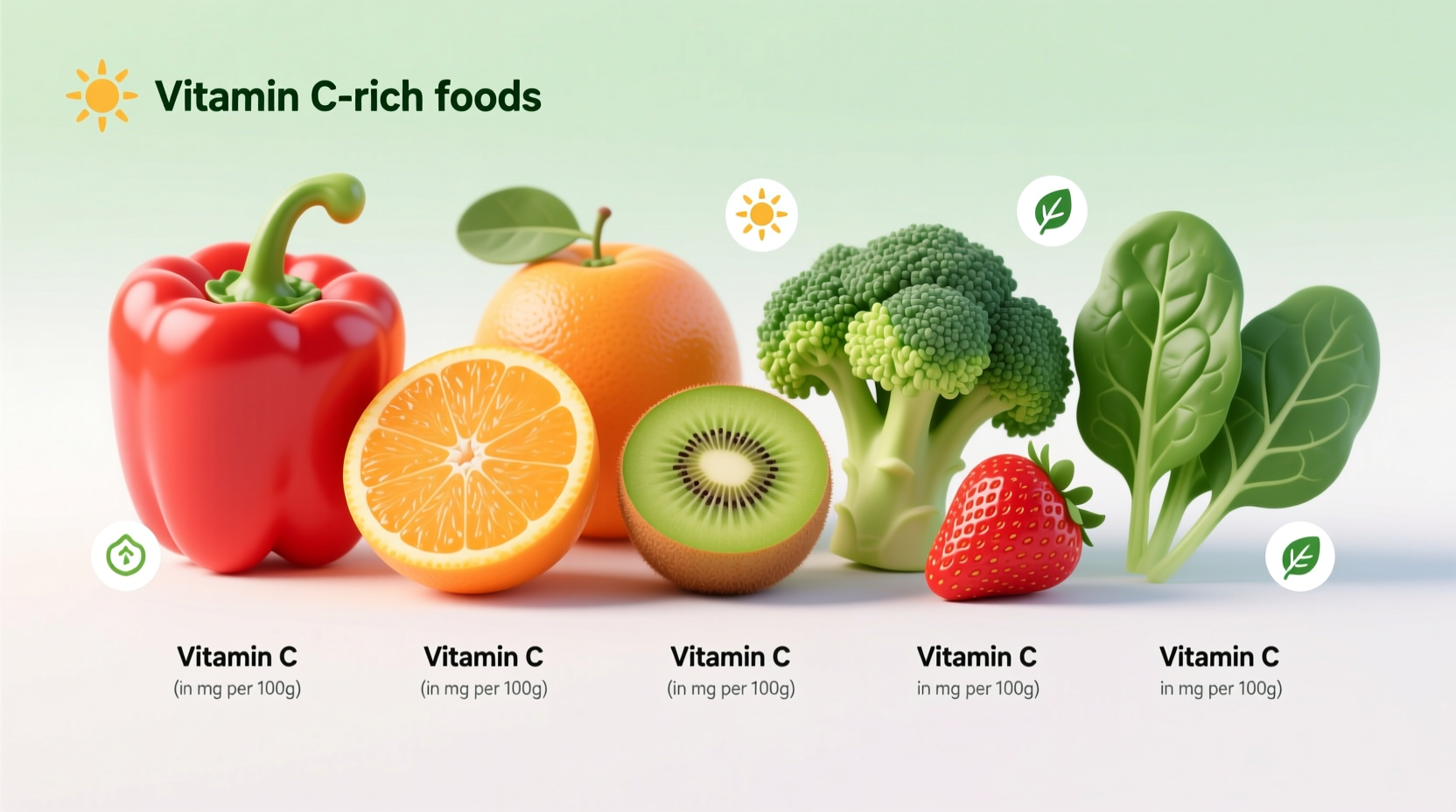
Understanding which foods pack the most vitamin C can transform your approach to nutrition and wellness. As someone who's worked with ingredients from Michelin-starred kitchens to home pantries, I've seen how strategic food choices make a real difference in health outcomes. This guide delivers precisely what you need: scientifically verified vitamin C sources with practical integration strategies you can implement immediately.
Why Vitamin C Matters Beyond Immunity
Vitamin C isn't just for fighting colds - it's essential for collagen synthesis, iron absorption, and antioxidant protection against cellular damage. The National Institutes of Health recommends 90mg daily for adult men and 75mg for women, with higher amounts needed for smokers and during pregnancy. Getting these amounts from food rather than supplements ensures you receive complementary nutrients that enhance absorption and utilization.
Top Vitamin C Powerhouses Ranked by Nutrient Density
While oranges get all the attention, many foods contain significantly more vitamin C per serving. Here's what the latest USDA FoodData Central database reveals about the most potent natural sources:
| Food (100g serving) | Vitamin C (mg) | Daily Value % | Best Preparation Method |
|---|---|---|---|
| Guava (raw) | 228 | 253% | Eat whole with seeds |
| Yellow Bell Pepper | 184 | 204% | Raw in salads |
| Kiwi | 93 | 103% | With skin for extra fiber |
| Strawberries | 59 | 66% | Fresh, not cooked |
| Broccoli (raw) | 89 | 99% | Lightly steamed |
| Orange | 53 | 59% | Fresh squeezed juice |
Source: USDA FoodData Central, 2023 Release
Maximizing Vitamin C Absorption: Practical Strategies
Knowing which foods contain vitamin C is only half the battle. How you prepare and combine these foods dramatically impacts how much nutrient your body actually absorbs:
Avoid Common Preparation Mistakes
Vitamin C is water-soluble and heat-sensitive, meaning cooking methods significantly affect retention. Research published in the Journal of Food Science shows that boiling vegetables can reduce vitamin C content by up to 50%, while steaming preserves 90% of the nutrient. Always cut fruits and vegetables just before eating - exposure to air causes oxidation that degrades vitamin C over time.
Smart Food Pairing Techniques
Combine vitamin C-rich foods with iron sources to boost absorption by up to 300%. Try these chef-tested combinations:
- Add sliced strawberries to spinach salad with chickpeas
- Squeeze lemon over lentil soup
- Pair bell peppers with black bean tacos
Vitamin C Through History: From Scurvy Cure to Modern Science
The understanding of vitamin C has evolved dramatically over centuries. In the 18th century, James Lind discovered citrus fruits prevented scurvy among sailors, though the actual vitamin wasn't isolated until 1932. This historical timeline reveals why whole foods outperform isolated supplements:
- 1747: James Lind's controlled experiment proves citrus prevents scurvy
- 1928: Albert Szent-Györgyi isolates hexuronic acid (later named ascorbic acid)
- 1933: First synthetic vitamin C produced
- 1990s: Research shows whole food sources provide better absorption than supplements due to complementary bioflavonoids
Special Considerations for Optimal Vitamin C Intake
Certain situations require adjusted vitamin C consumption strategies. Smokers need an additional 35mg daily because smoking depletes vitamin C stores. During illness, increasing intake to 200mg daily supports immune function without risking toxicity, as excess vitamin C is excreted rather than stored.
For those with digestive sensitivities, cooking tomatoes actually increases lycopene bioavailability while preserving significant vitamin C content. People with kidney issues should consult their physician before dramatically increasing high-oxalate vitamin C sources like kiwi and spinach.
Building Your Vitamin C-Rich Daily Menu
Creating a balanced diet rich in vitamin C doesn't require complicated recipes. Start your day with kiwi and strawberries, add bell peppers to lunchtime salads, snack on guava, and include broccoli with dinner. This simple approach consistently delivers 200-300mg of vitamin C - well above the RDA while providing diverse phytonutrients.
Remember that variety matters more than perfection. Different vitamin C sources provide unique complementary compounds - citrus offers flavonoids, berries provide anthocyanins, and peppers deliver carotenoids. This diversity creates synergistic health benefits no single supplement can match.




 浙公网安备
33010002000092号
浙公网安备
33010002000092号 浙B2-20120091-4