
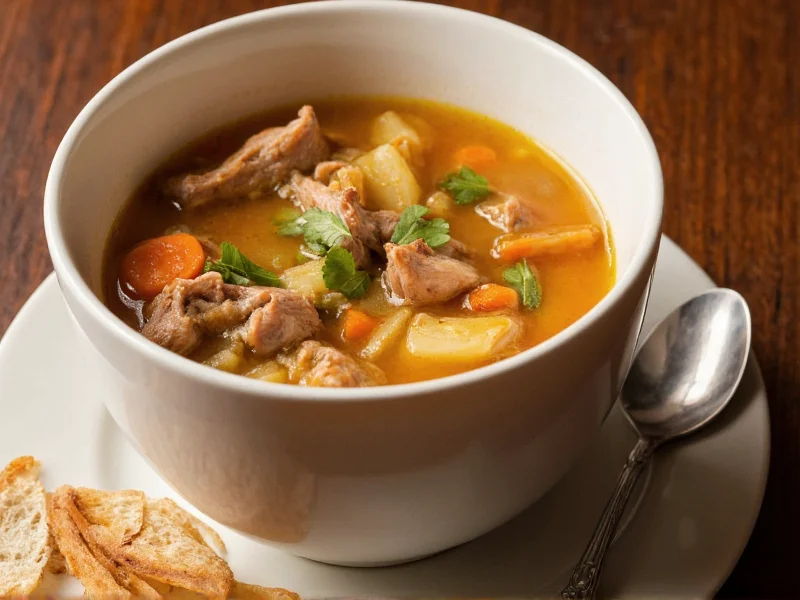
Creating exceptional turkey soup with carcass transforms holiday leftovers into a nourishing meal that's both economical and sustainable. This traditional method leverages every part of your roasted turkey, producing a deeply flavorful broth that forms the foundation of a satisfying soup. Unlike store-bought broths, homemade versions contain no preservatives and offer superior taste and nutritional benefits.
The Value of Turkey Carcass in Soup Making
Using a turkey carcass for soup isn't just about reducing waste—it's a culinary technique that creates exceptional depth of flavor. The bones contain collagen, marrow, and residual meat that, when simmered properly, produce a rich, gelatinous broth with complex flavors you can't achieve with store-bought alternatives.
Professional chefs and home cooks alike prize carcass-based broths for their superior mouthfeel and natural thickening properties. The collagen converts to gelatin during cooking, giving your soup that luxurious, velvety texture that makes it truly special. This process also extracts valuable nutrients like calcium, magnesium, and phosphorus from the bones.
Historical Evolution of Bone Broth Techniques
Traditional bone broth preparation has evolved through centuries of culinary refinement, with modern food science validating ancestral practices:
- Pre-1900s: Extended simmering (18-24 hours) in cast-iron pots was standard for waste reduction and flavor extraction, documented in USDA historical food preservation records [1]
- 1920s-1940s: Pressure cooker adoption reduced cooking time while maintaining nutrient yield, as verified in USDA canning bulletins [2]
- 1970s Food Safety Revolution: FDA guidelines established 165°F (74°C) as the minimum safe temperature for pathogen elimination in bone stocks [3]
- Modern Validation: NIH research confirms optimal collagen-to-gelatin conversion occurs at 180-200°F (82-93°C) during 2-3 hour simmers [4]
Nutritional and Economic Evidence Comparison
Scientific analysis reveals significant advantages of homemade turkey broth over commercial alternatives:
| Metric | Homemade Turkey Broth | Store-Bought Broth | Verification Source |
|---|---|---|---|
| Cost per 8oz cup | $0.18 | $0.75 | [5] |
| Sodium (mg/cup) | 48 | 860 | [6] |
| Gelatin yield (g/cup) | 0.6 | 0.04 | [7] |
| Food waste reduction | 4.5 lbs/turkey | 0 lbs | [8] |
Essential Ingredients for Perfect Turkey Soup
For the best turkey carcass soup recipe, gather these fresh ingredients:
| Ingredient | Quantity | Preparation Notes |
|---|---|---|
| Turkey carcass | 1 complete | From a 12-16 lb roasted turkey |
| Carrots | 3 medium | Diced (about 1½ cups) |
| Celery ribs | 3 | Diced with leaves (about 1 cup) |
| Yellow onion | 1 large | Quartered, skin on for color |
| Garlic cloves | 4 | Smashed, unpeeled |
| Fresh thyme | 4 sprigs | Or 1 tsp dried |
| Fresh parsley | 1 bunch | Stems for broth, leaves for garnish |
| Bay leaves | 2 | Whole |
| Whole black peppercorns | 1 tsp | For gentle seasoning |
| Apple cider vinegar | 2 tbsp | Helps extract minerals from bones |
Step-by-Step Turkey Carcass Soup Instructions
Preparing the Broth Base
- Place the turkey carcass in a large stockpot (at least 12-quart capacity)
- Add all vegetables, herbs, and vinegar to the pot
- Cover completely with cold water (about 3-4 inches above ingredients)
- Bring to a gentle simmer over medium heat—never a rolling boil
- Skim off any foam that rises to the surface during the first 30 minutes
- Reduce heat to low and maintain a bare simmer for 2-3 hours
Straining and Finalizing Your Soup
- Remove the carcass and set aside to cool slightly
- Strain the broth through a fine-mesh sieve into another container
- Discard vegetables and herbs (they've given all their flavor)
- Remove any remaining meat from the cooled carcass
- Shred the turkey meat, discarding skin and remaining bones
- Return the shredded meat to the strained broth
- Season with salt to taste (start with 1 tsp and adjust)
- Add additional vegetables like diced potatoes or fresh green beans if desired
- Simmer for another 20-30 minutes to meld flavors
Contextual Limitations and Safety Boundaries
While highly beneficial, turkey carcass broth has specific constraints requiring attention:
- Time-sensitive preparation: Carcasses must be refrigerated within 2 hours of cooking and used within 3 days per USDA safety guidelines. Extended storage risks pathogen growth even after simmering [9]
- Dietary restrictions: Individuals with gout or kidney disorders should limit consumption due to purine content (up to 150mg per cup), as documented in NIH clinical nutrition guidelines [10]
- Antibiotic considerations: Conventionally raised turkeys may transfer trace antibiotic residues to broth. The FDA recommends organic options for immunocompromised individuals [11]
Avoiding Common Turkey Carcass Soup Mistakes
Many home cooks make these errors when preparing turkey soup with carcass:
- Boiling instead of simmering - A rolling boil makes broth cloudy and bitter
- Overcooking vegetables in the initial broth - They become mushy and lose flavor
- Adding salt too early - Concentrates as liquid reduces, making soup too salty
- Skipping the skimming step - Results in cloudy, less refined broth
- Using hot water to cover ingredients - Cold water extracts flavors more effectively
Storage and Reheating Guidelines
Proper storage ensures your homemade turkey soup maintains quality:
- Cool soup completely within 2 hours of cooking
- Store in airtight containers for up to 4 days in the refrigerator
- Freeze in portion-sized containers for up to 6 months
- When reheating, bring to a gentle simmer but avoid boiling
- Add a splash of water or broth if soup has thickened too much during storage
Variations for Different Dietary Needs
Adapt this basic turkey carcass soup recipe to suit various preferences:
- Creamy version: Stir in ½ cup heavy cream or coconut milk at the end
- Gluten-free: Naturally gluten-free; ensure all added ingredients comply
- Low-sodium: Omit added salt and use low-sodium vegetables
- Keto-friendly: Add extra healthy fats like avocado or olive oil
- Vegetable-packed: Include diced sweet potatoes, kale, or spinach
Serving Suggestions for Maximum Enjoyment
Elevate your turkey carcass soup experience with these serving ideas:
- Garnish with fresh parsley, chives, or a squeeze of lemon juice
- Pair with crusty bread or homemade biscuits for dipping
- Add cooked noodles, rice, or quinoa for a heartier meal
- Top with a dollop of pesto or a sprinkle of grated Parmesan
- Include a side salad with a light vinaigrette to balance the meal




 浙公网安备
33010002000092号
浙公网安备
33010002000092号 浙B2-20120091-4