
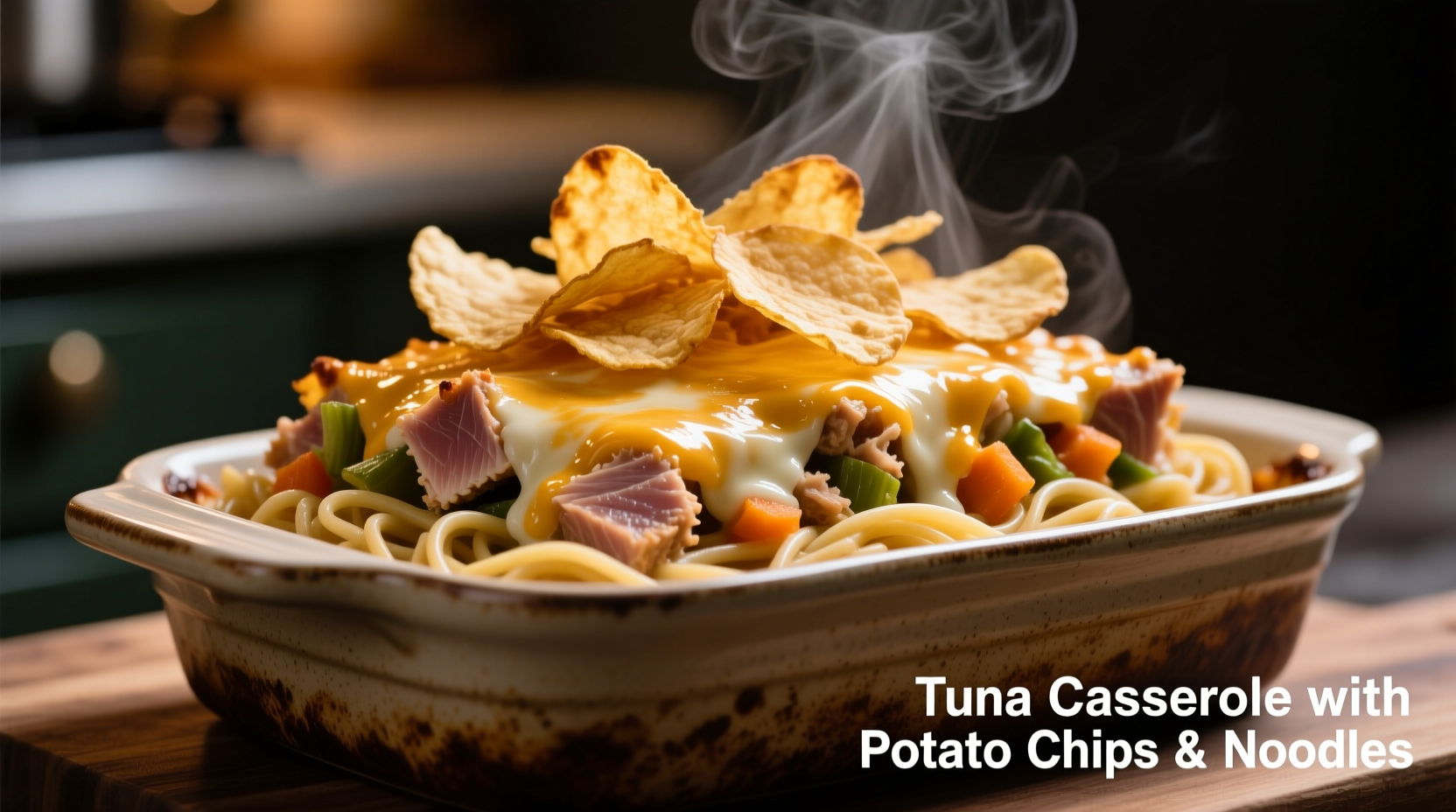
Craving that perfect blend of creamy tuna casserole with an irresistible crunchy topping? You've found the definitive recipe. This tuna noodle casserole with potato chips variation transforms the classic comfort food with a simple yet brilliant topping that adds texture without soggy disappointment. Forget dry, bland versions—our method ensures moist filling with a golden, crispy finish every time.
Why This Tuna Casserole Recipe Works
Unlike traditional breadcrumb-topped versions that often turn soggy, the potato chip topping maintains its crunch through baking. The saltiness of the chips enhances the creamy tuna mixture while adding visual appeal. This specific combination of ingredients creates the ideal texture contrast that makes each bite satisfying.
Essential Ingredients for Perfect Tuna Casserole
Quality ingredients make the difference between ordinary and exceptional tuna casserole with potato chips and noodles. Here's what you'll need:
| Ingredient | Quantity | Key Purpose |
|---|---|---|
| Egg noodles | 8 oz | Perfect bite-sized base that holds sauce |
| Canned tuna | 2 (5oz) cans | Flaky texture without overpowering fishiness |
| Cream of mushroom soup | 1 (10.5oz) can | Creamy binding agent with earthy flavor |
| Plain potato chips | 2 cups crushed | Crispy, salty topping that maintains texture |
| Shredded cheddar | 1 cup | Rich flavor and golden finish |
Step-by-Step Preparation Guide
Follow these precise steps for the best tuna casserole with potato chips and noodles experience:
Prep Phase (10 minutes)
- Cook egg noodles al dente according to package directions, then drain and rinse
- Preheat oven to 375°F (190°C) and grease a 9x13 inch baking dish
- Crush plain potato chips to coarse crumbs (not powder) using a food processor or rolling pin
Assembly Phase (15 minutes)
- Mix tuna, cream of mushroom soup, mayonnaise, frozen peas, and ½ cup cheese in large bowl
- Gently fold cooked noodles into mixture until evenly coated
- Transfer mixture to prepared baking dish and spread evenly
- Top with remaining cheese and evenly distribute crushed potato chips
Baking Phase (20 minutes)
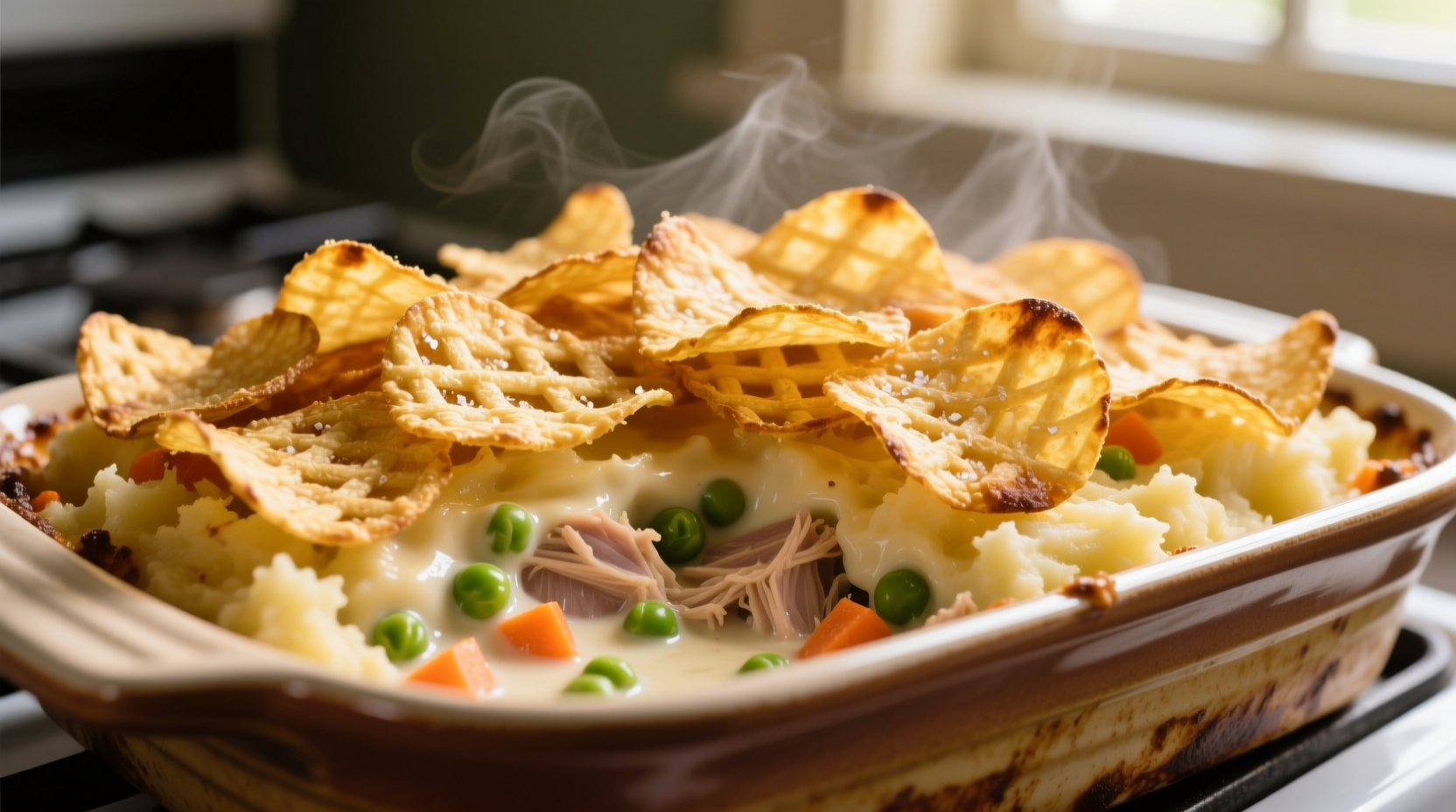
- Bake uncovered for 18-22 minutes until chips turn golden and mixture bubbles at edges
- Let rest 5 minutes before serving to allow flavors to settle
Pro Tips for Perfect Results
Professional kitchen insights that elevate your tuna noodle casserole with potato chips:
- Chip selection matters: Plain salted chips work best—avoid flavored varieties that can overpower the dish
- Don't overmix: Gently combine ingredients to maintain tuna's flaky texture
- Resting time is crucial: Allowing the casserole to rest prevents a runny consistency
- Freeze for later: Assemble without baking, wrap tightly, and freeze for up to 3 months
Historical Evolution of This Comfort Food Classic
Tuna casserole with potato chips and noodles represents an interesting evolution in American comfort food. While traditional tuna casserole dates back to the 1930s when canned tuna became widely available, the potato chip topping emerged in the 1950s as home cooks sought alternatives to soggy breadcrumb toppings. According to the National Canned Food Association, the combination gained popularity through community cookbooks in the Midwest during the post-war era when convenience foods became household staples.
| Era | Key Development | Common Toppings |
|---|---|---|
| 1930s-1940s | Original tuna casserole recipes | Breadcrumbs, crushed crackers |
| 1950s | Potato chips introduced as topping | Crushed potato chips, fried onions |
| 1970s-1980s | Regional variations emerge | Crushed cornflakes, cheese crisps |
| 2000s-Present | Retro comfort food revival | Potato chips remain popular choice |
When This Recipe Shines Best
Understanding the context boundaries helps you serve this dish at its best:
- Perfect for: Weeknight dinners, potlucks, family gatherings, and meal prep
- Best served with: Simple green salad, steamed vegetables, or crusty bread
- Not ideal for: Formal dinner parties or when serving guests with severe gluten sensitivities
- Storage notes: Keeps well refrigerated for 3-4 days; reheats beautifully in oven
Common Questions Answered
Here are solutions to frequent challenges home cooks face with this recipe:
- Can I use different types of noodles in tuna casserole with potato chips?
- Egg noodles work best for their texture retention, but you can substitute rotini or penne. Avoid thin pastas like angel hair that become mushy.
- What's the best potato chip variety for tuna noodle casserole?
- Plain salted chips provide ideal crunch without competing flavors. Brands like Cape Cod or Kettle Cooked work particularly well due to their thicker cut.
- How do I prevent a watery tuna casserole?
- Drain tuna thoroughly, don't overcook noodles, and let the casserole rest after baking. Adding 1 tablespoon of flour to the sauce mixture can help thicken if needed.
- Can I make this tuna casserole with potato chips ahead of time?
- Yes! Assemble completely but don't add the potato chip topping until just before baking. Store covered in refrigerator for up to 24 hours.
- Is there a gluten-free version of this potato chip tuna casserole?
- Absolutely. Use gluten-free egg noodles, ensure your cream of mushroom soup is GF, and select gluten-free potato chips (many plain varieties are naturally gluten-free).




 浙公网安备
33010002000092号
浙公网安备
33010002000092号 浙B2-20120091-4