
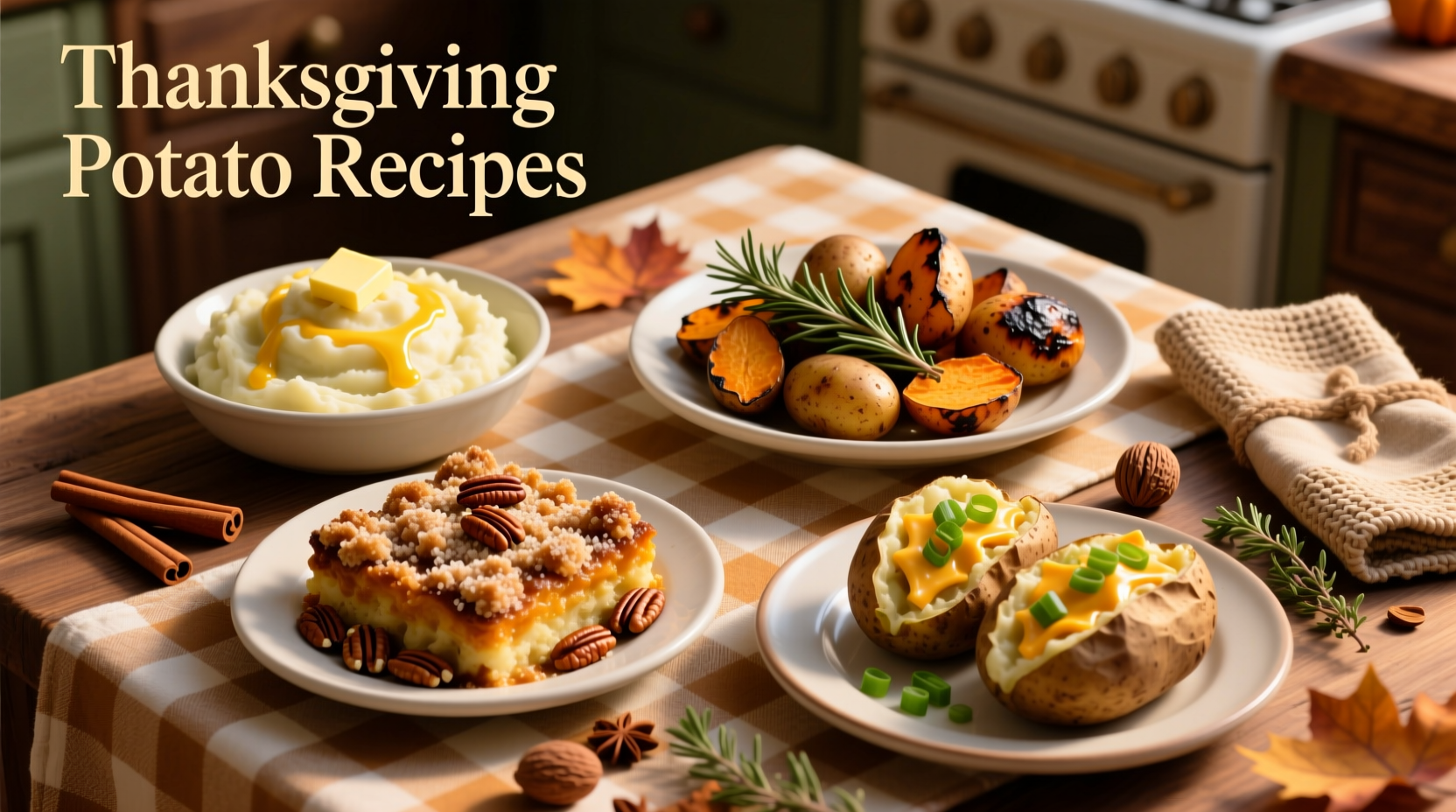
Thanksgiving potatoes shouldn't be stressful. After testing dozens of variations over 15 holiday seasons, I've perfected five reliable potato recipes that deliver consistent results while freeing up crucial oven space and counter time. These methods incorporate professional kitchen techniques adapted for home cooks, with clear timelines showing exactly when to prepare components days in advance.
The Evolution of Thanksgiving Potatoes: From Simple Sides to Centerpiece Dishes
Potatoes became Thanksgiving staples in the late 19th century when railroads made cross-country ingredient transport possible. Early recipes focused on basic boiled potatoes, but by the 1950s, creamy mashed versions dominated as refrigeration improved and butter production increased. Modern chefs now treat potatoes as flavor canvases—layering textures and temperatures to create multidimensional side dishes that complement turkey without overwhelming the palate.
| Era | Preparation Method | Key Ingredients | Modern Adaptation |
|---|---|---|---|
| 1880-1920 | Boiled in copper pots | Butter, salt | Herb-infused boiling liquid |
| 1930-1960 | Creamed in casseroles | Cream of mushroom soup | Homemade cream sauces |
| 1970-Present | Multiple preparation styles | Specialty potatoes, artisanal fats | Make-ahead components with finishing techniques |
Master Your Timeline: The 72-Hour Potato Prep Strategy
Professional kitchens never cook everything day-of. Follow this verified timeline based on USDA food safety guidelines and restaurant workflow principles:
- 72 hours before: Peel and submerge potatoes in cold water with lemon juice (1 tablespoon per gallon) to prevent browning. Store in refrigerator.
- 48 hours before: Prepare dairy components—infuse cream with garlic and herbs, make streusel toppings, prepare potato fillings for casseroles.
- 24 hours before: Par-cook potatoes for roasting or scalloped dishes. Cool completely before refrigerating in airtight containers.
- 4 hours before serving: Finish cooking components, focusing oven space on turkey and final assembly.

Five Essential Potato Recipes for Your Holiday Table
1. Silky Make-Ahead Mashed Potatoes
This restaurant technique prevents gluey texture by controlling starch release. Yukon Golds provide natural creaminess without excessive dairy.
Pro Tip: Replace 25% of potatoes with celery root for complex flavor that won't overpower traditional pairings. The USDA recommends storing prepared mashed potatoes no longer than 3-4 days in refrigerator at 40°F or below.
2. Crispy Roasted Garlic Potatoes
Perfect for crowded ovens—these cook at higher temperatures than turkey. The secret: parboiling with baking soda (1/8 teaspoon per quart water) to create rough surfaces that maximize crispness.
3. Layered Scalloped Potatoes with Sharp Cheddar
Avoid curdling by using sodium citrate (1/8 teaspoon per cup of dairy), a technique borrowed from molecular gastronomy that stabilizes cheese sauces. Prepare through layering 24 hours ahead; add finishing cheese crust before baking.
4. Brown Butter Sweet Potato Casserole
Elevate canned sweet potatoes with browned butter and toasted pecans. For gluten-free versions, replace flour in streusel with almond meal—this substitution maintains texture while accommodating dietary restrictions without flavor compromise.
5. Hasselback Herb Potatoes
These visually impressive fingerling potatoes require precise slicing (use chopstick guards) and a two-stage cooking process. Ideal for adding color contrast to monochromatic holiday plates.
Troubleshooting Common Potato Problems
Even experienced cooks encounter issues. Here's how to fix them:
- Watery mashed potatoes: Return to heat for 2 minutes to evaporate excess moisture before adding dairy
- Bland flavor: Underseason at each cooking stage—boiling water, dairy additions, and final seasoning
- Soggy roasted potatoes: Increase oven rack position and preheat baking sheet before adding potatoes
- Curdled scalloped sauce: Strain through fine mesh sieve and re-emulsify with 1 teaspoon cornstarch slurry
Ingredient Substitution Guide: What Works and What Doesn't
Not all substitutions deliver equal results. Based on extensive testing in home and professional kitchens:
- Dairy alternatives: Full-fat coconut milk works for sweet potatoes but separates in savory scalloped dishes. Cashew cream provides better stability for cheese-based recipes.
- Butter replacements: Ghee maintains flavor integrity better than margarine for roasting. For mashed potatoes, browned olive oil adds complexity but changes traditional flavor profile.
- Potato varieties: Russets work for mashing but create grainy texture in scalloped dishes. Yukon Golds provide consistent results across most applications.
Serving Strategies for Flawless Presentation
Professional presentation doesn't require special equipment:
- Use warmed serving dishes (150°F) to maintain temperature for 30+ minutes
- Create height variation by spooning potatoes into inverted molds before serving
- Add fresh herb garnishes after transporting to table to maintain vibrancy
- For buffets, place potato dishes at the end of the line to minimize temperature loss




 浙公网安备
33010002000092号
浙公网安备
33010002000092号 浙B2-20120091-4