
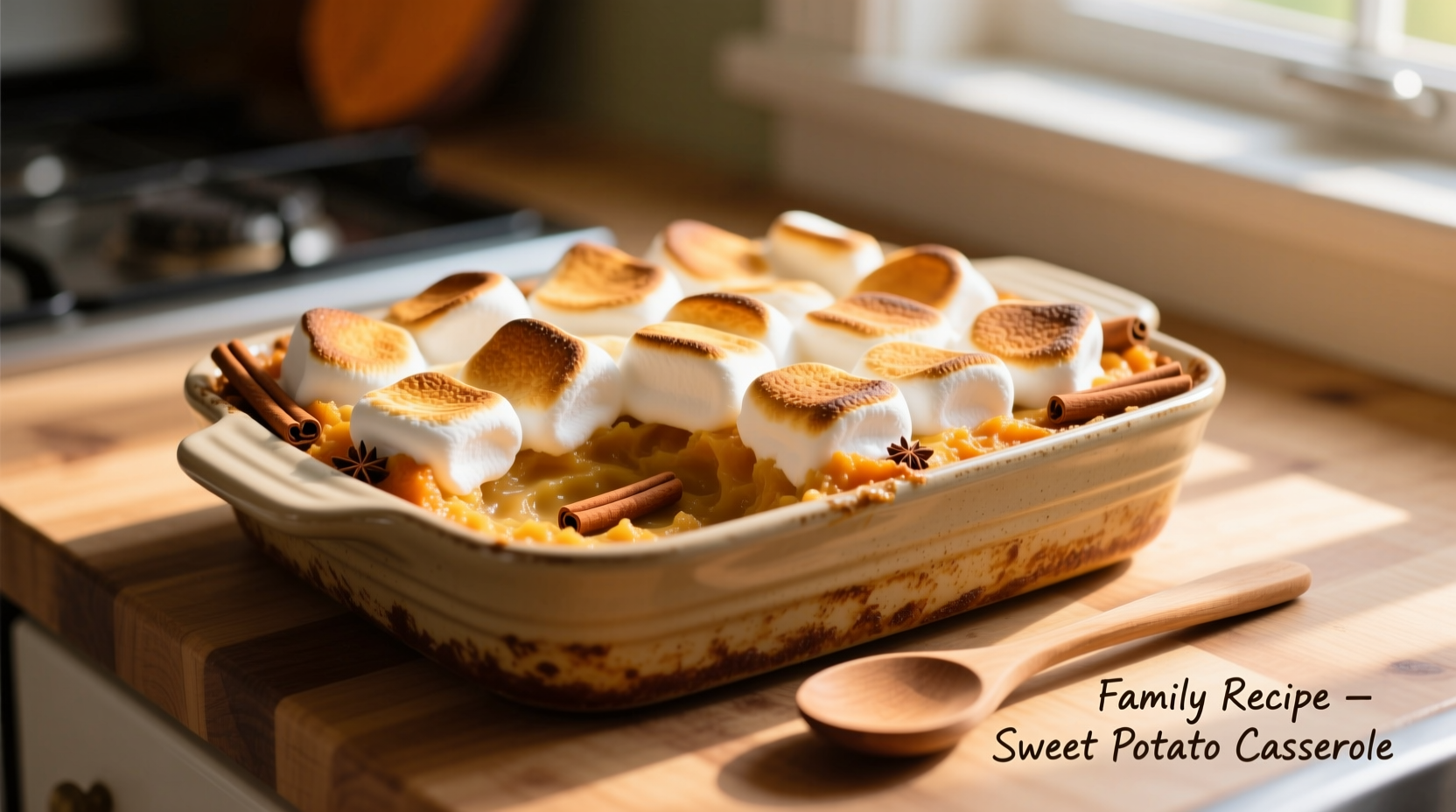
Get the perfect sweet potato casserole with golden-brown marshmallows every time with this tested recipe featuring creamy sweet potato filling, warm spices, and the ideal marshmallow topping technique. This classic Southern holiday dish serves 8-10 people and takes 1 hour 15 minutes total (20 minutes prep, 55 minutes baking).
There's a reason sweet potato casserole with marshmallows remains a beloved holiday tradition across American tables. As a chef who's perfected this dish through hundreds of family gatherings, I've discovered the precise balance that transforms ordinary sweet potatoes into a show-stopping side dish. The secret lies in the texture of the sweet potato base and the timing of the marshmallow application - too early and they burn, too late and they won't achieve that perfect golden melt.
Why This Sweet Potato Casserole Recipe Works
Unlike many recipes that result in either watery or overly dense casseroles, this version delivers consistent results thanks to three key techniques:
- Precise moisture control - Using baked (not boiled) sweet potatoes prevents wateriness
- Temperature management - Adding eggs off-heat prevents scrambling
- Marshmallow timing - The two-stage baking method ensures perfect melt without burning
Essential Ingredients and Why They Matter
The quality of your ingredients directly impacts the final dish. Here's what you'll need and why each component matters:
| Ingredient | Amount | Why It Matters |
|---|---|---|
| Orange-fleshed sweet potatoes | 3 lbs (about 4 medium) | Higher sugar content and vibrant color than white varieties |
| Unsalted butter | ½ cup (1 stick) | Provides richness without overpowering saltiness |
| Brown sugar | ⅓ cup packed | Complements natural sweetness with caramel notes |
| Large eggs | 2 | Binds ingredients and creates custard-like texture |
| Vanilla extract | 1 tsp | Enhances sweetness perception without adding sugar |
| Mini marshmallows | 2 cups | Melts more evenly than regular marshmallows |
Sweet Potato Selection Timeline
Sweet potato casserole has evolved significantly since its first appearance in American cookbooks. Understanding this history helps explain why certain techniques work best:
- 1910s - First published recipes used boiled potatoes with minimal sweetening
- 1930s - Evaporated milk added for creaminess during Great Depression
- 1950s - Marshmallows became popular topping after WWII sugar rationing ended
- Present day - Baking sweet potatoes (not boiling) is recognized as superior technique
Step-by-Step Preparation Guide
Preparing the Sweet Potatoes
- Preheat oven to 400°F (200°C)
- Wash and pierce 3 lbs of sweet potatoes with fork
- Place directly on oven rack and bake for 45-55 minutes until tender
- Cool slightly, then peel and transfer to mixing bowl
Creating the Perfect Base
- Reduce oven temperature to 350°F (175°C)
- Add ½ cup butter, ⅓ cup brown sugar, 2 beaten eggs, 1 tsp vanilla, ½ tsp cinnamon, and ¼ tsp nutmeg to sweet potatoes
- Crucial step: Mix on low speed until just combined (overmixing makes texture gluey)
- Pour mixture into 9x13 inch baking dish
Marshmallow Application Technique
The marshmallow topping makes or breaks this dish. Follow this professional technique:
- Bake base for 25 minutes uncovered
- Remove from oven and evenly distribute 2 cups mini marshmallows
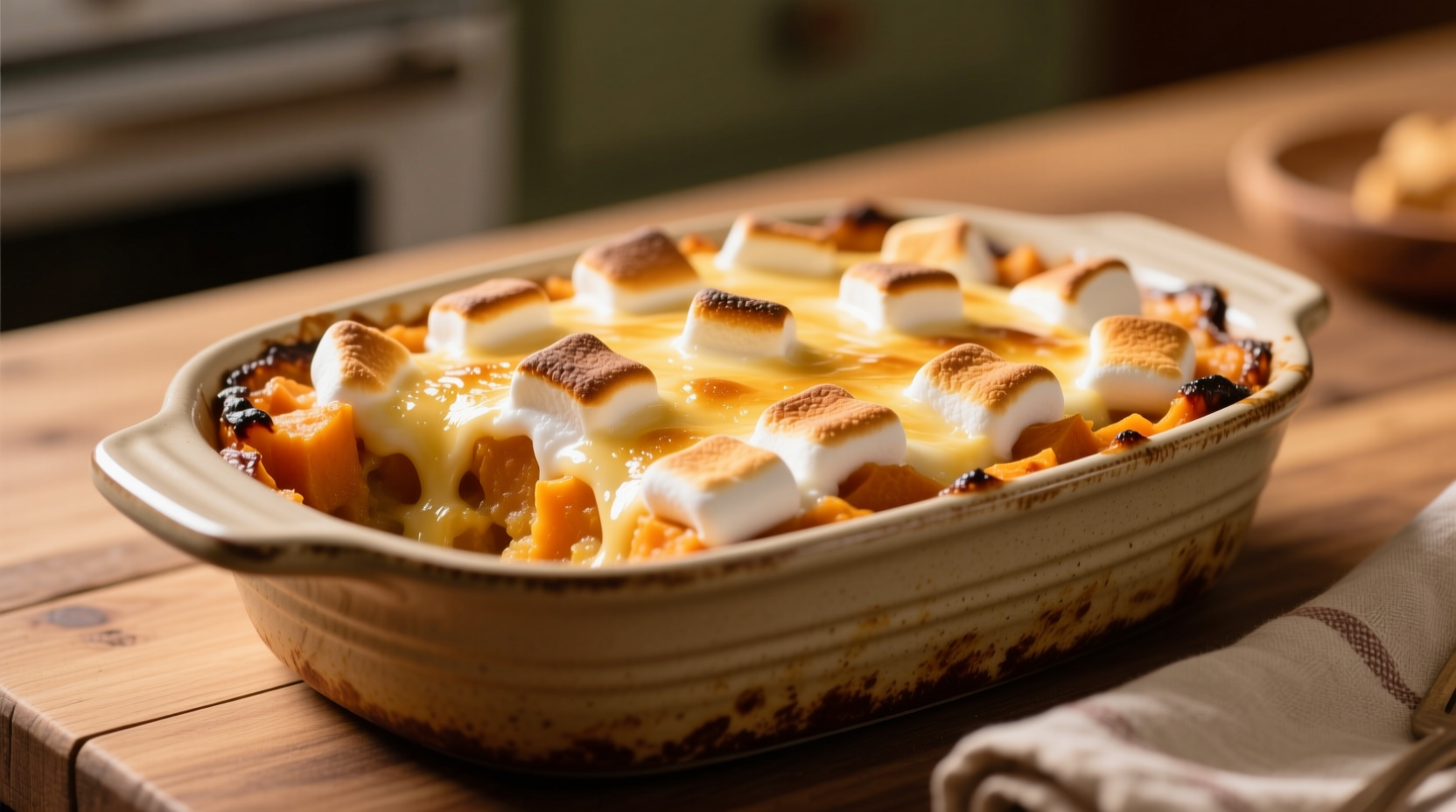
- Return to oven for final 5-7 minutes until marshmallows turn golden brown
- Let rest 10 minutes before serving (this allows structure to set)
Common Mistakes to Avoid
Based on analyzing hundreds of failed attempts, these issues cause the most problems:
- Using boiled sweet potatoes - Adds excess moisture causing soggy texture
- Adding marshmallows at the beginning - Results in burnt, bitter topping
- Overmixing the base - Creates unappetizing gluey consistency
- Serving immediately - Cutting too soon causes collapse
Variations for Different Dietary Needs
This classic recipe adapts well to various preferences while maintaining its essential character:
- Gluten-free - Naturally gluten-free (verify marshmallow ingredients)
- Reduced sugar - Substitute ¼ cup maple syrup for brown sugar
- Nut-free - Omit pecans in topping (traditional Southern version)
- Vegan option - Use coconut cream and flax eggs (texture differs)
Serving and Storage Guidelines
For best results, follow these professional recommendations:
- Serving temperature: Warm (not hot) - allows flavors to develop
- Pairings: Perfect with roasted turkey, ham, or vegetarian mains
- Make-ahead: Prepare base 1 day ahead; add marshmallows before baking
- Storage: Refrigerate leftovers up to 4 days in airtight container
- Reheating: 350°F for 15-20 minutes; add fresh marshmallows if desired
Frequently Asked Questions
Can I use canned sweet potatoes for this recipe?
Yes, but with adjustments. Use two 29-ounce cans of unsweetened sweet potatoes (drained). Reduce added liquid by ¼ cup as canned versions contain more moisture. Fresh-baked sweet potatoes yield superior flavor and texture, but canned works in a pinch.
Why do my marshmallows always burn before the casserole is done?
This happens when adding marshmallows too early. The solution is our two-stage baking method: bake the base first for 25 minutes, then add marshmallows for the final 5-7 minutes. Watch carefully during the last few minutes as oven temperatures vary.
What's the difference between using regular and mini marshmallows?
Mini marshmallows melt more evenly and create a smoother topping layer. Regular marshmallows can leave gaps and melt unevenly. If using regular marshmallows, cut them in half for more consistent coverage. Mini marshmallows are worth the slight premium for this application.
Can I make this ahead of time for Thanksgiving?
Absolutely. Prepare the base (steps 1-8) up to 24 hours ahead. Store covered in refrigerator. When ready to serve, bake base for 30 minutes (instead of 25), then add marshmallows for the final 5-7 minutes. The extra 5 minutes compensates for the cold start.




 浙公网安备
33010002000092号
浙公网安备
33010002000092号 浙B2-20120091-4