
Getting your watering routine right makes the difference between mediocre harvests and exceptional tomato yields. After decades of observing how water impacts plant health and fruit quality, I've discovered that precise hydration management is the single most overlooked factor in home tomato gardening. This guide delivers science-backed watering strategies that professional growers use to produce plump, flavorful tomatoes season after season.
Why Water Quantity Matters More Than You Think
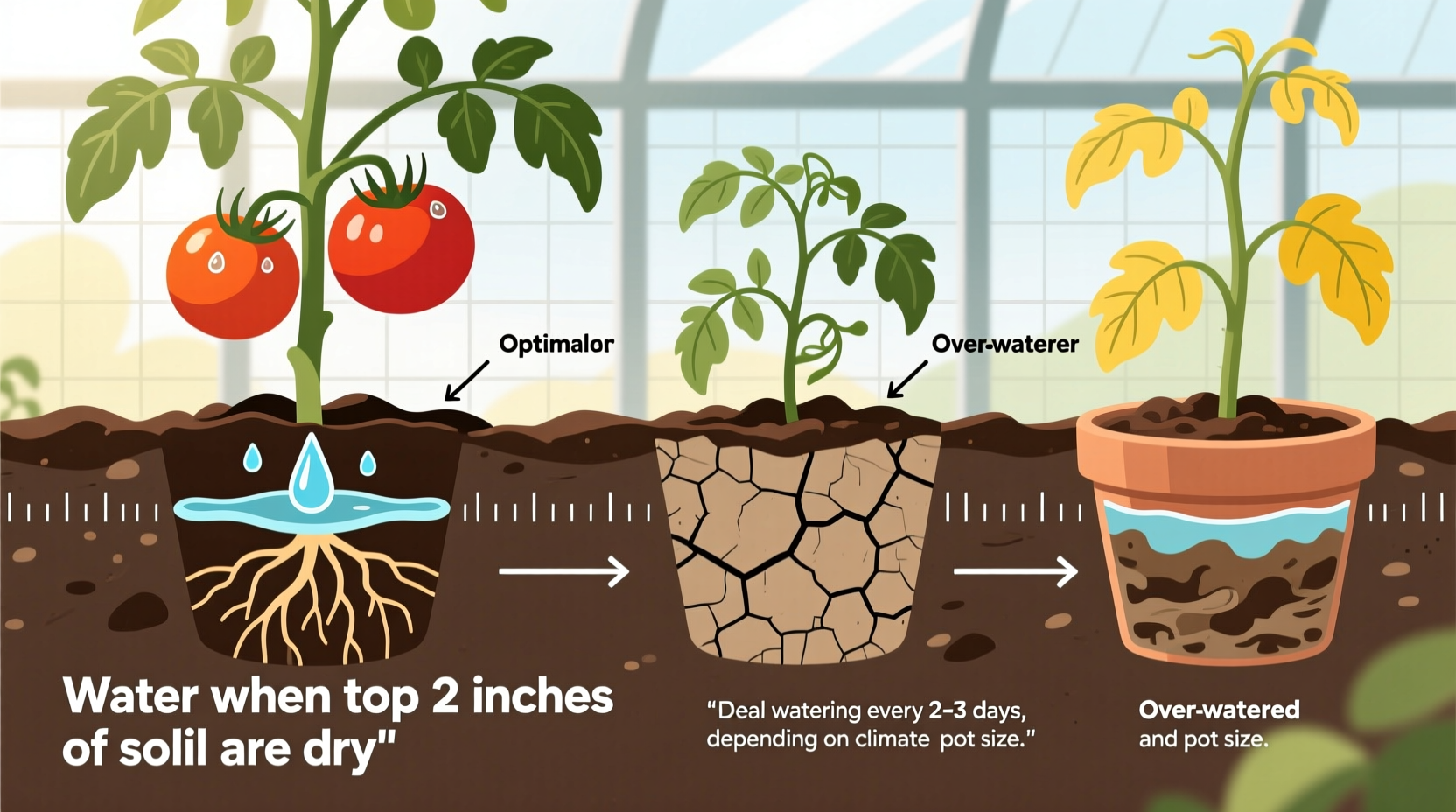
Water isn't just about keeping plants alive—it directly affects fruit size, flavor concentration, and disease resistance. Tomatoes consist of 94% water, making hydration critical for cellular development. Insufficient water during fruit set causes blossom drop, while inconsistent moisture leads to blossom end rot and fruit cracking. Overwatering creates conditions for root rot and reduces sugar concentration in fruits.
University of California Agriculture and Natural Resources research confirms that tomato plants experiencing water stress produce up to 30% less yield with significantly lower lycopene content—the antioxidant responsible for tomatoes' health benefits and rich color.
Watering Requirements Through Growth Stages
Your watering approach must evolve as plants progress through their lifecycle. Following this stage-based framework ensures optimal development at each critical phase:
| Growth Stage | Daily Water Needs | Key Focus |
|---|---|---|
| Seedling (indoors) | 1/4 cup daily | Keep soil moist but not soggy |
| Transplanting week | 1/2 gallon daily | Deep watering to encourage root establishment |
| Flowering | 3/4 gallon daily | Consistent moisture to prevent blossom drop |
| Fruit development | 1-1.5 gallons daily | Prevent cracking with even moisture levels |
| Ripening stage | Reduce by 25% | Concentrate sugars for better flavor |
Environmental Adjustments: Beyond Basic Guidelines
Standard recommendations assume ideal conditions, but real-world gardening requires nuanced adjustments. These context boundaries determine when to modify standard watering practices:
Soil Type Variations
Sandy soils drain quickly and require more frequent watering, while clay retains moisture longer. The USDA Natural Resources Conservation Service confirms that loam soil (ideal for tomatoes) holds moisture best but still requires adjustments based on organic matter content.
| Soil Type | Watering Frequency | Special Considerations |
|---|---|---|
| Sandy | Daily | Add 25% more water; water in multiple sessions |
| Clay | Every 2-3 days | Reduce quantity by 20%; ensure drainage |
| Loam | Daily | Standard recommendations apply |
| Container | Daily (twice in heat) | Use moisture meter; pots dry faster |
Climate and Weather Factors
Temperature significantly impacts water requirements. According to Cornell University's College of Agriculture and Life Sciences, tomato plants use approximately 50% more water when temperatures exceed 85°F (29°C). During heat waves above 90°F (32°C), plants may require up to 2 gallons daily.
Rainfall measurement is crucial—many gardeners overwater after light rains. Install a rain gauge to determine actual precipitation. One inch of rain typically provides sufficient moisture for 3-5 days in moderate temperatures.
Watering Techniques That Maximize Results
Timing Matters: When to Water
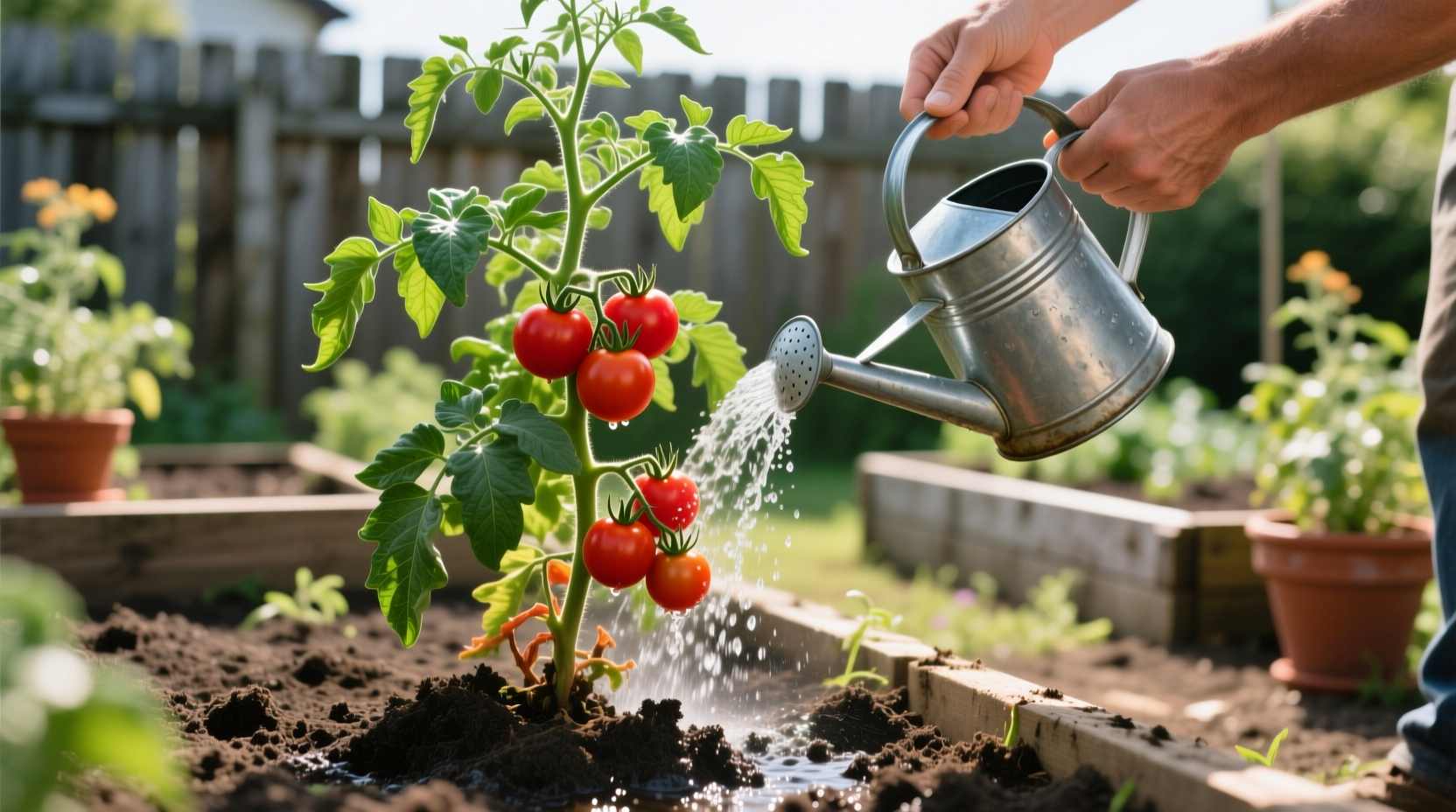
Watering early in the morning (5-9 AM) reduces evaporation by 30-50% compared to midday watering. This timing also allows foliage to dry before evening, minimizing fungal disease risk. Avoid evening watering which keeps plants wet overnight—a prime condition for blight development.
Watering Methods Compared
Drip irrigation delivers water directly to the root zone with 90% efficiency, compared to 60-70% for soaker hoses and just 50-60% for overhead sprinklers. The University of Florida IFAS Extension reports that drip-irrigated tomatoes show 20% higher yields with significantly fewer disease problems.
The Deep Watering Principle
Tomato roots grow vertically, reaching 2-3 feet deep at maturity. Shallow watering encourages surface roots vulnerable to temperature fluctuations. Water deeply 2-3 times weekly rather than daily light watering. To check depth, dig 6-8 hours after watering—you should find moist soil at least 6-8 inches down.
Recognizing Watering Problems Before Damage Occurs
Early detection prevents irreversible damage. Learn these visual cues:
Underwatering Signs
- Wilting that persists into evening (normal daytime wilting occurs in heat)
- Leaves curling upward
- Soil pulling away from container edges
- Blossom end rot on developing fruit
Overwatering Indicators
- Yellowing lower leaves
- Stunted growth despite adequate nutrients
- Foul odor from soil
- Wilting with moist soil (root rot preventing water uptake)
Advanced Water Management Strategies
Moisture Monitoring Tools
Don't guess—measure. A $10 moisture meter prevents both over and underwatering. Insert to 6-inch depth at multiple spots around the plant. Ideal readings fall between 4-7 on most meters (moist but not saturated). For precision gardening, consider soil moisture sensors that connect to smartphone apps.
Water Conservation Techniques
Mulching with 2-3 inches of straw or wood chips reduces evaporation by 70% according to USDA studies. Apply mulch after soil has warmed in spring. Drip irrigation combined with mulch can reduce water usage by 50% while improving plant health.
Creating Your Personalized Watering Schedule
Develop a customized routine based on these factors:
- Check soil moisture at 6-inch depth daily
- Adjust for weather forecasts (reduce before rain)
- Track plant responses (leaf color, fruit development)
- Modify as plants grow larger
- Reduce watering as harvest approaches for sweeter fruit
Frequently Asked Questions
How often should I water tomato plants in containers?
Container tomatoes typically need daily watering, sometimes twice daily during hot weather. Pots dry out faster than garden soil. Check moisture at 2-inch depth—water when top inch feels dry. Use pots with adequate drainage and consider self-watering containers for consistent moisture.
Can I water tomato plants with a sprinkler system?
While possible, overhead sprinklers are not ideal for tomatoes. They wet foliage, increasing disease risk from fungi like early blight. If using sprinklers, water early in morning so plants dry quickly. Drip irrigation or soaker hoses are far superior, delivering water directly to roots while keeping leaves dry.
Why do my tomatoes crack even when I water consistently?
Cracking usually occurs from inconsistent moisture during fruit development. Even with regular watering, heavy rain after dry periods causes rapid water uptake that splits fruit. Maintain even soil moisture, especially during ripening. Mulching helps buffer moisture fluctuations. Some varieties like 'Celebrity' and 'Mountain Spring' are less prone to cracking.
Should I reduce watering when tomatoes start ripening?
Yes, slightly reducing water (by 20-25%) during the final ripening stage concentrates sugars and improves flavor. However, don't let plants become stressed—severe water reduction causes fruit to drop. Maintain consistent but slightly reduced moisture for the best balance of yield and flavor quality.
How much water do tomato plants need in hot weather above 90°F?
In extreme heat (90°F+), mature tomato plants may need 1.5-2 gallons daily. Check soil moisture twice daily—early morning and late afternoon. Water deeply in the morning and consider a second light watering in late afternoon if plants show stress. Mulch heavily to retain moisture and protect roots from temperature extremes.




 浙公网安备
33010002000092号
浙公网安备
33010002000092号 浙B2-20120091-4