
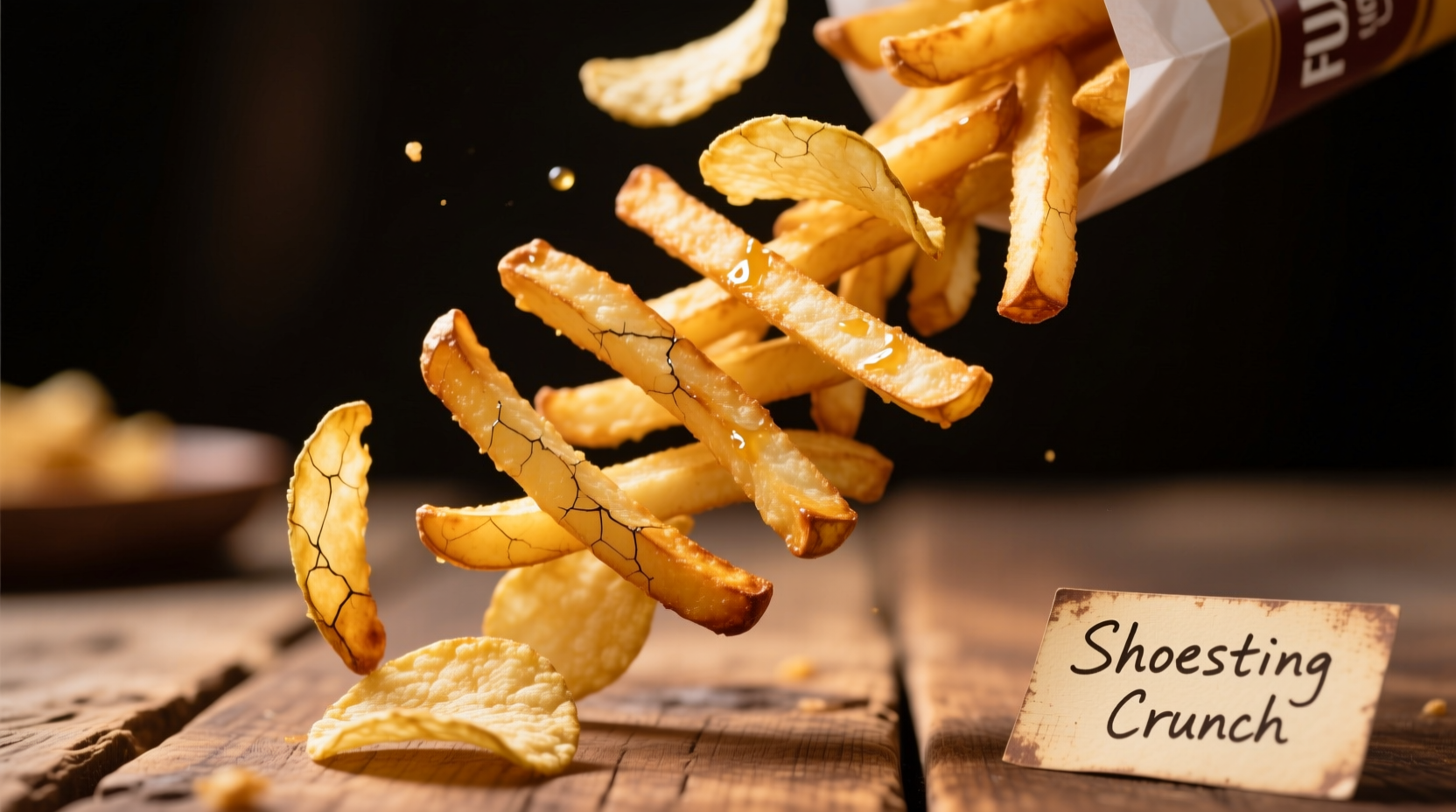
The Defining Characteristics of Shoestring Potato Chips
What sets shoestring potato chips apart isn't just their shape—it's the entire sensory experience. These slender potato strips (measuring approximately 1/8 inch in diameter) deliver a distinctive crunch that regular potato chips can't match. Food scientists at the Institute of Food Technologists note that the high surface-area-to-volume ratio allows for more even frying, creating that perfect balance between crisp exterior and tender interior.
When properly made, shoestring chips maintain their structural integrity better than thicker-cut varieties. This makes them ideal for dipping without breaking—a feature that explains their popularity in restaurant settings where presentation matters.
Evolution of the Shoestring Style: A Culinary Timeline
The history of shoestring potato chips reveals an interesting journey from restaurant specialty to supermarket staple:
| Time Period | Development | Significance |
|---|---|---|
| 1920s | First appeared in high-end restaurants | Chefs hand-cut potatoes into thin matchsticks as a gourmet alternative to standard chips |
| 1940s | Commercial production begins | Specialized cutting equipment developed during post-war food processing advancements |
| 1970s | National brand adoption | Companies like Alexia Foods began marketing frozen shoestring options to consumers |
| 2000s | Craft chip movement | Artisanal producers revived traditional shoestring methods with premium ingredients |
| Present | Global popularity | Available in diverse flavors while maintaining the original thin-cut format |
How Commercial Shoestring Chips Achieve Perfect Crispness
The manufacturing process for quality shoestring potato chips involves precise temperature control and specialized equipment. According to the Potato Association of America, the critical factors include:
- Potato selection: High-starch varieties like Russets work best for maintaining structure
- Cutting precision: Uniform 1/8-inch diameter strips ensure even cooking
- Double-frying technique: Initial blanching at 300°F followed by final fry at 350°F
- Oil management: Continuous filtration maintains oil quality for consistent texture
This careful process prevents the sogginess that often plagues thicker-cut chips, delivering that signature light crunch that disappears completely in your mouth without greasy residue.

Shoestring vs. Regular Potato Chips: Key Differences
Understanding the distinctions helps you choose the right chip for your needs:
| Characteristic | Shoestring Potato Chips | Regular Potato Chips |
|---|---|---|
| Thickness | 1/8 inch diameter | 1/4 inch or thicker |
| Crispness level | Light, delicate crunch | Heavier, substantial crunch |
| Oil absorption | 25-30% less oil | Higher oil content |
| Dipping suitability | Excellent structural integrity | Often breaks when dipping |
| Texture longevity | Maintains crispness longer | Becomes soggy more quickly |
Finding Quality Shoestring Potato Chips
Not all shoestring chips deliver on their promise. When shopping, look for these quality indicators:
- Ingredient simplicity: Should contain just potatoes, oil, and salt (plus flavorings if applicable)
- Uniform sizing: Consistent thickness indicates proper cutting equipment
- Transparency: Reputable brands disclose potato varieties and oil types
- Texture test: Proper shoestrings should bend slightly before breaking
Major brands like Alexia, Cape Cod, and Kettle Brand offer reliable options, while regional producers often provide more artisanal varieties. For the freshest experience, seek out local potato chip makers who specialize in the shoestring style.
Perfect Homemade Shoestring Potato Chips
Recreating authentic shoestring chips at home requires attention to detail but yields superior results to store-bought versions. Follow this professional technique:
- Choose high-starch Russet potatoes and peel them completely
- Use a mandoline slicer with 1/8-inch julienne blade for uniform strips
- Soak cut potatoes in ice water for 30 minutes to remove excess starch
- Thoroughly dry potatoes with clean kitchen towels
- Heat neutral oil (like canola) to 300°F in deep fryer or heavy pot
- Fry in small batches for 2-3 minutes until just beginning to color
- Remove and drain, then increase oil temperature to 350°F
- Refry same batch for 45-60 seconds until golden and crisp
- Immediately season with fine salt while still warm
This double-fry method replicates commercial techniques, creating chips that stay crisp for hours. For best results, serve within 24 hours—homemade versions lack the preservatives that extend shelf life in commercial products.
Common Questions About Shoestring Potato Chips
Here are answers to frequently asked questions about this distinctive snack:




 浙公网安备
33010002000092号
浙公网安备
33010002000092号 浙B2-20120091-4