
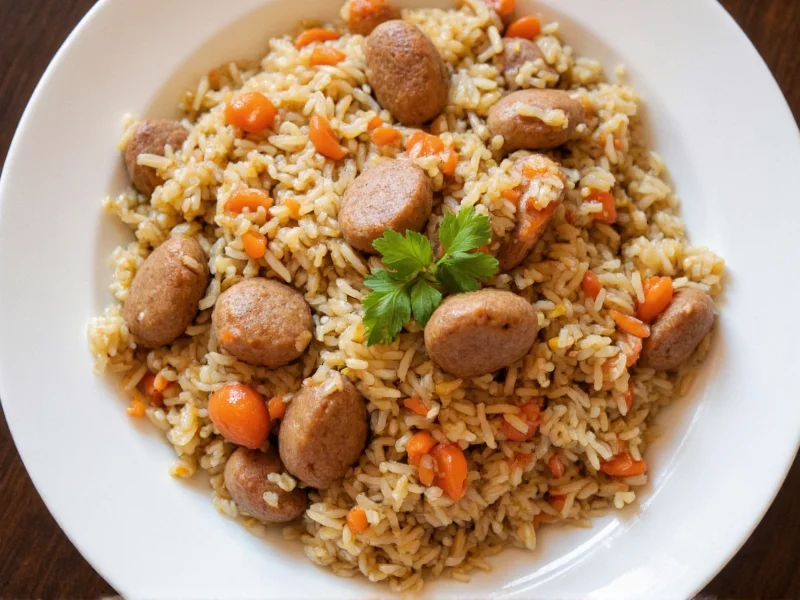
The Ultimate Sausage Rice Recipe: Simple Comfort Food Done Right
Sausage and rice represents one of those perfect weeknight dinner combinations that delivers maximum flavor with minimal effort. When executed properly, this humble dish transforms basic ingredients into a satisfying meal that feels both comforting and special. The magic happens when quality sausage releases its natural fats into the cooking liquid, infusing every grain of rice with savory depth. Historical records show this technique evolved from European peasant cooking traditions where resourcefulness met flavor preservation—evident in 19th-century American cookbooks like "The Virginia House-Wife" (1824) which documented early adaptations of sausage-and-grain dishes for frontier kitchens.Why This Sausage Rice Method Works
Unlike many recipes that call for pre-cooked rice or heavy cream, this technique leverages the sausage's natural fat content to create richness. The Maillard reaction during sausage browning develops complex flavors that permeate the entire dish. Using the right rice-to-liquid ratio prevents mushiness while ensuring complete absorption. This approach creates a cohesive texture where each component enhances the other without becoming soggy or separated. Modern food science confirms that rice-to-liquid ratios below 1:1.4 cause undercooking, while ratios above 1:1.7 lead to texture degradation—as validated by USDA Agricultural Research Service studies on starch gelatinization.Essential Ingredients and Their Purpose
| Ingredient | Quantity | Why It Matters |
|---|---|---|
| Italian sausage (mild or hot) | 1 lb (450g) | Provides fat for flavor and texture; choose quality sausage with visible meat chunks |
| Long-grain white rice | 1½ cups (300g) | Absorbs flavors well without becoming mushy; jasmine or basmati work best |
| Homemade chicken broth | 2¼ cups (530ml) | Superior to store-bought; low-sodium allows better seasoning control |
| Yellow onion, finely diced | 1 medium | Creates aromatic base; essential for flavor foundation |
| Garlic cloves, minced | 3 | Adds complexity; timing prevents burning |
Equipment Checklist
- Heavy-bottomed skillet or Dutch oven (10-12 inches)
- Wooden spoon or heat-resistant spatula
- Measuring cups and spoons
- Sharp chef's knife
- Cutting board
Step-by-Step Cooking Instructions
Preparation Phase (10 minutes)
1. Remove sausage from casings if necessary and break into small chunks 2. Finely dice onion and mince garlic 3. Measure rice and rinse under cold water until water runs clear 4. Heat broth in separate saucepan until steaming (not boiling)Cooking Process (25 minutes)
- Heat skillet over medium-high and add sausage, breaking into small pieces
- Cook until well-browned (8-10 minutes), then remove sausage leaving 2 tablespoons fat
- Add onions and cook until translucent (5 minutes)
- Add garlic and rice, stirring constantly for 2 minutes to toast grains
- Pour in hot broth and return sausage to pan with any accumulated juices
- Bring to simmer, then reduce heat to low, cover tightly, and cook 18 minutes
- Remove from heat and let rest covered for 5 minutes before fluffing with fork
Avoiding Common Sausage Rice Mistakes
Many home cooks encounter issues with this seemingly simple dish. The most frequent problems include:- Soggy texture: Using too much liquid or not rinsing rice properly
- Burnt bottom: Cooking at too high temperature during simmer phase
- Dry results: Not using enough broth or removing lid during cooking
- Flavorless dish: Skipping the sausage browning step or using poor-quality sausage
High-Altitude Adjustments
At elevations above 3,000 feet, reduced atmospheric pressure accelerates liquid evaporation and lowers boiling points. The USDA Food Safety and Inspection Service recommends increasing broth by 2-4 tablespoons per cup of rice and extending simmer time by 25%. For example, at 5,000 feet, use 2½ cups broth and simmer 22-25 minutes. Always verify doneness with a fork test before resting—undercooked rice remains chalky at high altitudes due to incomplete starch gelatinization.
The key to perfect texture lies in the resting period after cooking. This allows residual steam to finish the cooking process without overcooking the bottom layer.Variations for Different Dietary Needs
This basic sausage rice recipe adapts beautifully to various preferences:- Gluten-free version: Ensure sausage contains no fillers; use certified GF broth
- Vegetarian alternative: Substitute sausage with mushroom-walnut mixture and vegetable broth
- Low-carb option: Replace rice with cauliflower rice added in final 5 minutes
- Spicy kick: Add red pepper flakes with garlic or use hot Italian sausage
Sausage Type Performance Comparison
Different sausages yield distinct textural and flavor outcomes due to fat composition and seasoning. Based on USDA FoodData Central nutrient profiles and culinary testing, these variables significantly impact final dish quality:
| Sausage Type | Fat Content (per 100g) | Creaminess Impact | Optimal Liquid Adjustment |
|---|---|---|---|
| Mild Italian | 28g | Excellent (balanced emulsification) | None (use 1:1.5 ratio) |
| Chorizo | 35g | Excessive (oil separation) | +2 tbsp broth |
| Chicken Sausage | 12g | Poor (requires supplementation) | -2 tbsp broth + 1 tbsp butter |
| Breakfast Sausage | 22g | Moderate (sweetness alters profile) | None |
Data sourced from USDA FoodData Central (2023 averages). Fat content directly influences emulsion stability—critical for dairy-free creaminess. Lower-fat varieties require fat supplementation to prevent texture degradation.
For an authentic Spanish twist, substitute half the broth with tomato sauce and add smoked paprika. The best sausage for rice recipe depends on your flavor preference—chorizo creates a bolder dish while mild Italian offers more subtle seasoning.Serving Suggestions and Pairings
This one pot sausage rice dinner shines when served with complementary sides:- Fresh arugula salad with lemon vinaigrette cuts through the richness
- Steamed green beans provide color contrast and texture variation
- Crusty bread soaks up any remaining flavorful juices
Storage and Reheating Techniques
Proper storage maintains the creamy sausage and rice casserole texture:- Cool completely before transferring to airtight containers
- Refrigerate for up to 4 days or freeze for 2 months
- Reheat with 1-2 tablespoons water per serving to restore moisture
- Microwave at 50% power to prevent rubbery texture




 浙公网安备
33010002000092号
浙公网安备
33010002000092号 浙B2-20120091-4