
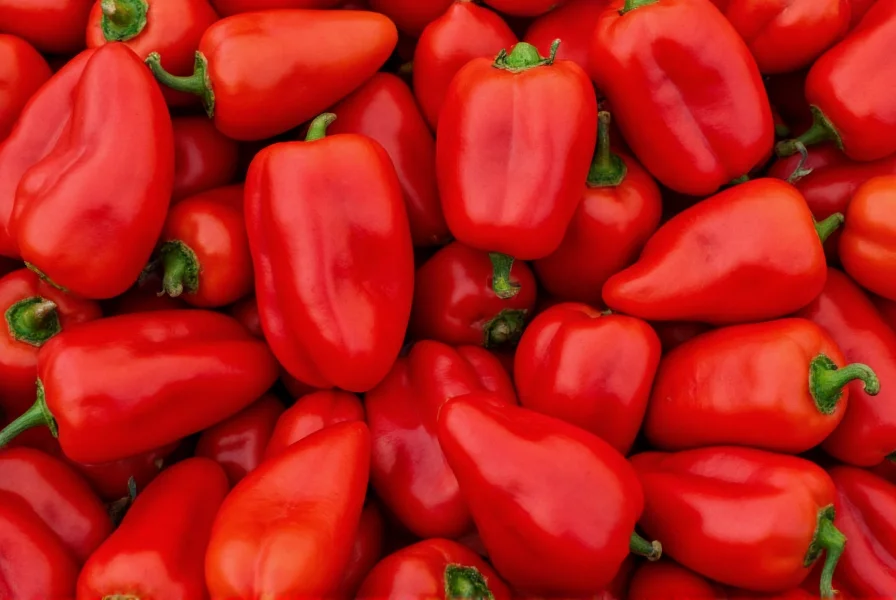
Red Pepper Isn’t a Heat Gauge—It’s a Texture Signal
Most people assume red pepper’s hue correlates with capsaicin level: deeper red = hotter. This idea spreads through label design (‘smoked paprika’, ‘hot Hungarian’, ‘sweet Spanish’), reinforced by supermarket shelf logic—darker jars sit beside ‘extra hot’ stickers. But in daily use, that assumption backfires. A family making weekly tomato sauce may reach for a brick-red flake thinking it’ll add punch, only to find it contributes zero heat and clumps badly when stirred into cold yogurt. Or worse: they discard a pale, dusty-looking jar labeled ‘mild’—not realizing its fine grind and low moisture make it dissolve cleanly into vinaigrettes where the vivid red version turns greasy and grainy.
The color-to-heat rule doesn’t matter when you’re seasoning a pot of lentils over low heat for 45 minutes. Capsaicin migrates and mutes; visual intensity becomes irrelevant. It also doesn’t matter when storing opened flakes for more than three weeks—oxidation dulls color faster than it degrades pungency, so judging freshness by shade misleads. What *does* shift is texture response: how quickly the flake absorbs oil, whether it disperses evenly in dairy, how much it dusts off when shaken over pizza. These aren’t abstract qualities—they’re physical behaviors tied to drying method, particle size, and residual moisture—not pigment concentration.
First invalid fixation: ‘Is it smoked?’ Smoked red pepper isn’t inherently hotter or milder—it’s just less hygroscopic. The smoke layer seals surface pores, slowing oil absorption. That makes it stable in olive oil blends but prone to floating atop soups unless pre-toasted. Second invalid fixation: ‘Is it ground or flaked?’ Grain size affects dispersion speed, not heat delivery. A superfine powder from a deep-red chile may still register as mild on the tongue if the cultivar is low-capsaicin—yet it’ll cloud broth instantly. Neither smoking nor grinding changes the core thermal signature; both change mechanical behavior in home prep.
The real constraint isn’t heat control—it’s pantry humidity. In many homes, especially those without air conditioning or with exterior-facing cabinets, red pepper flakes gain moisture within days of opening. That moisture triggers clumping, encourages rancidity in volatile oils, and makes flakes stick to spoons instead of scattering. You can’t fix this with ‘better storage’ alone: standard glass jars lack vapor barriers, and paper envelopes (common in bulk bins) accelerate moisture transfer. The result isn’t spoiled spice—it’s inconsistent performance: same jar, same shake, different outcome across seasons.
When reheating leftover chili, use the darker red flake—it holds up to simmering without turning bitter. When finishing raw avocado toast, choose the paler, drier flake—it adheres cleanly and won’t weep oil onto bread. When building a spice blend for dry-rubbed chicken, skip color entirely and test flake brittleness: snap one between fingers—if it crumbles silently, it’s low-moisture and will mix evenly; if it bends or sticks, it’s already absorbing ambient humidity and will gum up your rub. In a home kitchen, inconsistent flake behavior ruins more dishes than incorrect heat level ever does.
Here’s what works instead of color-based guessing: hold the jar to light and tilt slowly. If flakes slide freely and don’t cling to the glass, moisture is low—even if color is faded. If they smear or leave residue, discard or repurpose for oil infusions only. Don’t smell for ‘freshness’—volatile oils degrade before aroma fades. Don’t rely on expiration dates—most are arbitrary and ignore your kitchen’s microclimate. And never re-toast flakes to ‘revive’ them: that burns delicate esters and amplifies bitterness without restoring dispersion.
| What people fixate on | What it affects | When it matters | When it doesn't |
|---|---|---|---|
| Deep red vs. brick red color | Perceived heat level | When serving raw, uncooked applications (e.g., garnish on hummus) | During slow-cooked stews or baked dishes |
| Smoked vs. unsmoked labeling | Oil absorption rate | In oil-based marinades or infused vinegars | In dry rubs or sprinkled over finished food |
| Flake thickness (coarse vs. fine) | Dispersion in liquids | When stirring into cold dressings or yogurt dips | When roasting whole flakes with garlic and oil |
| “Hungarian” or “Spanish” origin claim | Regional drying conditions (humidity exposure) | In humid climates where stored flakes soften quickly | In climate-controlled pantries with sealed containers |
Quick verdicts for home cooks
- If your red pepper clumps in the shaker, switch to a paler, drier batch—even if it looks less ‘vibrant’.
- For creamy dips, prioritize flake brittleness over color: snap one—if it crumbles, it’ll disperse cleanly.
- When cooking for kids, ignore heat labels—test a pinch in warm milk first; color won’t predict burn.
- If you store spices near the stove, choose smoked red pepper: its surface seal resists steam better.
- For weeknight stir-fries, use coarse flakes—they bloom faster in hot oil than fine powders.
- When substituting dried red pepper for fresh chiles, match texture, not Scoville: brittle flakes mimic jalapeño skin, not heat.
Frequently asked questions
Why do people think darker red pepper is always hotter?
Because packaging, photography, and culinary folklore equate saturation with potency—ignoring that drying time, sun exposure, and cultivar genetics affect color far more than capsaicin concentration.
Is it actually necessary to refrigerate red pepper flakes?
No—unless your kitchen exceeds 80°F (27°C) regularly and humidity stays above 60%. In most homes, a cool, dark cabinet outperforms a fridge’s condensation risk.
What happens if you ignore flake texture and only judge by color?
You’ll mispredict how it behaves in oil, dairy, or dry mixes—leading to greasy sauces, gritty dressings, or uneven rubs—while heat level remains incidental.




 浙公网安备
33010002000092号
浙公网安备
33010002000092号 浙B2-20120091-4