
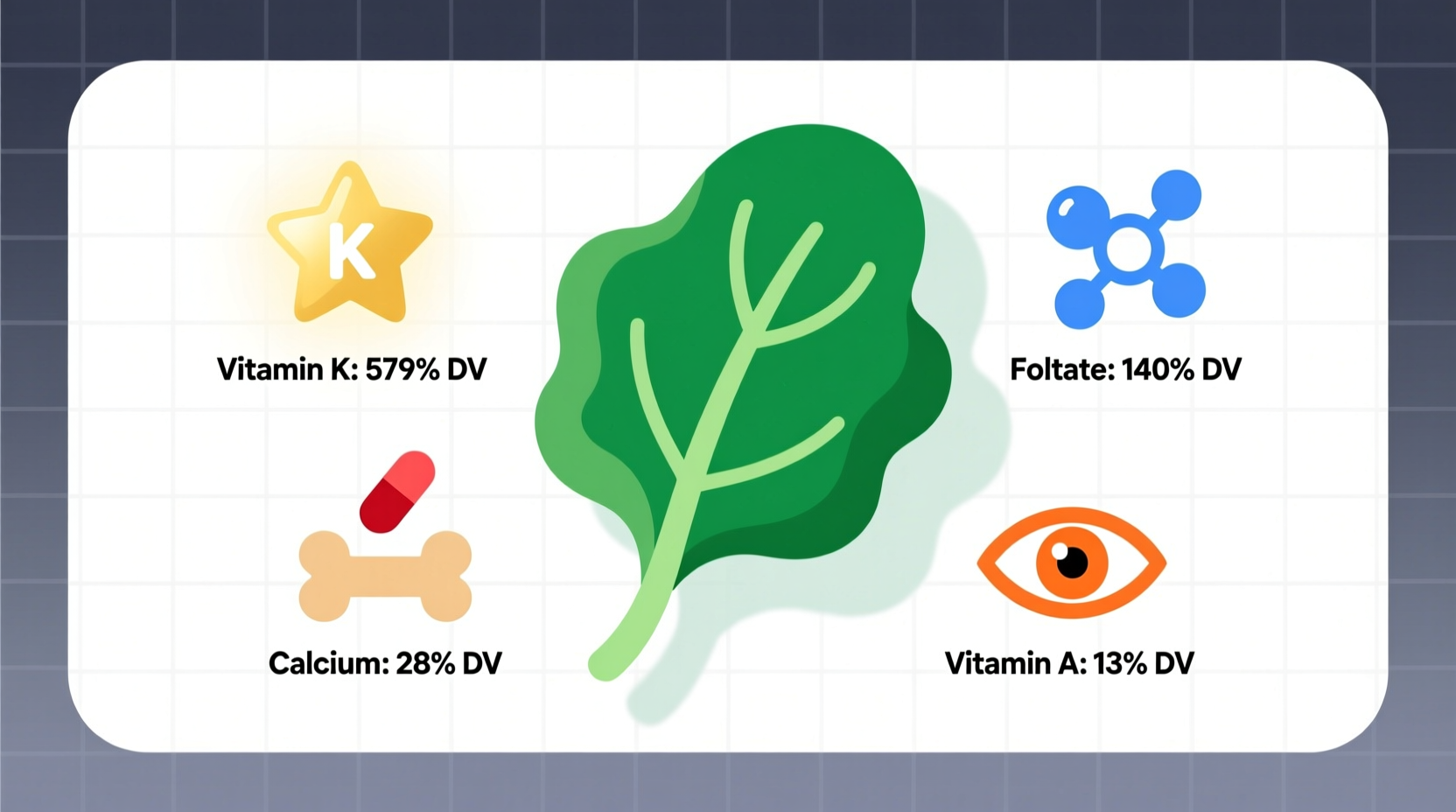
One cup (30g) of raw spinach contains just 7 calories while delivering 181% of your daily vitamin K, 56% of vitamin A, and 15% of folate. This nutrient-dense leafy green also provides magnesium, iron, and antioxidants like lutein that support eye health and reduce inflammation.
Spinach isn't just Popeye's favorite superfood—it's a nutritional powerhouse backed by decades of scientific research. Whether you're blending it into smoothies, sautéing it with garlic, or adding it to salads, understanding exactly what makes spinach so beneficial can transform how you incorporate it into your daily meals.
Your Complete Spinach Nutrition Profile
USDA FoodData Central provides the most reliable nutrition information for raw spinach per 100g serving. This standardized measurement allows for accurate comparisons across different preparation methods:
| Nutrient | Amount | % Daily Value |
|---|---|---|
| Calories | 23 kcal | 1% |
| Protein | 2.9g | 6% |
| Fiber | 2.2g | 8% |
| Vitamin K | 483mcg | 402% |
| Vitamin A | 9377IU | 188% |
| Folate | 194mcg | 49% |
| Magnesium | 79mg | 19% |
| Iron | 2.7mg | 15% |
This comprehensive nutrient profile explains why spinach consistently ranks among the top recommended vegetables by nutritionists worldwide. The vitamin K content alone provides more than four times your daily requirement in a single serving, crucial for proper blood clotting and bone metabolism.
Science-Backed Health Benefits of Spinach
Research published in the American Journal of Clinical Nutrition confirms that regular spinach consumption delivers measurable health improvements. The timeline of spinach research reveals evolving understanding of its benefits:
- 1980s-1990s: Early studies identified spinach as rich in beta-carotene and lutein, linking these compounds to reduced risk of age-related macular degeneration
- 2000s: Researchers discovered spinach's nitrates improve blood flow and lower blood pressure, with effects measurable within 90 minutes of consumption
- 2010s: Studies demonstrated spinach's thylakoids increase satiety hormones, helping with weight management by reducing cravings by up to 21%
- 2020s: Current research focuses on spinach's epigenetic effects—how its nutrients influence gene expression related to inflammation and chronic disease prevention
Practical Nutrition Optimization Tips
Maximize spinach's nutritional benefits with these evidence-based preparation techniques:
Cooking Methods That Preserve Nutrients
While raw spinach retains water-soluble vitamins like vitamin C, light cooking actually increases bioavailability of fat-soluble nutrients. A study in the Journal of Agricultural and Food Chemistry found that steaming spinach for 3-5 minutes increases beta-carotene absorption by 50% compared to raw consumption. Pairing spinach with healthy fats like olive oil or avocado enhances absorption of vitamins A, E, and K.
Spinach vs. Other Leafy Greens: When to Choose Which
Understanding the nutritional differences helps you make strategic choices:
- Spinach vs. Kale: Spinach contains more vitamin K and folate, while kale has higher vitamin C. Spinach's iron is more bioavailable when cooked, whereas kale's vitamin C content makes it better raw.
- Spinach vs. Arugula: Arugula provides more calcium per serving, but spinach delivers significantly more magnesium and folate.
- Spinach vs. Swiss Chard: Both are excellent potassium sources, but spinach contains nearly double the iron of Swiss chard.
Important Considerations and Limitations
While spinach offers remarkable benefits, certain health conditions require moderation:
- Blood Thinners: The extremely high vitamin K content (402% DV) can interfere with warfarin medication. Those on blood thinners should maintain consistent daily intake rather than varying amounts.
- Kidney Stones: Spinach contains oxalates that may contribute to calcium-oxalate kidney stones in susceptible individuals. Boiling reduces oxalate content by up to 40% compared to raw consumption.
- Iron Absorption: Though rich in iron, spinach's non-heme iron has lower bioavailability. Pair with vitamin C-rich foods like citrus or bell peppers to increase absorption by up to 300%.
Easy Ways to Incorporate More Spinach Daily
You don't need large portions to gain benefits. Try these practical approaches:
- Add 1 cup raw spinach to smoothies (it disappears flavor-wise while adding nutrients)
- Substitute half the lettuce in salads with baby spinach for double the nutrition
- Stir frozen spinach into soups, stews, and pasta sauces during the last 5 minutes of cooking
- Create spinach pesto by blending with basil, garlic, pine nuts, and olive oil
- Make spinach pancakes by adding pureed cooked spinach to your favorite batter




 浙公网安备
33010002000092号
浙公网安备
33010002000092号 浙B2-20120091-4