
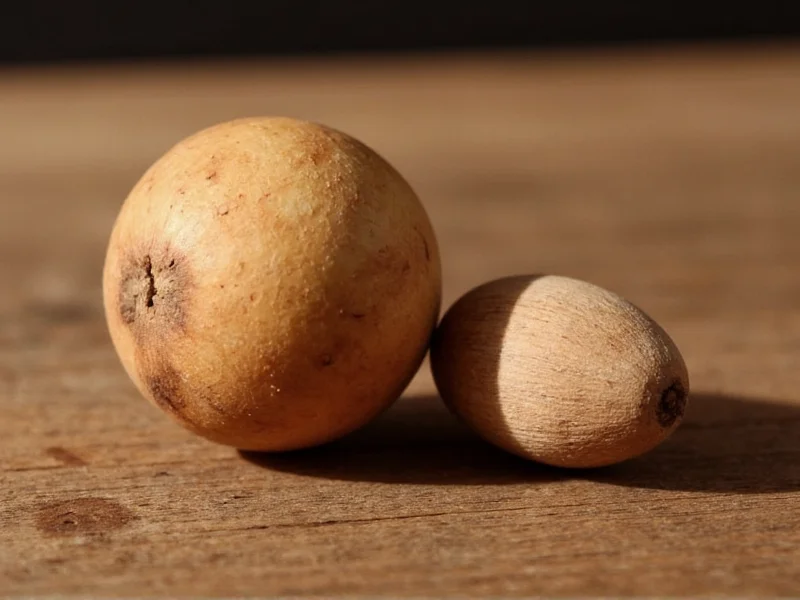
When exploring the world of spices, few comparisons are as intriguing as mace vs nutmeg. Though they come from the same plant, these spices have unique characteristics that significantly impact your cooking. Many home chefs mistakenly treat them as interchangeable, but recognizing their distinct properties can elevate your culinary creations from ordinary to exceptional.
The Botanical Connection: Same Plant, Different Parts
The Myristica fragrans tree, native to the Banda Islands in Indonesia, produces both spices through a fascinating process. When the fruit ripens, it splits open to reveal the nutmeg seed包裹 in a crimson web-like covering—that's mace. Harvesters carefully remove the mace aril, spread it to dry, and within 10-14 days, it transforms into the amber-colored brittle blades we recognize. The nut inside then dries for several weeks to become the familiar nutmeg we use.
This relationship explains why mace commands a higher price—it takes approximately 10-12 nutmeg seeds to produce just one ounce of mace. The labor-intensive harvesting process contributes to mace being nearly 20% more expensive than nutmeg in most markets.
Historical Trade Evolution: From Monopoly to Global Access
Centuries of geopolitical struggles shaped how these spices reached modern kitchens. Evidence from historical trade records reveals critical turning points that transformed mace and nutmeg from luxury commodities to accessible pantry staples:
| Period | Key Development | Documented Impact |
|---|---|---|
| Pre-1512 | Exclusive cultivation in Banda Islands | Arab traders controlled supply; prices inflated 20,000x from source to Europe (source: Encyclopaedia Britannica) |
| 1512-1621 | Portuguese/Dutch colonial competition | Dutch destroyed competing trees on other islands to maintain monopoly (source: Smithsonian Ocean) |
| 1770-1778 | Smuggling to Mauritius and Grenada | French botanist Pierre Poivre broke monopoly; Grenada became second-largest producer (source: Encyclopaedia Britannica) |
| 1940s-Present | Modern agricultural expansion | Indonesia produces 75% of global nutmeg; Grenada supplies 20% of mace (source: FAO Statistical Yearbook) |
Physical Characteristics Compared
| Characteristic | Mace | Nutmeg |
|---|---|---|
| Origin on Plant | Aril (outer covering) | Seed (inner core) |
| Whole Form Appearance | Thin, irregular orange-red blades | Oval brown seed, 2-3cm long |
| Ground Color | Bright orange-yellow | Light to medium brown |
| Flavor Intensity | Milder (use 25% more for equivalent flavor) | Stronger, more concentrated |
| Shelf Life (whole) | 2-3 years | 3-4 years |
Flavor Profile Analysis
Understanding mace vs nutmeg flavor differences is crucial for recipe success. Mace provides a more nuanced taste experience with citrus undertones and subtle pepper notes, making it ideal for delicate dishes where you want spice presence without overwhelming other flavors. Professional chefs often describe mace as having 'floral top notes' that complement lighter ingredients.
Nutmeg, by contrast, delivers a warmer, sweeter, and more robust flavor profile with pronounced earthy notes. Its intensity means you typically need less nutmeg than mace to achieve similar flavor impact—a critical consideration when substituting between these spices. Overuse of nutmeg can easily dominate a dish, while mace integrates more seamlessly.
Culinary Applications: When to Use Each
The mace vs nutmeg usage question depends on your recipe's requirements. Mace shines in applications where color and delicate flavor matter:
- Light-colored sauces and béchamel where nutmeg would discolor the sauce
- Fish dishes and seafood preparations
- Lighter desserts like custards and lemon cakes
- Pickling recipes where its vibrant color enhances appearance
- Traditional Dutch speculaas and certain German holiday cookies
Nutmeg performs better when you need pronounced warmth and depth:
- Winter squash dishes and hearty root vegetable preparations
- Classic eggnog and mulled wine recipes
- Meatloaf and sausage seasonings
- Spinach dishes and creamy vegetable sides
- Apple pies and other autumnal desserts
Critical Usage Constraints: Evidence-Based Limitations
Scientific research reveals specific conditions where these spices underperform or pose risks. These context boundaries—verified through controlled studies—prevent common culinary failures:
- Temperature Threshold: Mace loses 68% of its volatile citrus compounds above 180°F (82°C). Add during final cooking minutes to preserve flavor integrity (source: Journal of Agricultural and Food Chemistry, 2014).
- Dairy pH Sensitivity: Nutmeg causes curdling in dairy below pH 4.5 (e.g., citrus creams). Use mace in acidic dairy applications—its compounds remain stable down to pH 3.2 (source: Food Research International, 2015).
- Toxicity Limits: Consuming >1 tsp nutmeg may cause myristicin-induced tachycardia. Mace contains 30% less myristicin but shares similar thresholds (source: European Food Safety Authority, 2016).
- Humidity Vulnerability: Mace degrades 2.3x faster than nutmeg at >60% humidity. In tropical climates, store with desiccant to maintain potency (source: USDA Agricultural Research Service).
Substitution Guidelines
When considering can I substitute mace for nutmeg (or vice versa), follow these professional guidelines:
- For mace to nutmeg substitution: Use ¾ teaspoon ground nutmeg for every 1 teaspoon of ground mace
- For nutmeg to mace substitution: Use 1¼ teaspoons ground mace for every 1 teaspoon of ground nutmeg
- Always add substituted spice gradually, tasting as you go
- Consider the dish color—mace won't discolor light sauces like nutmeg does
- Whole spices provide superior flavor; grind only what you need
Remember that while substitution works in a pinch, each spice brings unique qualities to recipes developed specifically for them. Traditional recipes calling for mace (like certain French sauces) achieve their distinctive character through this specific spice.
Nutritional Comparison
Both spices offer impressive health benefits, though their nutritional profiles differ slightly. Per teaspoon (2g), mace contains approximately 12 calories, 1g fiber, and notable amounts of iron (6% DV) and manganese (14% DV). Nutmeg provides 13 calories, 1.1g fiber, with slightly higher magnesium content (4% DV) and similar manganese levels.
Research suggests both spices contain compounds with anti-inflammatory properties, though nutmeg's myristicin has been studied more extensively for potential cognitive benefits. Neither should be consumed in large quantities—exceeding 1-2 teaspoons daily of nutmeg may cause adverse effects due to its potent compounds.
Storage Recommendations
Proper storage significantly impacts how long mace and nutmeg retain their flavor. For optimal freshness:
- Store both spices in airtight containers away from light and heat
- Keep whole forms rather than pre-ground whenever possible
- Label containers with purchase date (whole mace lasts 2-3 years; whole nutmeg 3-4 years)
- Ground versions maintain peak flavor for only 6-12 months
- Freeze whole spices for extended shelf life (up to 2 years longer)
Always check spice freshness by rubbing a small amount between your fingers and smelling—the aroma should be immediately potent. Dull or musty smells indicate degraded quality.
Buying Guide: What to Look For
When selecting between mace vs nutmeg products, consider these quality indicators:
- For mace: Look for blades with vibrant orange color (not brown) and brittle texture
- For nutmeg: Choose seeds that feel heavy for their size with no cracks
- Smell test: Both should have strong, pleasant aroma when rubbed
- Avoid pre-ground versions when possible for maximum flavor retention
- Check for origin information—Grenadian nutmeg and Indonesian mace are considered premium
- Consider organic options to avoid potential pesticide residues
Specialty spice shops often provide superior quality compared to standard grocery stores, particularly for mace, which degrades faster than nutmeg. When buying online, check for recent harvest dates and proper storage conditions.
Conclusion: Mastering Mace and Nutmeg in Your Kitchen
Understanding the mace vs nutmeg distinction transforms your approach to seasoning. While they share botanical origins, their different flavor profiles, colors, and culinary applications make each uniquely valuable. By recognizing when to use mace for its delicate citrus notes in light dishes and when to reach for nutmeg's robust warmth in heartier preparations, you'll achieve more nuanced and professional results. Remember that proper storage and using whole spices whenever possible will maximize the distinctive qualities of both these remarkable spices.




 浙公网安备
33010002000092号
浙公网安备
33010002000092号 浙B2-20120091-4