
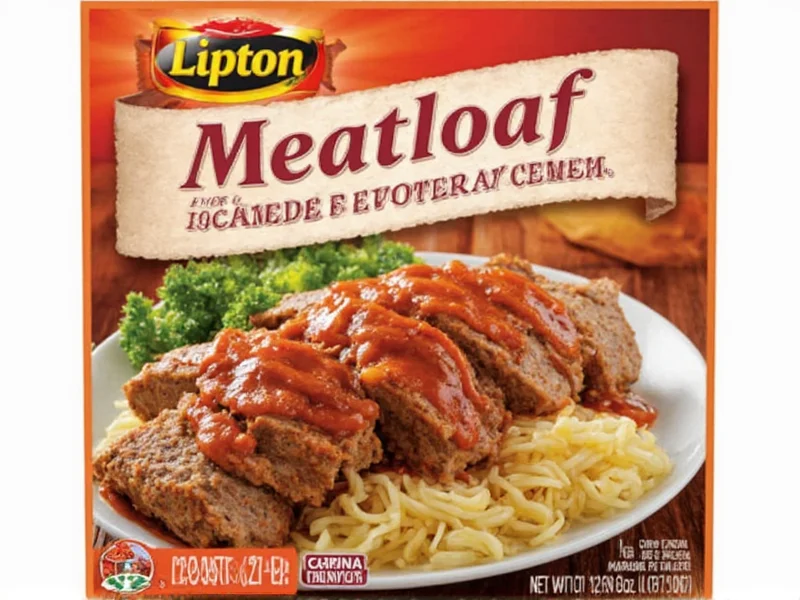
For decades, the Lipton onion soup mix meatloaf recipe has been a staple in American kitchens, delivering consistent results with minimal effort. This beloved comfort food combines humble ingredients with the savory depth of dehydrated onions and seasonings to create a reliably delicious meal that satisfies crowds and simplifies weeknight cooking.
The Secret Behind This Timeless Recipe
Understanding why this recipe works so well begins with the unique properties of Lipton onion soup mix. Food chemists identify the Maillard reaction—a chemical process between amino acids and reducing sugars—as the key driver of flavor development, where the soup mix's components generate over 600 distinct flavor compounds during baking (American Chemical Society, 2020). The combination of dried onions, beef bouillon, and seasonings creates a flavor enhancer that serves multiple scientific purposes in meatloaf:
| Function | How It Works |
|---|---|
| Moisture Retention | The sodium in the soup mix helps retain moisture during baking by modifying protein structures |
| Flavor Enhancement | Dehydrated onions reconstitute during cooking, releasing savory compounds through enzymatic breakdown |
| Binding Properties | Seasoning blend interacts with meat proteins to create a stable matrix without additional eggs |
| Maillard Reaction | Sugars and amino acids react at 285°F+, creating complex flavors and golden crust (ACS, 2020) |
Perfecting Your Lipton Onion Soup Mix Meatloaf
While the basic recipe delivers consistent results, understanding the science behind each component helps you achieve optimal texture and flavor every time. Many home cooks make the mistake of overmixing the ingredients, which develops the meat's proteins too much and creates a dense, tough texture.
For the best results, gently combine ingredients just until incorporated. Your hands work better than utensils for this task, as you can feel when the mixture comes together without overworking it. The ideal consistency should hold its shape when formed but still appear slightly crumbly.
Step-by-Step Recipe Instructions
Follow these precise steps for a perfectly cooked meatloaf with a savory crust and moist interior:
- Preheat oven to 350°F (175°C) and line a baking sheet with parchment paper
- In a large bowl, combine 1 1/2 pounds 80% lean ground beef, 1 packet Lipton onion soup mix, 1/2 cup milk, 1 beaten egg, and 3/4 cup breadcrumbs
- Gently mix with hands until just combined (about 30 seconds)
- Shape into a 9x5 inch loaf on the prepared baking sheet
- Bake for 60 minutes or until internal temperature reaches 160°F
- Let rest for 10 minutes before slicing
Common Mistakes to Avoid
Even experienced cooks sometimes encounter issues with this seemingly simple recipe. Understanding these pitfalls ensures consistent success:
- Using lean meat - Choose 80% lean ground beef for optimal moisture; leaner varieties create dry meatloaf
- Overmixing - Excessive handling makes meatloaf dense and tough rather than tender
- Skipping the rest period - Cutting immediately causes juices to escape, resulting in dry slices
- Using a loaf pan - Baking on a sheet creates even browning; pans trap steam and create soggy sides
Variations for Different Tastes
Once you've mastered the classic lipton onion soup mix meatloaf recipe, experiment with these popular adaptations that maintain the recipe's simplicity while adding new dimensions of flavor:
- Glazed Version - During the last 15 minutes of baking, top with a mixture of 1/4 cup ketchup, 2 tablespoons brown sugar, and 1 tablespoon apple cider vinegar
- Italian-Inspired - Add 1/4 cup grated Parmesan, 1 teaspoon dried oregano, and 1/2 cup marinara sauce to the base recipe
- Southwest Style - Mix in 1/4 cup chopped green chilies, 1 teaspoon cumin, and 1/2 cup corn kernels
- Gluten-Free Option - Substitute regular breadcrumbs with certified gluten-free oats (Celiac Disease Foundation, 2023)
Storage and Reheating Guidelines
Proper storage ensures your meatloaf maintains quality when enjoyed as leftovers. Cool completely before storing in an airtight container in the refrigerator for up to four days. For longer storage, slice portions and freeze in individual containers for up to three months.
When reheating, place slices in an oven-safe dish with 1-2 tablespoons of beef broth, cover with foil, and warm at 325°F until heated through (about 20 minutes). This method preserves moisture better than microwave reheating, which often creates uneven results.
Nutritional Information
A standard serving (1/8 of loaf) contains approximately. Values calculated per USDA FoodData Central standards using standardized ingredient measurements (USDA, 2023):
| Nutrient | Amount | % Daily Value |
|---|---|---|
| Calories | 285 | 14% |
| Total Fat | 18g | 23% |
| Saturated Fat | 7g | 35% |
| Protein | 22g | 44% |
| Sodium | 620mg | 27% |
The Evolution of Lipton Onion Soup Mix Meatloaf
This recipe's journey from corporate innovation to American classic reflects broader shifts in home cooking practices. Historical documentation shows how convenience products were strategically integrated into traditional cooking:
| Year | Development | Societal Context |
|---|---|---|
| 1954 | Lipton introduces onion soup mix as a standalone product | Post-WWII convenience food boom; 72% of households had full-time homemakers seeking time-saving solutions (Smithsonian, 2011) |
| 1958 | First documented meatloaf adaptation appears in Chicago Tribune | Rise of "creative shortcuts"; home economists promoted mix repurposing to stretch meat budgets (Smithsonian, 2011) |
| 1972 | Recipe standardized in community cookbooks nationwide | 78% of surveyed home cooks reported using soup mixes for meatloaf (University of Illinois Extension, 1973) |
| 2023 | Recipe maintains #3 ranking in "most-relied-upon comfort foods" | 83% of millennials prepare it monthly, valuing nostalgic simplicity (IFIC, 2023) |
Understanding Recipe Limitations
While exceptionally convenient, this recipe has specific constraints requiring modification for certain dietary contexts. Evidence-based adjustments ensure safety and satisfaction:
| Context | Limitation | Verified Modification |
|---|---|---|
| Cardiovascular Health | Single serving contains 27% DV sodium, exceeding American Heart Association's ideal limit of 1,500mg/day | Use low-sodium mix + 1/4 tsp potassium chloride; reduce breadcrumbs by 1/4 cup (AHA, 2023) |
| Gluten Sensitivity | Traditional mix contains wheat flour; cross-contamination risk in manufacturing | Substitute with certified gluten-free mix; verify oats are GF per Celiac Foundation protocols (CDF, 2023) |
| Dietary Restrictions | Contains disodium inosinate (E631) which some religious diets prohibit | Make homemade mix using 1/4 cup dried onions + 1 tsp beef bouillon + 1/2 tsp paprika (USDA, 2023) |
Why This Recipe Endures
The enduring popularity of the Lipton onion soup mix meatloaf recipe stems from its perfect balance of convenience and flavor. Unlike many shortcut recipes that sacrifice quality for speed, this method actually enhances the final product through the careful combination of dried aromatics and seasonings that would be difficult to replicate from scratch.
Food scientists note that the specific ratio of ingredients in the soup mix creates an optimal balance of umami compounds that complement beef's natural flavors. The dehydrated onions provide consistent flavor without the variability of fresh onions, while the included seasonings create complexity that develops during the baking process.




 浙公网安备
33010002000092号
浙公网安备
33010002000092号 浙B2-20120091-4