
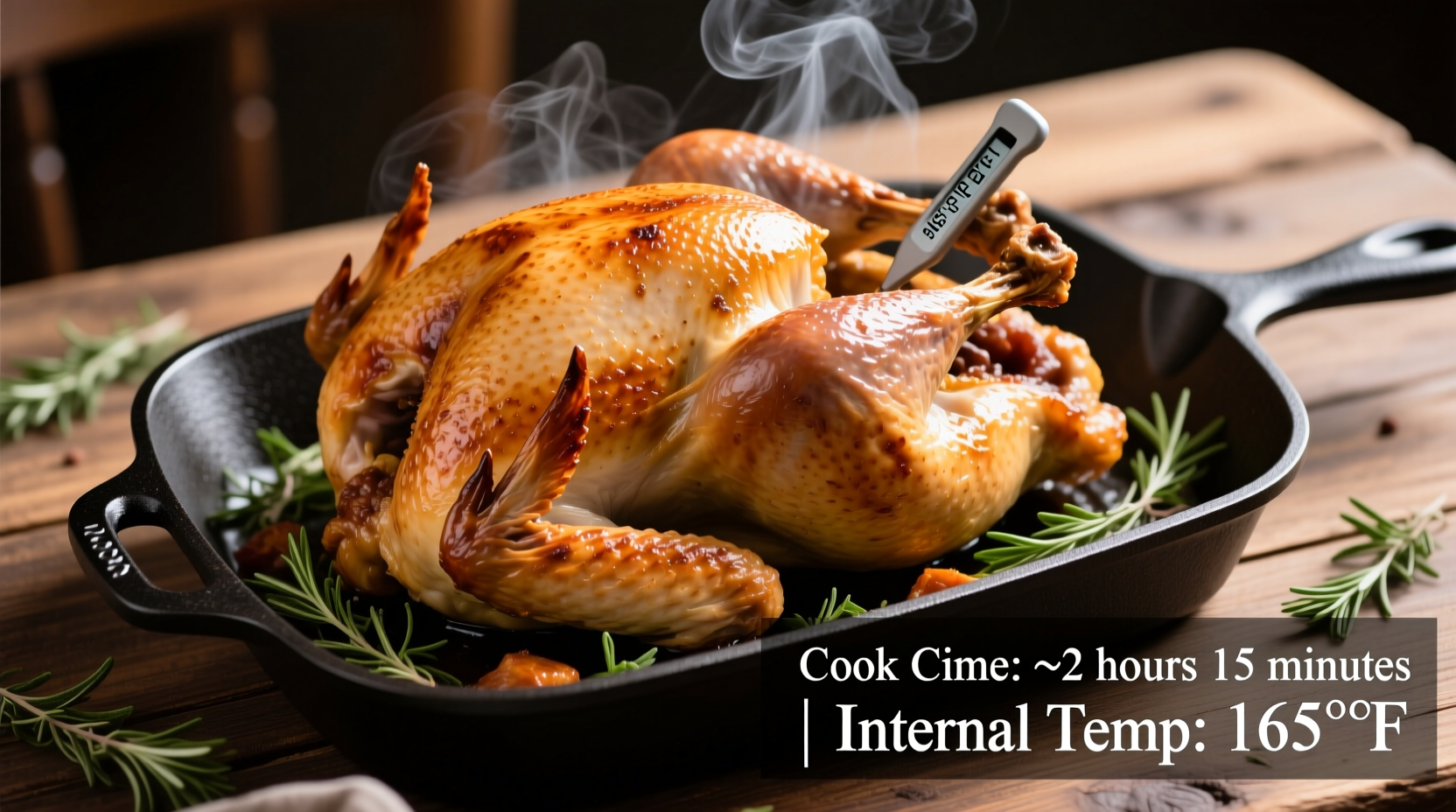
Getting the cooking time right for your turkey breast isn't just about following a recipe—it's about understanding food science, ensuring safety, and achieving that perfect balance between tenderness and flavor. Undercooked poultry poses serious health risks, while overcooked turkey becomes dry and disappointing. Let's break down exactly how to cook your 5-pound turkey breast to perfection.
Why Proper Cooking Time Matters for Turkey Breast
Cooking a turkey breast properly requires understanding how heat penetrates meat and when it reaches safe temperatures. The USDA Food Safety and Inspection Service emphasizes that poultry must reach 165°F internally to eliminate harmful bacteria like salmonella and campylobacter. However, cooking time alone isn't sufficient—internal temperature is the only reliable indicator of doneness.
Unlike whole turkeys, turkey breasts cook faster due to their smaller size and lack of bones in many preparations. The 5-pound size is common for holiday meals serving 6-8 people, making precise timing essential for meal planning.
Your Step-by-Step Cooking Journey
Preparation Phase: Setting Up for Success
Before your turkey even enters the oven, proper preparation affects cooking time:
- Thaw completely: A frozen turkey breast adds 25-50% more cooking time. Allow 24 hours of refrigerator thawing per 4-5 pounds
- Bring to room temperature: Let the turkey sit out for 30-60 minutes before cooking for more even heat distribution
- Dry the surface: Pat thoroughly with paper towels—moisture creates steam that prevents proper browning
- Season wisely: Heavy rubs or wet marinades can slightly alter cooking time by creating a barrier
Cooking Phase: Timing and Temperature Control
The actual roasting process follows these critical guidelines:
| Weight | Oven Temp | Approximate Time | Internal Temp |
|---|---|---|---|
| 3-4 lbs | 325°F | 1h 45m-2h 15m | 165°F |
| 5 lbs | 325°F | 2h 15m-2h 30m | 165°F |
| 6-7 lbs | 325°F | 2h 45m-3h 15m | 165°F |
According to the USDA Food Safety and Inspection Service's Safe Minimum Cooking Temperatures chart, all poultry must reach 165°F internally. The chart above provides approximate times, but always verify with a thermometer.
Place your turkey breast on a rack in a roasting pan, skin-side up. For more accurate timing:
- Start checking temperature 30 minutes before expected finish time
- Insert thermometer into thickest part, avoiding bone or fat pockets
- Account for oven variations—most home ovens fluctuate 15-25°F
Checking Phase: The Critical Temperature Moment
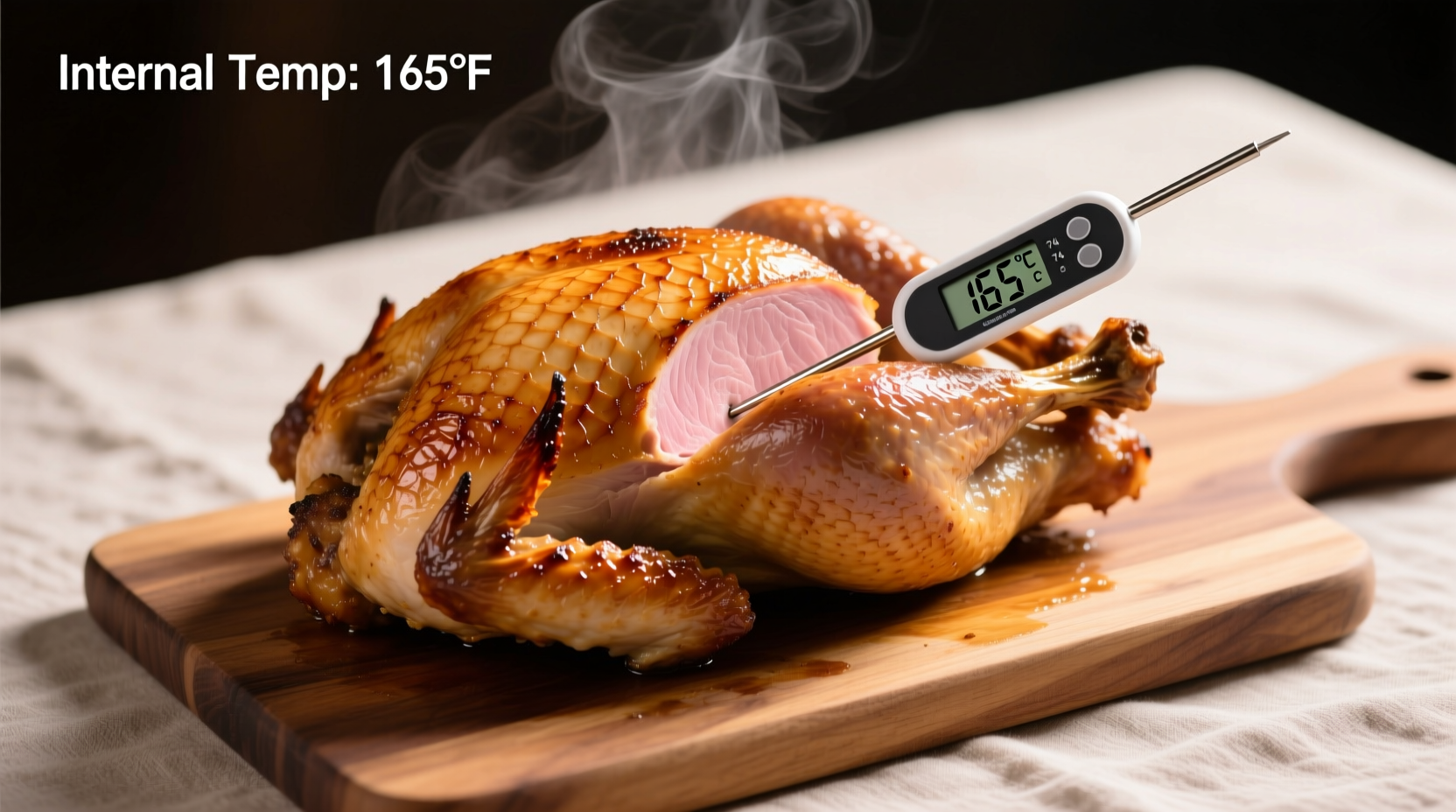
Timing alone won't guarantee perfect results. The moment of truth comes when checking internal temperature:
- Use an instant-read thermometer for accuracy (within ±1°F)
- Check multiple spots—the breast should read 165°F consistently
- Remember carryover cooking: Temperature rises 5-10°F after removal from oven
Food science research from the University of Minnesota Extension confirms that removing turkey at 160°F allows carryover cooking to safely reach 165°F while preventing overcooking. This technique preserves juiciness while meeting safety standards.
Resting Phase: The Often-Missed Step
After reaching proper temperature, rest your turkey breast for 15-20 minutes before carving. This critical step allows:
- Proteins to reabsorb juices that would otherwise run out
- Temperature to equalize throughout the meat
- Carryover cooking to complete the process
Cutting too soon releases precious moisture, resulting in drier meat despite perfect cooking time.
Common Timing Mistakes and How to Avoid Them
Even with good intentions, home cooks frequently make these timing errors:
- Relying solely on time: Oven variations mean time is just an estimate—always use a thermometer
- Checking too frequently: Each oven opening drops temperature by 25-50°F, extending cooking time
- Ignoring starting temperature: Cold turkey from the fridge adds 15-20 minutes to cooking time
- Misplacing the thermometer: Reading near bone or fat gives false high readings
Troubleshooting Your Turkey Breast Cooking
When things don't go according to plan:
- Cooking too fast: If your turkey is browning too quickly, reduce oven temperature by 25°F and tent loosely with foil
- Cooking too slow: If significantly behind schedule, increase oven temperature by 25°F but monitor closely
- Uneven cooking: Rotate the pan 180 degrees halfway through cooking for even heat exposure
Remember that convection ovens cook approximately 25% faster than conventional ovens. If using convection, reduce cooking time by 25% or lower temperature by 25°F.
Why Timing Varies: The Science Behind the Numbers
Several factors affect how long your 5 lb turkey breast needs to cook:
- Oven calibration: Most home ovens have significant temperature variations
- Pan material: Dark metal pans cook faster than glass or ceramic
- Rack position: Middle rack provides most even heating
- Starting temperature: Room temperature turkey cooks more evenly than cold
- Stuffing or brining: Moisture content affects heat transfer rates
Food safety researchers at the USDA's Food Safety and Inspection Service have established that the critical danger zone for poultry is between 40°F and 140°F. Your turkey should pass through this zone as quickly as possible during cooking to minimize bacterial growth.
Perfecting Your Turkey Breast: Pro Tips
For consistently excellent results:
- Use a probe thermometer with an alarm set to 160°F
- Position the turkey breast with thicker end toward the oven's heat source
- Baste only during the last 30 minutes to prevent skin from becoming soggy
- Consider a dry brine (salt rub) 12-24 hours before cooking for better moisture retention
Frequently Asked Questions
How long should I cook a 5 lb bone-in turkey breast?
A 5 lb bone-in turkey breast typically requires 2 hours and 30 minutes to 2 hours and 45 minutes at 325°F. The bone adds cooking time but helps retain moisture. Always verify with a thermometer—internal temperature should reach 165°F in the thickest part.
Can I cook a frozen 5 lb turkey breast?
Yes, but it will take approximately 50% longer than a thawed turkey breast—about 3 hours and 15 minutes at 325°F. Never cook a frozen turkey breast in a slow cooker, as it remains in the danger zone too long. Always use a meat thermometer to verify it reaches 165°F internally.
Why does my turkey breast finish cooking faster than the recommended time?
Several factors can accelerate cooking: oven running hotter than indicated, using a convection setting, starting with room-temperature turkey, or using a dark roasting pan. Always rely on internal temperature (165°F) rather than time alone for doneness determination.
How do I prevent my turkey breast from drying out?
To prevent dryness: remove at 160°F (allowing carryover cooking to reach 165°F), rest for 15-20 minutes before carving, use a dry brine 12-24 hours ahead, and avoid overcooking. Positioning the turkey with the thicker end toward the heat source promotes even cooking.
Can I use a higher oven temperature to cook my turkey breast faster?
While you can increase temperature to 375°F for the first 30 minutes to promote browning, then reduce to 325°F, cooking at consistently high temperatures (above 350°F) often results in uneven cooking—browned exterior with undercooked interior. The recommended 325°F provides the most reliable results for a 5 lb turkey breast.




 浙公网安备
33010002000092号
浙公网安备
33010002000092号 浙B2-20120091-4