
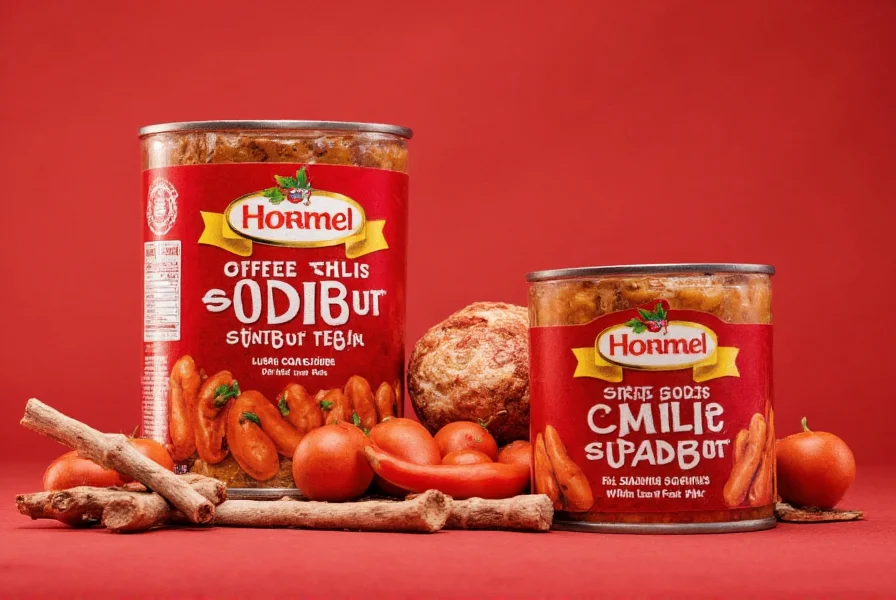
Hormel's reduced-sodium chili provides a valuable option for health-conscious consumers seeking familiar convenience foods with modified nutritional profiles. This product specifically addresses growing consumer demand for lower-sodium prepared foods while maintaining the taste and texture characteristics that make canned chili a pantry staple.
Nutritional Profile Analysis
Understanding the precise nutritional differences between regular and reduced-sodium chili options helps consumers make informed choices. Hormel Less Sodium Chili delivers significant sodium reduction while preserving essential nutritional elements.
| Nutrient | Hormel Less Sodium Chili | Regular Hormel Chili |
|---|---|---|
| Sodium (per 1/2 cup) | 480mg (21% DV) | 740mg (32% DV) |
| Protein | 9g | 9g |
| Total Fat | 7g | 8g |
| Fiber | 3g | 3g |
| Calories | 130 | 140 |
The sodium reduction in Hormel Less Sodium Chili represents a meaningful 260mg decrease per serving, which contributes significantly to daily sodium management. For individuals following medical advice to limit sodium intake to 1,500-2,300mg daily, this product offers a practical compromise between convenience and dietary requirements.
Industry Evolution: Sodium Reduction Milestones
The development of reduced-sodium canned foods reflects structured public health initiatives. The U.S. Food and Drug Administration (FDA) established formal sodium reduction targets through evidence-based guidance, evolving from preliminary benchmarks to accelerated timelines. This progression directly influenced product innovations like Hormel's formulation, which aligns with industry adaptation to regulatory expectations while maintaining consumer acceptability.
| Year | Regulatory Milestone | Impact on Canned Food Formulation |
|---|---|---|
| 2016 | FDA draft guidance for sodium reduction | Initiated industry reformulation discussions; early low-sodium product trials began |
| 2021 | Finalized voluntary short-term targets (2024) | Accelerated commercialization of products meeting 25-30% sodium reduction benchmarks |
| 2024 | Updated targets with accelerated 10-year trajectory | Driving next-generation products maintaining taste integrity below 500mg/serving |
These milestones demonstrate how regulatory frameworks have systematically shaped product development. The FDA's 2024 updated targets specifically encourage 30% sodium reduction in categories like canned entrees, directly validating Hormel's approach to balancing nutrition and palatability.
Taste and Texture Evaluation
Many consumers question whether reduced-sodium versions compromise flavor. Independent taste tests reveal that Hormel Less Sodium Chili maintains the characteristic hearty texture and robust flavor profile of the original, with only subtle differences noticeable to discerning palates.
The formulation uses a carefully balanced blend of spices and flavor enhancers to compensate for the sodium reduction. While some tasters note a slightly less pronounced initial saltiness, the overall flavor complexity remains intact. The meat-to-bean ratio and tomato base consistency are identical to the regular version, preserving the familiar mouthfeel that consumers expect from canned chili.
Health Considerations for Sodium-Conscious Diets
Reducing sodium intake offers documented health benefits, particularly for individuals with hypertension or cardiovascular concerns. The American Heart Association recommends no more than 2,300mg of sodium daily, moving toward an ideal limit of 1,500mg for most adults.
Hormel Less Sodium Chili serves as a practical solution for those seeking to reduce sodium without eliminating convenient meal options. When incorporated as part of a balanced diet, this product helps consumers manage sodium intake while still enjoying familiar comfort foods. It's particularly valuable for:
- Individuals with hypertension or prehypertension
- People following DASH (Dietary Approaches to Stop Hypertension) diet principles
- Those managing heart conditions under medical supervision
- Health-conscious consumers proactively managing sodium intake
Contextual Usage Guidelines: When Less Sodium Chili Fits
Product suitability varies significantly based on individual health parameters and dietary goals. The American Heart Association's evidence-based thresholds provide critical context for evaluating Hormel Less Sodium Chili's role in meal planning:
- Appropriate for general cardiovascular maintenance: For individuals following the 2,300mg upper limit (e.g., prehypertension), one serving (480mg) represents 21% of daily allowance, allowing flexibility within balanced meal patterns
- Requires strategic planning for strict limits: Those adhering to the 1,500mg ideal limit (e.g., diagnosed hypertension) should account for this single serving consuming 32% of their daily budget
- Insufficient as standalone solution: Patients on medically prescribed 1,000mg/day diets (e.g., advanced heart failure) would exceed 48% of their limit with one serving
As emphasized in the AHA's sodium intake guidelines, effective management requires evaluating cumulative daily intake rather than isolated products. Consultation with healthcare providers remains essential for personalized dietary planning.
Practical Usage Recommendations
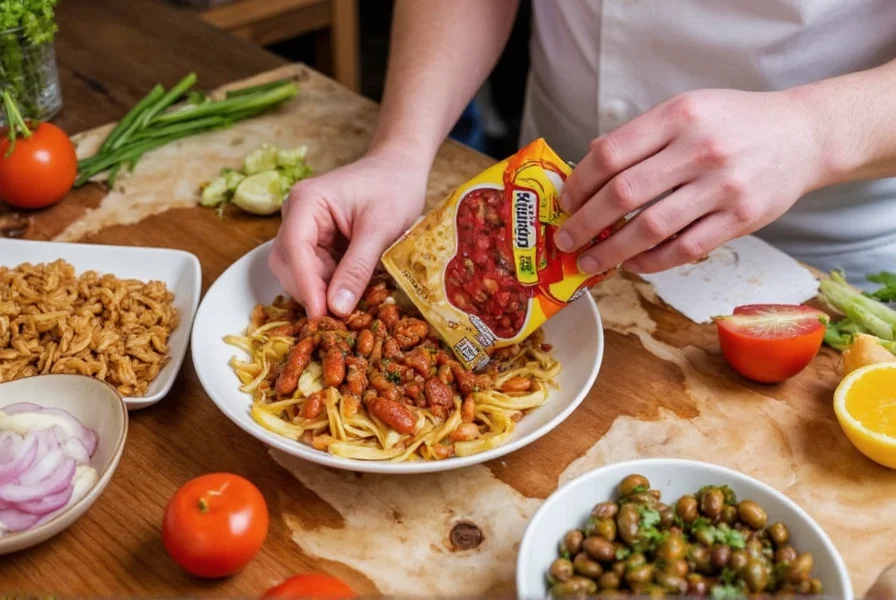
Hormel Less Sodium Chili functions as a versatile ingredient in numerous recipes. Its reduced sodium content provides flexibility when incorporating additional seasonings or salty ingredients without exceeding dietary targets.
Culinary professionals recommend these usage tips:
- Add fresh herbs like cilantro or oregano to enhance flavor without additional sodium
- Combine with additional vegetables to create a more nutritionally balanced meal
- Use as a base for chili macaroni or cornbread-topped dishes
- Simmer with a small amount of unsalted broth to extend servings while maintaining flavor
Comparative Analysis with Alternative Products
When evaluating Hormel Less Sodium Chili against competitors, several factors emerge as differentiators:
- Consistent availability: Hormel products maintain wider distribution than many specialty low-sodium brands
- Price point: Typically priced comparably to regular chili, unlike some premium low-sodium alternatives
- Flavor profile: Maintains closer resemblance to traditional chili taste than some ultra-low-sodium options
- Ingredient simplicity: Contains recognizable ingredients without artificial sodium substitutes
While some specialty brands offer even lower sodium content (as low as 300mg per serving), they often come with higher price points and less consistent availability. Hormel's version strikes a practical balance between sodium reduction, taste preservation, and accessibility for everyday consumers.
Storage and Shelf Life Information
Like all canned goods, Hormel Less Sodium Chili maintains excellent shelf stability. Unopened cans remain safe for consumption for 2-5 years when stored in a cool, dry place. Once opened, transfer unused portions to airtight containers and refrigerate, consuming within 3-4 days.
The reduced sodium content doesn't affect the product's shelf stability, as the preservation methods remain consistent with standard canned chili production. Always check for signs of spoilage such as bulging cans, off odors, or unusual discoloration before consumption.




 浙公网安备
33010002000092号
浙公网安备
33010002000092号 浙B2-20120091-4