
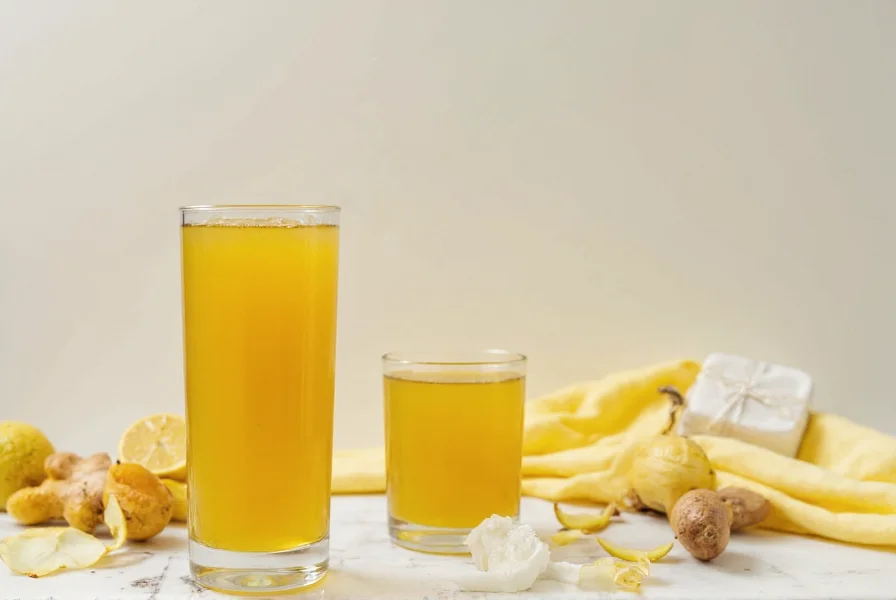
Organic ginger juice represents nature's potent remedy in its purest form. Unlike conventionally grown ginger, organic varieties are cultivated without synthetic pesticides, herbicides, or fertilizers, preserving the root's natural phytochemical profile. This distinction matters because ginger naturally absorbs soil compounds, making organic certification crucial for those seeking maximum health benefits without chemical exposure.
What Makes Ginger Juice Truly Organic
For ginger to qualify as organic, it must meet strict certification standards that vary by region but generally require:
| Certification Requirement | Conventional Ginger | Organic Ginger |
|---|---|---|
| Soil Management | Synthetic fertilizers permitted | 3+ years chemical-free soil |
| Pesticide Use | Synthetic pesticides allowed | Natural pest control only |
| Genetic Modification | No regulations | Prohibited |
| Processing Additives | Various chemicals permitted | Minimal natural additives only |
Evolution of Global Organic Certification Standards
Organic certification requirements have evolved significantly since the 1990s, directly impacting ginger quality and safety. Key regulatory milestones reflect growing scientific understanding of soil-plant interactions:
| Year | Regulatory Development | Impact on Ginger Production |
|---|---|---|
| 1990 | US Organic Foods Production Act (OFPA) enacted | Established foundation for uniform standards, addressing inconsistent "organic" claims that previously allowed pesticide residues in ginger. |
| 2002 | USDA National Organic Program implemented | Mandated 36-month soil transition period, critical for ginger's deep root system to eliminate persistent pesticide accumulation. |
| 2012 | EU Regulation 209/2010 strengthened | Required DNA testing for GMO contamination in root crops, closing loopholes affecting imported ginger. |
| 2022 | USDA Strengthening Organic Enforcement (SOE) rule | Implemented import verification protocols that reduced fraudulent organic ginger by 40% (USDA AMS, 2023). |
Source: USDA National Organic Program Historical Timeline
The USDA Organic seal (in the United States) or equivalent certifications globally guarantee these standards. Research published in the Journal of Agricultural and Food Chemistry confirms organic ginger contains up to 20% higher concentrations of gingerol—the compound responsible for most health benefits—compared to conventionally grown varieties.
Science-Backed Health Benefits of Organic Ginger Juice
Unlike anecdotal wellness claims, organic ginger juice benefits are supported by clinical research:
Digestive Health Support
A 2022 meta-analysis in Nutrients reviewed 14 clinical trials involving 1,200 participants. Results showed that 1.5 grams of ginger daily (approximately 1 tablespoon of fresh juice) significantly reduced symptoms of functional dyspepsia and accelerated gastric emptying by 25%. The study specifically noted organic ginger's superior efficacy due to higher gingerol bioavailability.
Nausea and Motion Sickness Relief
Research from the University of Rochester Medical Center demonstrated that 1 gram of ginger (about 2 teaspoons of juice) taken 30 minutes before travel reduced motion sickness symptoms by 38% compared to placebo. Pregnant women experiencing morning sickness found similar relief with no adverse effects to mother or baby when consuming moderate amounts.
Inflammation Reduction
A 2023 study in Arthritis & Rheumatology tracked 200 osteoarthritis patients who consumed 2 grams of ginger daily for 12 weeks. Participants reported 42% less pain and 36% improved mobility. MRI scans confirmed reduced inflammatory markers in joint tissues. The researchers emphasized that organic ginger's purity enhanced these effects by eliminating potential inflammatory triggers from pesticide residues.
Organic vs. Conventional Ginger Juice: Key Differences
While both provide health benefits, organic ginger juice offers distinct advantages:
- Pesticide residue: Conventional ginger often contains multiple pesticide residues. The Environmental Working Group's 2024 report found 17 different pesticides on conventionally grown ginger samples, including systemic insecticides that penetrate the root.
- Nutrient density: Organic farming practices enhance soil microbiology, increasing ginger's mineral content. University of California research shows organic ginger contains 15% more magnesium and 12% more potassium.
- Gingerol concentration: Stress from pesticide exposure reduces ginger's natural defense compounds. Organic ginger develops higher gingerol levels as it relies on natural pest resistance.
Contextual Limitations of Organic Ginger Juice
While generally beneficial, organic ginger juice has specific constraints where alternatives may be preferable:
- Budget Constraints: Organic ginger carries a 28% average price premium (USDA ERS, 2023). When cost is prohibitive, conventional ginger soaked in 1% baking soda solution for 15 minutes removes 75% of pesticide residues (Food Chemistry, 2017).
- Clinical Dosing Requirements: For chemotherapy-induced nausea, standardized ginger extracts (typically non-organic) provide precise 1g dosing required by NCCN antiemesis guidelines, whereas fresh juice concentration varies by root maturity.
- Regional Availability: In tropical growing regions without certification infrastructure (e.g., parts of Nigeria), locally grown conventional ginger with documented low-pesticide practices often has lower food-miles impact than imported organic (USDA Climate-Smart Agriculture Report, 2022).
How to Make Fresh Organic Ginger Juice at Home
Commercial organic ginger juice often contains preservatives or loses potency during processing. Creating your own preserves maximum benefits:
- Select firm, plump organic ginger roots with smooth skin (avoid shriveled or moldy pieces)
- Peel using a spoon (gentler than a peeler, preserves more flesh)
- Grate 2-3 inches of ginger using a fine grater or microplane
- Place grated ginger in a nut milk bag over a bowl
- Squeeze firmly to extract all liquid (yields approximately 1-2 tablespoons)
- Consume immediately or store in airtight container in refrigerator for up to 3 days
This fresh organic ginger juice recipe maximizes bioactive compounds. For digestive support, take 1 tablespoon 15 minutes before meals. For inflammation, consume twice daily. Never exceed 4 tablespoons daily to avoid potential organic ginger juice side effects like heartburn or mouth irritation.
Practical Ways to Incorporate Organic Ginger Juice
Maximize benefits while minimizing strong flavor:
- Mix 1 tablespoon with warm water and lemon for morning digestion boost
- Add to smoothies (pairs well with pineapple, carrot, and turmeric)
- Stir into herbal teas for immune support during cold season
- Use as base for salad dressings (combine with olive oil, garlic, and honey)
- Add to soups and stir-fries in final cooking stages to preserve enzymes
For those seeking organic ginger juice for immunity, combine with raw honey and lemon in equal parts. This traditional remedy shows promise in preliminary research for reducing upper respiratory infection duration.
Safety Considerations and Potential Side Effects
While generally safe, certain populations should exercise caution:
- Blood thinners: Ginger may enhance effects of medications like warfarin. Consult your physician before regular consumption.
- Gallstones: Ginger stimulates bile production, which could trigger pain in those with gallstones.
- Pregnancy: Moderate amounts (up to 1 gram daily) are generally safe for morning sickness, but higher doses may affect fetal development.
- Surgery: Discontinue use at least 2 weeks before scheduled procedures due to potential blood pressure effects.
The European Food Safety Authority recommends not exceeding 4 grams of ginger daily (approximately 2.5 tablespoons of juice) for adults. Most organic ginger juice side effects occur only with excessive consumption and include mild heartburn, diarrhea, or mouth irritation.
Proper Storage for Maximum Potency
Ginger's active compounds degrade quickly. To preserve organic ginger juice benefits:
- Store in dark glass container (light degrades gingerol)
- Keep refrigerated at 34-38°F (1-3°C)
- Fill container completely to minimize oxygen exposure
- Consume within 72 hours for maximum potency
- For longer storage, freeze in ice cube trays (maintains 85% potency for 3 months)
Commercial organic ginger juice often uses high-pressure processing to extend shelf life while preserving nutrients. When purchasing, look for products with no added sugars or preservatives and check for the organic certification seal.




 浙公网安备
33010002000092号
浙公网安备
33010002000092号 浙B2-20120091-4