
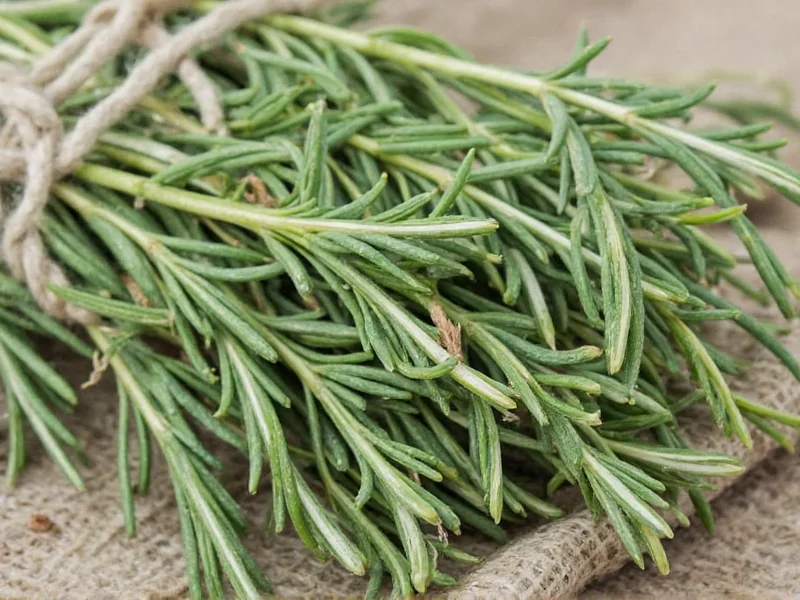
Understanding herb conversions is essential for achieving perfect flavor balance in your cooking. When a recipe calls for fresh rosemary but you only have dried available (or vice versa), knowing the proper substitution ratio prevents your dishes from becoming either bland or overpoweringly herbal.
Why Dried and Fresh Rosemary Require Conversion
During the drying process, rosemary loses its water content while concentrating its essential oils and flavor compounds. This concentration means dried rosemary delivers a more intense flavor profile than fresh. The general rule across culinary science is that dried herbs are approximately three times more potent than fresh herbs.
Using equal measurements of dried and fresh rosemary would result in significantly different flavor outcomes. For example, substituting 1 tablespoon of dried rosemary for 1 tablespoon of fresh would create an overwhelmingly strong herbal flavor that could dominate your entire dish.
Dried Rosemary to Fresh Conversion Chart
| Dried Rosemary | Fresh Rosemary Equivalent |
|---|---|
| ¼ teaspoon | ¾ teaspoon |
| ½ teaspoon | 1½ teaspoons |
| 1 teaspoon | 1 tablespoon |
| 1½ teaspoons | 1½ tablespoons |
| 1 tablespoon | 3 tablespoons (¼ cup) |
Practical Application in Cooking
When substituting between dried and fresh rosemary, consider these practical factors that affect your final dish:
- Timing matters: Add dried rosemary earlier in the cooking process to allow time for rehydration and flavor release, while fresh rosemary can be added later since it releases flavor more quickly
- Dish moisture content: In soups, stews, and sauces with ample liquid, dried rosemary has time to rehydrate properly. In drier applications like rubs or quick sautés, fresh rosemary might integrate better
- Flavor development: Dried rosemary offers a more earthy, concentrated flavor, while fresh provides brighter, more citrusy notes
- Texture considerations: Dried rosemary leaves can remain somewhat stiff even after cooking, while fresh leaves soften completely
When to Adjust the Standard Conversion Ratio
While the 1:3 ratio works for most applications, certain cooking scenarios might require slight adjustments to the dried rosemary to fresh conversion:
- Long-cooking dishes (stews, braises, slow-cooked meats): Consider using slightly less dried rosemary (try a 1:2.5 ratio) as extended cooking time intensifies the flavor
- Delicate dishes (fish, light sauces, vegetable preparations): Use a more conservative approach (1:3.5 ratio) to prevent rosemary from overwhelming subtle flavors
- High-heat applications (grilling, roasting): The standard 1:3 ratio typically works well as some flavor compounds evaporate during high-heat cooking
- Older dried herbs: If your dried rosemary has been stored for more than 6 months, it may have lost potency, requiring slightly more than the standard conversion
Tips for Best Results with Rosemary Conversions
Professional chefs recommend these techniques when working with rosemary conversions:
- Crumble dried rosemary between your fingers before adding to release essential oils
- For more accurate dried rosemary to fresh conversion in critical recipes, steep a small amount of your dried rosemary in warm water for 5 minutes to partially rehydrate before measuring
- When in doubt about dried rosemary equivalent measurements, start with less and adjust to taste during cooking
- Store dried rosemary in an airtight container away from light and heat to maintain potency for up to 1 year
- Fresh rosemary keeps best when stored upright in a glass with water (like flowers) in the refrigerator for up to 2 weeks
Common Mistakes to Avoid
Many home cooks make these errors when converting between dried and fresh rosemary:
- Using equal measurements without conversion, resulting in overly strong or weak flavor
- Adding dried rosemary at the same stage as fresh would be added, without accounting for rehydration time
- Not considering the age of dried herbs, which lose potency over time
- Crushing dried rosemary directly into dry ingredients, which can create uneven distribution
- Using the stems of fresh rosemary without realizing they're too woody for most applications
Understanding Rosemary's Flavor Profile
The conversion ratio between dried rosemary to fresh exists because of fundamental differences in their chemical composition. Fresh rosemary contains approximately 70-80% water, while dried rosemary has only 5-10% moisture content. This dramatic reduction concentrates the herb's essential oils, particularly cineole and camphor, which give rosemary its distinctive pine-like aroma and flavor.
When properly converted, both forms can deliver excellent results in cooking. Dried rosemary works particularly well in long-simmering dishes where it has time to rehydrate, while fresh rosemary shines in applications where its brighter, more complex flavor notes can be appreciated, such as in finishing oils, compound butters, or as a garnish.
What is the exact dried rosemary to fresh conversion for recipes?
The precise conversion is 1 teaspoon of dried rosemary equals 1 tablespoon of fresh rosemary. This 1:3 ratio accounts for the concentration of flavor compounds that occurs during the drying process when water content is removed.
Can I substitute dried rosemary for fresh in a 1:1 ratio?
No, substituting dried rosemary for fresh in a 1:1 ratio will result in an overly strong, potentially bitter flavor. Dried rosemary is approximately three times more potent than fresh, so using equal measurements would overwhelm your dish. Always use the 1:3 conversion ratio (1 tsp dried = 1 tbsp fresh) for best results.
How do I convert fresh rosemary to dried measurements?
To convert fresh rosemary to dried measurements, divide the fresh amount by three. For example, if a recipe calls for 1 tablespoon of fresh rosemary, you would use 1 teaspoon of dried rosemary. Remember that this conversion works best when the dried rosemary is relatively fresh (less than 6 months old).
Does the dried rosemary to fresh conversion differ for different cooking methods?
Yes, the ideal conversion can vary slightly depending on cooking method. For long-cooking dishes like stews, use slightly less dried rosemary (1:2.5 ratio). For delicate dishes like fish or light sauces, use a more conservative ratio (1:3.5). For high-heat applications like roasting, the standard 1:3 ratio typically works well.
How can I tell if my dried rosemary has lost potency for accurate conversion?
Fresh dried rosemary should have a strong, pleasant aroma when crushed between your fingers. If it has little scent or a musty smell, it has likely lost potency. Older dried rosemary (over 6-12 months) may require using up to 50% more than the standard conversion ratio to achieve the desired flavor intensity.




 浙公网安备
33010002000092号
浙公网安备
33010002000092号 浙B2-20120091-4