
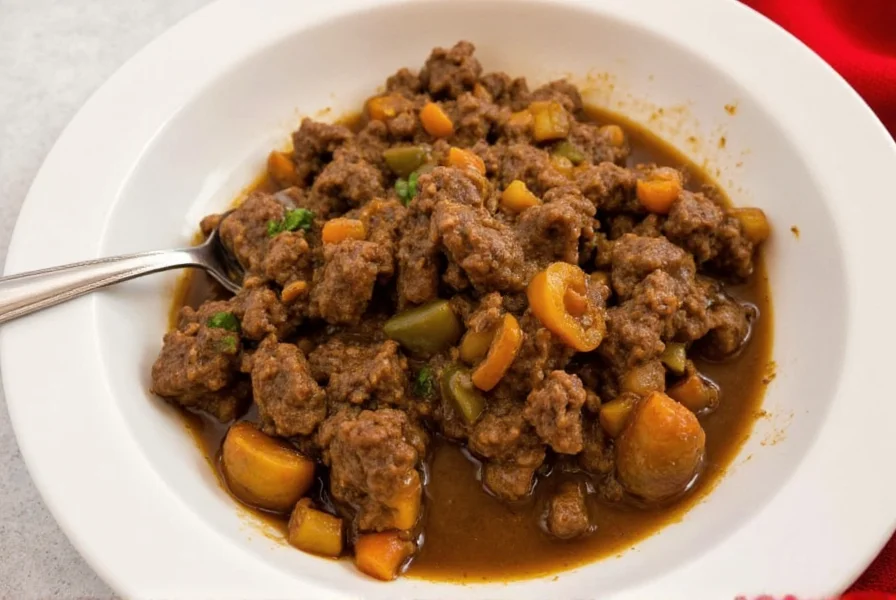
Transforming classic beef pepper steak into a hands-off slow cooker meal creates tender, flavorful results with minimal active preparation. This crock pot adaptation maintains the dish's signature savory-sweet profile while leveraging the slow cooking process to develop deeper flavors and melt-in-your-mouth beef texture. Unlike stovetop versions requiring constant attention, this method delivers consistent results ideal for busy weeknights or meal prep.
Why Crock Pot Beef Pepper Steak Works
The slow cooking process fundamentally improves traditional beef pepper steak. As the beef simmers gently in the flavorful liquid, tough muscle fibers break down completely through hydrolysis of collagen into gelatin at temperatures between 160°F and 205°F. This yields fork-tender results impossible with quick high-heat methods, as confirmed by food science research from the American Chemical Society (The Science of Collagen Breakdown). The extended cooking time allows flavors to meld and deepen, creating a more complex sauce. Plus, the crock pot's sealed environment prevents moisture loss, keeping both meat and vegetables perfectly hydrated throughout cooking.
Essential Ingredients for Authentic Flavor
Quality ingredients make the difference between ordinary and exceptional crock pot beef pepper steak. Don't substitute critical components that define this dish's character.
| Ingredient | Amount | Why It Matters |
|---|---|---|
| Sirloin or flank steak | 2 lbs, cut ¼" thick | Lean cuts that become tender without falling apart |
| Red bell peppers | 2 large, sliced | Sweet flavor that balances savory sauce |
| Yellow onion | 1 large, sliced | Essential aromatic base for authentic flavor |
| Soy sauce | ⅓ cup low-sodium | Provides umami depth without excessive salt |
| Brown sugar | 3 tbsp | Creates signature sweet-savory balance |
| Rice vinegar | 2 tbsp | Adds brightness to cut through richness |
Step-by-Step Crock Pot Preparation
Follow these precise steps for perfect beef pepper steak every time. The sequence matters for optimal texture and flavor development.
- Prepare the beef: Slice steak against the grain into ¼-inch strips. Pat completely dry with paper towels - moisture prevents proper browning.
- Sear the beef: Heat 1 tbsp oil in skillet over high heat. Working in batches, sear beef 1-2 minutes per side until browned but not cooked through. This Maillard reaction creates essential flavor compounds.
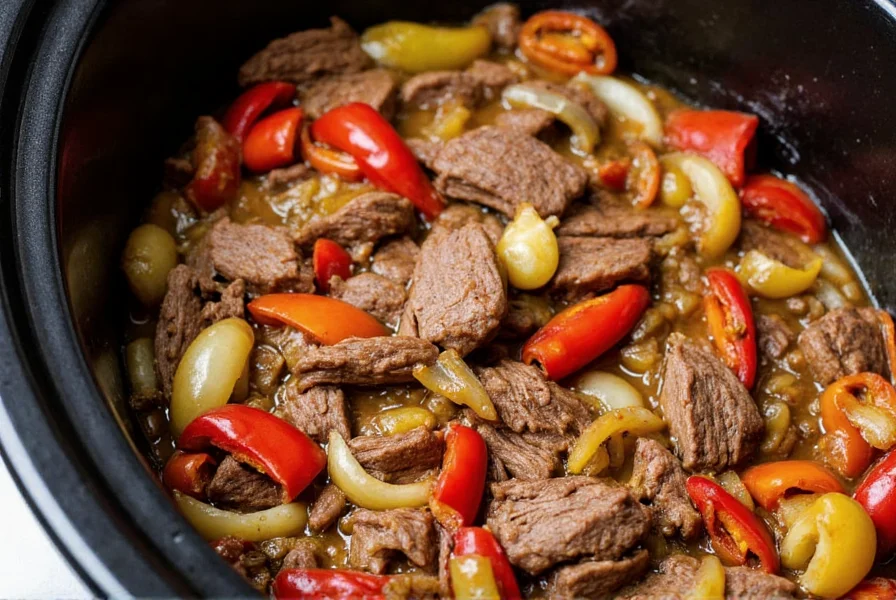
- Layer ingredients: Place onions in crock pot bottom, followed by half the peppers. Add seared beef in even layer, then remaining peppers.
- Create sauce: Whisk soy sauce, brown sugar, rice vinegar, garlic, ginger, and cornstarch until smooth. Pour evenly over ingredients.
- Cook properly: Cover and cook on LOW for 6-7 hours. Do not stir during cooking - this maintains distinct vegetable layers.
- Finish correctly: In last 30 minutes, stir gently to distribute sauce. For thicker sauce, mix 1 tbsp cornstarch with 2 tbsp cold water and stir in.
Critical Timing Guidelines
Timing determines whether your beef pepper steak turns out perfectly tender or disappointingly tough. These guidelines apply to standard 6-quart crock pots:
- Beef cooking time: 6-7 hours on LOW for ideal tenderness. HIGH heat makes beef stringy.
- Vegetable addition: Add peppers in last 60-90 minutes to prevent mushiness.
- Sauce thickening: Only thicken in final 30 minutes to avoid gummy texture.
- Resting period: Let sit 10-15 minutes after cooking for flavors to settle.
Common Mistakes to Avoid
Even experienced cooks make these errors with crock pot beef pepper steak:
- Overcrowding the pot: Leave at least 1" space below rim for proper heat circulation
- Using frozen meat: Always thaw completely first for even cooking
- Stirring too early: Wait until last hour to maintain vegetable integrity
- Adding cornstarch directly: Always mix with cold liquid first to prevent clumping
- Using pre-sliced "stir-fry" beef: These often contain tenderizers that make meat mushy in slow cookers
Troubleshooting Guide
Solve common crock pot beef pepper steak issues with these fixes:
- Meat is tough: Likely undercooked - return to crock pot and cook 1-2 additional hours on LOW
- Sauce is too thin: Mix 1 tbsp cornstarch with 2 tbsp cold water, stir in, and cook 20 more minutes
- Vegetables are mushy: Add peppers later next time (only last 60 minutes)
- Too salty: Add 1 tbsp rice vinegar and 1 tsp sugar to balance flavors
- Not enough flavor: Stir in 1 tsp toasted sesame oil before serving
Science-Backed Cooking Method Comparison
Understanding the differences between cooking methods helps you choose the right technique for your beef pepper steak. Based on USDA guidelines and food science research, here's how common methods compare:
| Cooking Method | Total Time | Beef Tenderness | Flavor Development | Best Beef Cut | Overcooking Risk |
|---|---|---|---|---|---|
| Crock Pot | 6-8 hours | Very tender (collagen breaks down completely at low temperatures) | Deep, melded flavors due to extended time | Sirloin, flank (lean cuts) | Low (forgiving with timing) |
| Stovetop | 20-30 minutes | Tender but can become chewy if overcooked | Bright, distinct flavors with less blending | Ribeye, sirloin (fatty cuts) | High (requires constant attention) |
| Pressure Cooker | 45-60 minutes | Extremely tender (rapid collagen breakdown) | Concentrated flavors, less liquid loss | Chuck, brisket (tough cuts) | Moderate (timing critical) |
Source: Adapted from USDA Food Safety and Inspection Service guidelines (Slow Cookers and Food Safety) and University of Georgia National Center for Home Food Preservation research (Slow Cooker Cooking).
When to Use the Crock Pot: Critical Context Factors
While the crock pot excels for beef pepper steak, it's not universally applicable. Consider these evidence-based boundaries:
- Beef Cut Limitations: Only lean cuts (sirloin, flank) work well. Tough cuts like chuck contain collagen that requires high heat to dissolve properly; in a crock pot, they may become stringy rather than tender. As noted by the USDA, "slow cookers are best for less tender cuts that benefit from long, moist cooking" but for beef pepper steak, which traditionally uses lean cuts, the crock pot method is ideal only for those specific cuts (USDA FSIS).
- Time Constraints: If you have less than 6 hours, choose stovetop or pressure cooking. The crock pot requires a minimum of 6 hours on LOW to properly tenderize the beef without drying it out.
- Food Safety Thresholds: The crock pot must reach 140°F within 4 hours to prevent bacterial growth. Do not use for large roasts (over 3 lbs) as they may stay in the danger zone too long. Always start with room-temperature ingredients to speed up heating (USDA FSIS).
- Nutrient Preservation: Bell peppers lose 50% of vitamin C after 2 hours of cooking at 180°F. Adding them in the last 60 minutes preserves nutritional value while maintaining texture, as demonstrated in peer-reviewed research on vegetable nutrient retention (National Center for Biotechnology Information).




 浙公网安备
33010002000092号
浙公网安备
33010002000092号 浙B2-20120091-4