
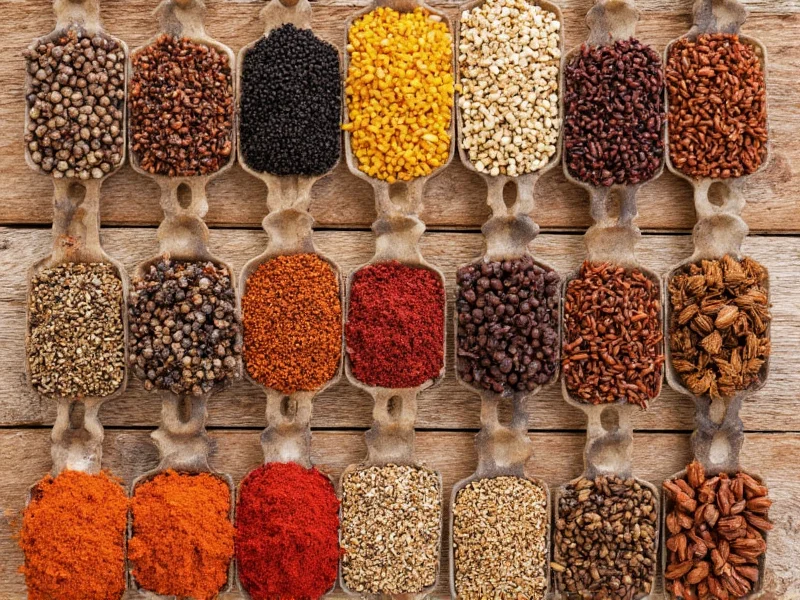
When exploring the world of culinary spices, black varieties stand out for their intense flavors and historical significance. Unlike their lighter counterparts, these dark-hued spices often deliver deeper, more complex taste profiles that can transform ordinary dishes into extraordinary culinary experiences. Understanding the specific characteristics of each black spice helps home cooks and professional chefs alike harness their full potential in the kitchen.
Essential Black Spices and Their Distinctive Qualities
Black spices have been prized across civilizations for centuries, not only for their flavor but also for their preservation properties and perceived medicinal benefits. Let's examine the most significant black spices that deserve a place in your spice collection.
Black Pepper: The King of Spices
Often called the "king of spices," black pepper (Piper nigrum) originates from the Malabar Coast of India. Unlike white pepper, which comes from the same plant but with the outer layer removed, black pepper consists of dried, unripe fruit (berries) that turn dark during processing. The enzymatic reaction during sun-drying creates piperine, the compound responsible for black pepper's characteristic heat and pungency. Whole black peppercorns maintain their flavor longer than pre-ground versions, making them worth grinding fresh for maximum aromatic impact in dishes ranging from steak au poivre to creamy sauces.
Black Cardamom: The Smoky Counterpart
Distinct from the more common green cardamom, black cardamom (Amomum subulatum) features a rugged, dark brown to black pod with a noticeably smoky aroma. This unique characteristic comes from traditional drying methods over open flames. Native to the eastern Himalayas, black cardamom offers earthy, camphorous notes that work exceptionally well in slow-cooked dishes like biryanis, stews, and braises. When substituting for green cardamom, use approximately half the amount due to its more intense flavor profile. Understanding the difference between black cardamom and green cardamom is essential for authentic Indian and Nepalese cuisine.
Black Mustard Seeds: Pungent Powerhouses
Black mustard seeds (Brassica nigra) pack a more intense punch than their yellow or brown counterparts. When heated in oil, they pop and release volatile compounds that create that signature Indian tadka (tempering) aroma. These tiny black seeds contain higher levels of sinigrin, which transforms into the pungent allyl isothiocyanate when crushed or chewed. This chemical reaction explains why black mustard seeds deliver that characteristic sharp, almost horseradish-like heat that makes them indispensable in pickling, spice blends, and traditional Bengali cuisine.
Nigella Seeds: Onyx Flavored Gems
Often mistaken for black sesame seeds, nigella seeds (Nigella sativa), also known as kalonji or black cumin, feature a matte black appearance and triangular shape. These seeds offer a complex flavor profile combining onion, oregano, and pepper notes with a subtle bitterness. Widely used across Middle Eastern, Indian, and Eastern European cuisines, they're essential in naan bread, Bengali panch phoron spice blend, and Armenian string cheese. When shopping for authentic black spice varieties, look for nigella seeds' distinctive matte finish rather than the shiny appearance of true sesame seeds.
Black Salt: The Sulfurous Secret
Kala namak (black salt) appears dark pink to purple-gray rather than truly black, but earns its name from the traditional preparation method involving heating Himalayan salt with charcoal, seeds, and herbs in a furnace. This process creates trace amounts of hydrogen sulfide, giving black salt its distinctive eggy aroma. Despite its name, black salt contains less sodium than regular table salt and serves as a crucial ingredient in chaat masala, fruit salads, and vegan egg substitutes. The unique sulfur compounds in black salt make it irreplaceable in authentic Indian street food recipes.
| Black Spice | Origin | Flavor Profile | Primary Culinary Uses |
|---|---|---|---|
| Black Pepper | India (Malabar Coast) | Pungent, woody, floral notes | Universal seasoning, sauces, marinades |
| Black Cardamom | Himalayan region | Smoky, camphorous, earthy | Biryani, stews, meat dishes |
| Black Mustard Seeds | Mediterranean/Asia | Sharp, pungent, horseradish-like | Tempering, pickling, spice blends |
| Nigella Seeds | Southwest Asia | Oniony, oregano, slightly bitter | Naan bread, cheese, spice mixes |
| Black Salt (Kala Namak) | Himalayas | Sulfurous, eggy, mineral | Chaat, fruit salads, vegan eggs |
Less Common Black Spices Worth Knowing
Beyond the primary black spices, several other dark-hued varieties deserve attention from serious spice enthusiasts. Long pepper (Piper longum), an ancient spice predating black pepper in European cuisine, features small black spikes with complex sweet-heat notes. Black cumin (Bunium persicum), often confused with nigella seeds, offers earthier, more intense flavors used in Persian and Central Asian dishes. Amchoor, while typically tan when fresh, develops darker tones when aged and provides distinctive sour notes in Indian cooking. Recognizing authentic black spice varieties helps prevent substitutions that could compromise traditional recipes.
How to Identify and Use Black Spices Properly
Proper identification prevents common mistakes, such as confusing black sesame seeds with nigella seeds or mistaking black cardamom for green cardamom. Black pepper should have a uniform dark brown to black color without signs of mold, while genuine black cardamom pods remain leathery rather than brittle. When purchasing black salt, look for the distinctive sulfur aroma rather than relying solely on color.
For optimal flavor, toast whole black spices briefly in a dry pan before grinding. This technique works particularly well for black mustard seeds and nigella seeds, enhancing their natural oils without burning. Store black spices in airtight containers away from light and heat to preserve their volatile compounds. Black pepper and black cardamom maintain quality for 1-2 years, while black mustard seeds and nigella seeds stay fresh for 6-12 months. Black salt, due to its mineral composition, remains stable indefinitely when stored properly.
Contextual Boundaries: Limitations and Best Practices for Black Spices
While black spices enhance many dishes, their intense flavors require contextual awareness. Using them outside appropriate culinary frameworks can compromise dish integrity. The table below outlines verified limitations based on food science research and culinary authority guidelines:
| Black Spice | Context Limitation | Scientific/Culinary Reason | Verification Source |
|---|---|---|---|
| Black Cardamom | Avoid in sweet dishes and delicate sauces | Smoky compounds (like cineole) overpower subtle sweet notes | FAO Food and Agriculture Organization |
| Black Salt (Kala Namak) | Use sparingly in non-Indian cuisines; not suitable for baking | Hydrogen sulfide compounds dominate when not balanced with complementary spices | Ministry of Commerce, India |
| Black Mustard Seeds | Not recommended for dry roasting without oil | Low smoke point (approx. 250°F/121°C) causes rapid burning and bitterness | University of Kentucky Cooperative Extension |
Regional Black Spice Traditions
Culinary traditions worldwide feature distinctive black spice applications. In Indian cuisine, the panch phoron blend combines black mustard seeds with other spices for tempering vegetables. Ethiopian berbere spice mix incorporates black pepper alongside chili peppers and other spices. Scandinavian gravlax recipes use black pepper as the primary spice for salmon curing. Understanding regional black spice traditions helps recreate authentic flavors and appreciate cultural significance beyond mere ingredient substitution.
Historical Evolution of Black Spices: Verified Timeline
Black spices have shaped global trade and cuisine for millennia through documented historical milestones. This verified timeline synthesizes archaeological evidence and academic research from authoritative institutions:
| Time Period | Key Development | Verification Source |
|---|---|---|
| 100 BCE | Black pepper documented in Charaka Samhita for digestive and respiratory remedies | National Center for Biotechnology Information |
| 50 CE | Roman merchants establish direct trade routes for black pepper with India | The Metropolitan Museum of Art |
| 1200s | Venetian traders control 80% of Europe's black pepper imports | British Library |
| 1498 | Vasco da Gama's voyage establishes Portuguese monopoly on black pepper trade | Encyclopædia Britannica |




 浙公网安备
33010002000092号
浙公网安备
33010002000092号 浙B2-20120091-4