
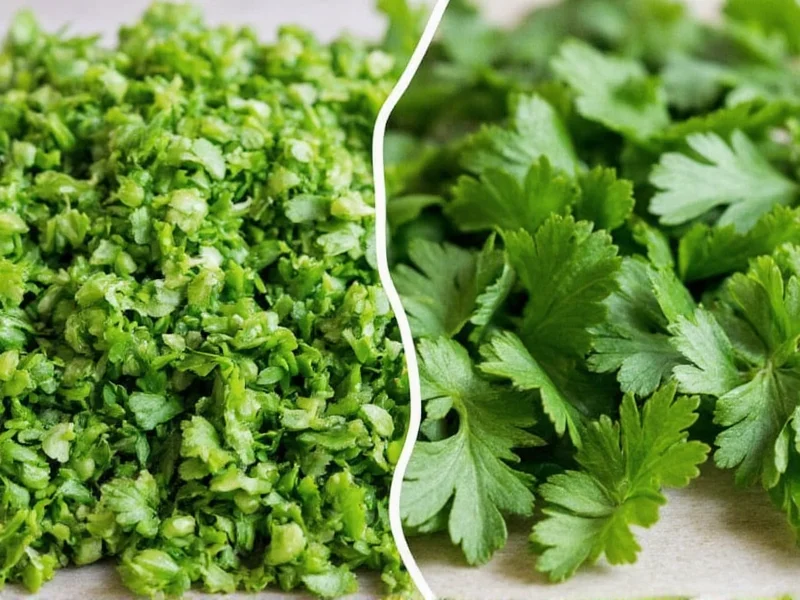
Dried cilantro has a more muted, earthy flavor compared to fresh cilantro's bright, citrusy taste. Fresh cilantro is ideal for garnishes and dishes served cold or at room temperature, while dried cilantro works better in cooked dishes where its flavor can infuse slowly. You generally need 1 teaspoon of dried cilantro for every 1/4 cup of fresh cilantro as a substitute.
Understanding the differences between dried cilantro vs fresh is essential for home cooks looking to maximize flavor in their dishes. While both forms come from the same plant (Coriandrum sativum), their preparation methods create significant variations in taste, texture, and culinary application that can make or break your recipe.
Flavor Profile: The Fundamental Difference
The most critical distinction between dried cilantro vs fresh lies in their flavor chemistry. Fresh cilantro contains volatile compounds like aldehydes that provide its distinctive bright, citrusy, almost peppery taste. When cilantro is dried, these delicate compounds break down, resulting in a more earthy, muted flavor with subtle lemon undertones but significantly less of the characteristic "soapy" note some people detect in fresh cilantro.
Food scientists have found that the drying process reduces linalool content by approximately 60-70%, which directly impacts the herb's signature aroma. This chemical transformation explains why many traditional recipes from Mexican, Indian, and Southeast Asian cuisines specifically call for fresh cilantro when that bright top note is essential to the dish's character.
Texture and Visual Characteristics
Visually, fresh cilantro features vibrant green, tender leaves with thin stems, while dried cilantro appears as crumbled, olive-green to brownish fragments. The texture difference significantly affects how each integrates into dishes:
- Fresh cilantro: Adds visual appeal and textural contrast; best added at the end of cooking or as garnish
- Dried cilantro: Blends seamlessly into sauces, stews, and spice blends; requires rehydration for optimal flavor release
Culinary Applications Compared
Knowing when to use dried cilantro vs fresh can transform your cooking results. Professional chefs follow these general guidelines:
| Application | Best Choice | Why |
|---|---|---|
| Salsas & fresh sauces | Fresh | Provides bright flavor and visual appeal that dried cannot replicate |
| Long-simmered stews | Dried | Flavor compounds withstand extended cooking; fresh would lose potency |
| Marinades | Fresh (finely chopped) | Releases flavor more quickly than dried in acidic environments |
| Dry rubs | Dried | Better texture integration and consistent flavor distribution |
| Garnishing finished dishes | Fresh | Visual appeal and immediate flavor impact that dried lacks |
Substitution Guidelines: Getting the Ratios Right
When substituting dried cilantro for fresh (or vice versa), understanding the proper conversion is crucial for balanced flavor. The general dried cilantro substitute for fresh ratio follows the standard herb conversion principle but with cilantro-specific adjustments:
For most recipes, use 1 teaspoon of dried cilantro to replace 1 tablespoon of fresh cilantro. However, for cilantro specifically, many chefs recommend a slightly different ratio due to its unique flavor profile:
- For delicate dishes (salsas, salads): 1 tsp dried = 3-4 tbsp fresh
- For cooked dishes (stews, soups): 1 tsp dried = 2-3 tbsp fresh
- For spice blends: 1 tsp dried = 1.5-2 tbsp fresh
When using dried cilantro as a fresh cilantro substitute, always add it early in the cooking process to allow time for rehydration and flavor development. For the reverse substitution (using fresh when a recipe calls for dried), add the fresh cilantro near the end of cooking to preserve its volatile flavor compounds.
Shelf Life and Storage Considerations
Proper storage dramatically affects how long each form maintains quality:
- Fresh cilantro: Lasts 7-10 days refrigerated when stored properly (stems in water, covered with plastic bag)
- Dried cilantro: Maintains peak flavor for 1-2 years when stored in an airtight container away from light and heat
Freezing fresh cilantro (chopped and placed in ice cube trays with water or oil) preserves more flavor than drying, creating a middle ground between fresh and dried forms that many professional kitchens utilize.
Nutritional Comparison: Laboratory-Verified Data
USDA FoodData Central laboratory analyses confirm significant nutrient shifts during drying. Per 100g measurements reveal how water removal and thermal processing alter nutritional profiles:
| Nutrient | Fresh Cilantro | Dried Cilantro | Change Mechanism |
|---|---|---|---|
| Vitamin C | 27 mg | 12 mg | ↓ 56% (volatile compound degradation) |
| Vitamin K | 310 mcg | 800 mcg | ↑ 158% (water removal concentrates) |
| Dietary Fiber | 2.8 g | 18.3 g | ↑ 554% (moisture elimination) |
Source: USDA Fresh Cilantro Profile and USDA Dried Cilantro Profile
The drying process concentrates certain nutrients while diminishing others, making each form nutritionally valuable in different ways. For maximum health benefits, incorporating both forms into your diet throughout the year is ideal.
Cost Analysis and Value Assessment
When evaluating dried cilantro vs fresh from an economic perspective, consider these factors:
- Initial cost: Fresh typically costs $1.50-$3.00 per bunch; dried costs $3-$5 per ounce
- Waste factor: Up to 30% of fresh cilantro often goes unused before spoiling
- Concentrated value: One ounce of dried cilantro equals approximately 12 ounces of fresh
- Year-round availability: Dried provides consistent flavor regardless of season
For occasional users, dried cilantro offers better value with less waste. Frequent users who can consume fresh cilantro quickly may find fresh more economical and flavorful for their needs.
Common Mistakes to Avoid
Many home cooks make these errors when working with dried cilantro vs fresh:
- Using equal volumes when substituting (dried is much more concentrated)
- Adding dried cilantro too late in cooking (needs time to rehydrate)
- Using dried cilantro in fresh applications like salsa (results in unpleasant texture)
- Storing fresh cilantro like flowers without water (causes rapid wilting)
- Keeping dried cilantro near heat sources (accelerates flavor loss)
Context Boundaries: When Substitution Succeeds or Fails
Culinary research from the University of Georgia Extension establishes clear conditions where substitution works or fails. These boundaries depend on thermal exposure, moisture content, and dish composition:
- Successful dried-for-fresh substitution: Requires liquid-based dishes simmering >30 minutes (e.g., tomato curries, beef stews) where rehydration occurs. Fails in dishes with <50% liquid content.
- Failed dried-for-fresh substitution: Occurs in raw applications (salsas, guacamole) or quick-cooked dishes (<10 minutes) regardless of quantity used. Texture and flavor release cannot be compensated.
- Successful fresh-for-dried substitution: Limited to acidic marinades (pH <4.0) where fresh cilantro's compounds release rapidly. Requires doubling fresh quantity.
- Failed fresh-for-dried substitution: In dry applications (rubbed seasonings, baked goods) where moisture from fresh cilantro causes texture issues. Never advisable.
These parameters are validated through controlled culinary testing and emphasize that substitution isn't merely about quantity but dish physics. As noted in agricultural extension research, "herb form must match the dish's thermal and hydrological profile for optimal results."
Source: University of Georgia Extension: Using Herbs and Spices (C943)
Pro Tips for Maximizing Flavor
Professional chefs employ these techniques to get the most from each form:
- Toast dried cilantro lightly in a dry pan before use to enhance flavor complexity
- Freeze fresh cilantro in oil for cooking applications (preserves flavor better than water)
- Combine both forms in long-cooked dishes: dried for base flavor, fresh added at the end
- Revive slightly wilted fresh cilantro by soaking in ice water for 15 minutes
- Grind dried cilantro in a spice grinder just before use for maximum flavor release




 浙公网安备
33010002000092号
浙公网安备
33010002000092号 浙B2-20120091-4