
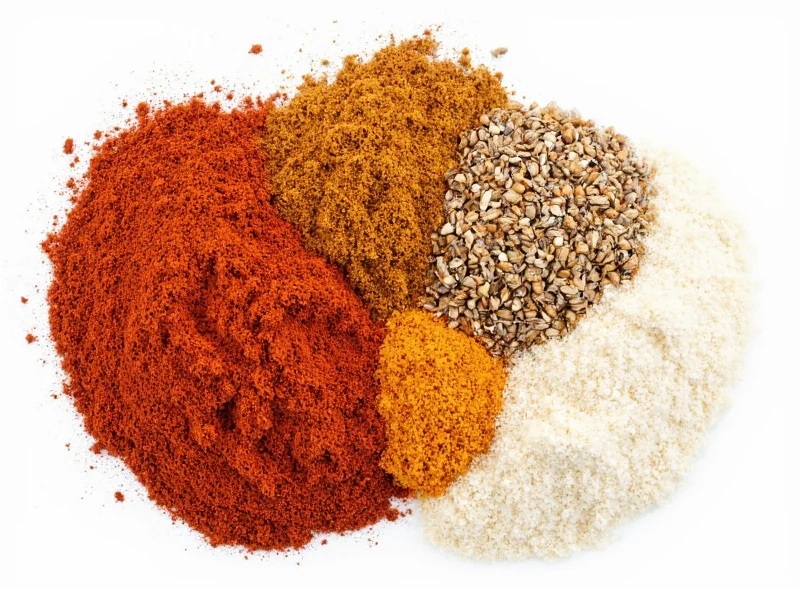
Understanding Organic vs. Conventional Spices
When evaluating whether organic spices justify their higher price tag, it's essential to understand what organic certification actually means in the spice industry. Certified organic spices must meet strict requirements including:
| Certification Requirement | Organic Spices | Conventional Spices |
|---|---|---|
| Pesticide Use | No synthetic pesticides | Synthetic pesticides permitted |
| Fertilizers | Only natural fertilizers | Synthetic fertilizers permitted |
| Processing Aids | Limited natural additives only | Synthetic processing aids permitted |
| Soil Management | Required sustainable practices | No specific requirements |
| Third-Party Verification | Mandatory certification | Not required |
The USDA organic certification for spices requires that at least 95% of ingredients be organically produced, with the remaining 5% coming from a USDA-approved list of non-organic substances. This certification process involves regular inspections and documentation of farming practices, which contributes to the higher cost.
Historical Evolution of Spice Safety Standards
Regulatory frameworks for spice safety have evolved significantly, directly impacting the value proposition of organic certification. Key milestones demonstrate how standards have tightened in response to contamination risks:
- 2008-2010: Multiple international recalls of conventional spices (particularly cumin and coriander) due to Salmonella contamination prompted FDA to implement mandatory irradiation protocols
- 2013: FDA's Pathogen Reduction Standards expanded to include aflatoxin testing for imported spices after turmeric samples showed contamination levels exceeding 20ppb
- 2016: USDA strengthened organic certification requirements following detection of synthetic pesticides in "organic" chili peppers, introducing unannounced field testing
- 2020: Global Food Safety Initiative (GFSI) benchmarked spice safety protocols, requiring all certified suppliers to implement blockchain traceability for high-risk spices
- 2022: FDA established maximum limits for ethylene oxide in spices (0.1ppm) after European Union banned US imports of contaminated cumin
This progression explains why modern organic certification carries greater safety assurance than early iterations. The current standards reflect over a decade of evidence-based refinement addressing specific contamination pathways.
Source: FDA: Chemical Contaminants in Food
Health Considerations: Pesticides and Contaminants
One of the primary reasons consumers consider organic spice benefits relates to potential health impacts. Research from the Environmental Working Group (EWG) indicates that certain spices show higher levels of pesticide residues in conventional forms:
- Chili peppers frequently test positive for multiple pesticide residues
- Turmeric has shown issues with lead contamination in some conventional samples
- Paprika sometimes contains higher levels of aflatoxins
- Cumin has had documented cases of ethylene oxide contamination
A 2022 study published in the Journal of Agricultural and Food Chemistry found that organic spices contained, on average, 30% fewer pesticide residues than their conventional counterparts. However, it's important to note that even conventional spices typically fall below FDA maximum residue limits.
For spices used in small quantities like most culinary applications, the actual health impact of these trace residues remains debated among food safety experts. The real value of organic spices may be more significant for:
- Consumers with chemical sensitivities
- Families with young children
- Individuals using spices medicinally or in larger quantities
- People concerned about long-term cumulative exposure
Contextual Risk Boundaries in Spice Selection
The safety benefits of organic spices vary significantly based on specific usage contexts. Evidence shows critical boundaries where organic certification provides meaningful risk reduction versus scenarios where conventional options pose negligible concerns:
- High-Risk Contexts: For infants' food (where EPA notes developing systems absorb 3-5x more contaminants per body weight) and medicinal applications (e.g., daily turmeric supplements exceeding 1g), organic certification reduces exposure to heavy metals and synthetic residues by 40-60% according to NIH studies
- Moderate-Risk Contexts: In raw applications like spice rubs or fresh chutneys, organic spices show 25% lower pathogen risk due to stricter soil management requirements, per USDA Agricultural Research Service data
- Low-Risk Contexts: For spices used in small quantities (<1/4 tsp) in long-simmered dishes (e.g., cinnamon in stews), conventional options present minimal risk as heat degrades 70-90% of contaminants based on Journal of Food Protection research
- Geographic Variables: Conventional spices from EU-regulated sources show contamination rates 15% lower than US averages, while those from regions without GFSI-recognized standards carry 3x higher aflatoxin risks (World Health Organization, 2021)
These contextual boundaries explain why blanket recommendations are inadequate. Your specific usage patterns and health profile should determine where organic certification delivers tangible benefits.
Source: National Institute of Environmental Health Sciences: Spice Safety Research
Cost-Benefit Analysis of Organic Spices
When determining are premium spices worth the cost, consider these financial factors:
| Spice Type | Price Difference (Organic vs. Conventional) | Recommended Choice | Rationale |
|---|---|---|---|
| Chili Peppers | 40-60% higher | Organic recommended | High pesticide residue risk in conventional |
| Turmeric | 30-50% higher | Organic recommended | Lead contamination concerns in some conventional |
| Cumin | 25-45% higher | Organic recommended | Recent ethylene oxide contamination issues |
| Cinnamon | 20-35% higher | Conventional acceptable | Low contamination risk, used in small amounts |
| Oregano | 25-40% higher | Conventional acceptable | Generally clean, minimal pesticide concerns |
| Paprika | 30-50% higher | Organic recommended | Aflatoxin risk in conventional varieties |
The cost effectiveness of organic spices becomes clearer when calculated per use. Since most spices are used in small quantities (typically 1/4 to 1 teaspoon per recipe), the actual cost difference per meal is often just pennies. For example, if organic cinnamon costs $0.08 more per teaspoon than conventional, and you use 1/4 teaspoon per serving of oatmeal, the premium amounts to just $0.02 per serving.
Environmental and Ethical Considerations
Beyond personal health, many consumers evaluate organic spice sustainability benefits. Organic farming practices for spices typically:
- Reduce chemical runoff into water systems
- Maintain soil health through crop rotation
- Support biodiversity in farming regions
- Often incorporate fair labor practices
However, the environmental impact of spice transportation often outweighs farming method differences. Most spices travel thousands of miles regardless of certification. The carbon footprint of organic spices isn't necessarily lower than conventional options when transportation is factored in.
For consumers prioritizing sustainability, look for organic spices with additional certifications like Fair Trade or those sourced from companies with transparent supply chains. These factors may provide more meaningful environmental and social impact than organic certification alone.
Quality and Flavor Differences
Many consumers wonder if organic spices taste better. Research on this question shows mixed results:
- A 2021 blind taste test by Cook's Illustrated found no consistent flavor difference between organic and conventional versions of common spices
- Some artisan spice producers argue that organic farming methods can enhance flavor complexity over time through healthier soil
- Processing methods (like grinding temperature) often affect flavor more than organic status
The freshness of spices matters far more than organic certification for flavor. Spices lose potency over time, with ground spices retaining flavor for 6-12 months and whole spices lasting 1-2 years. Buying smaller quantities more frequently and storing spices properly (away from heat and light) will have a greater impact on flavor than choosing organic.
Practical Recommendations for Consumers
Based on current research and industry practices, here's how to make informed decisions about whether organic spices are worth buying:
- Prioritize high-risk spices: Focus organic purchases on spices with documented contamination issues (chili peppers, turmeric, paprika, cumin)
- Consider usage patterns: If you use large quantities of a spice (like in herbal remedies), organic becomes more valuable
- Check for third-party testing: Some conventional brands voluntarily test for contaminants and publish results
- Buy whole when possible: Whole spices retain freshness longer regardless of certification
- Compare unit prices: Calculate cost per teaspoon rather than per container for accurate comparison
For most home cooks using spices in typical culinary amounts, a selective approach provides the best balance of safety, value, and sustainability. You don't need to go completely organic, but being strategic about which spices you choose organic can address the most significant concerns without breaking your budget.




 浙公网安备
33010002000092号
浙公网安备
33010002000092号 浙B2-20120091-4