
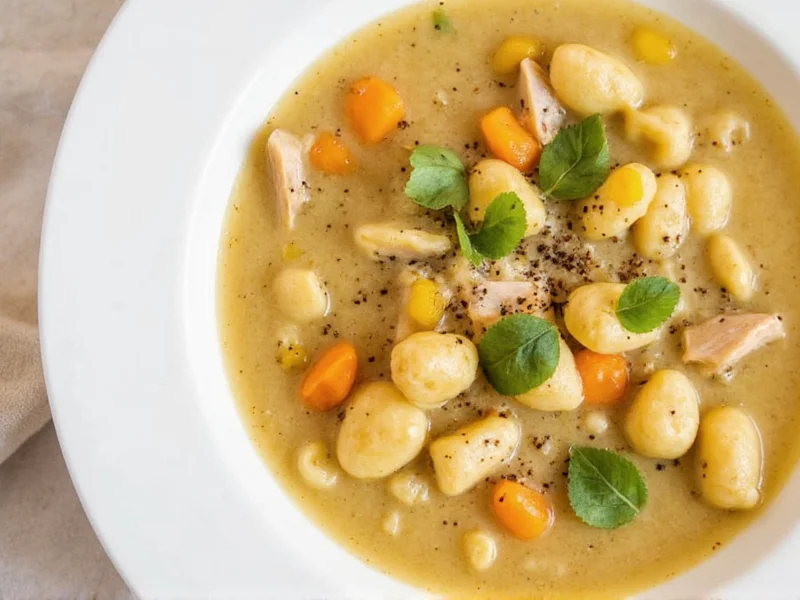
If you're searching for a creamy chicken gnocchi soup that's both comforting and elegant enough for guests, you've found your new go-to recipe. This beloved Italian-inspired dish has gained popularity for its perfect balance of simplicity and sophistication, making it ideal for weeknight dinners or special occasions. Unlike many online recipes that compromise texture or flavor, our tested method ensures your homemade chicken gnocchi soup features perfectly cooked gnocchi that maintains its shape while absorbing the rich broth.
Why This Chicken Gnocchi Soup Recipe Works
This easy chicken gnocchi soup recipe succeeds where others fail by addressing common pitfalls. Many recipes either overcook the delicate gnocchi or create a broth that's either too thin or artificially thick. Our approach uses a roux-based cream base that emulsifies beautifully with chicken stock, creating a velvety texture without overwhelming the dish. The addition of fresh thyme and a splash of lemon juice at the end brightens the rich flavors, while carefully timing the gnocchi addition prevents mushiness.
Ingredients for Perfect Chicken Gnocchi Soup
Quality ingredients make the difference between good and exceptional soup. Here's what you'll need for this best chicken gnocchi soup recipe:
| Ingredient | Amount | Notes & Substitutions |
|---|---|---|
| Chicken breast or thighs | 1 lb (450g) | Thighs add more flavor; breasts are leaner. Cut into ½-inch cubes |
| Potato gnocchi | 16 oz (450g) | Fresh refrigerated gnocchi works best; avoid frozen for texture |
| Chicken broth | 4 cups (950ml) | Low-sodium preferred; homemade yields best flavor |
| Heavy cream | 1 cup (240ml) | Substitute half-and-half for lighter version |
| Butter | 3 tbsp | Unsalted for better flavor control |
| All-purpose flour | 3 tbsp | For gluten-free, use rice flour or cornstarch |
| Garlic, minced | 2 cloves | Fresh is essential for bright flavor |
| Fresh thyme | 1 tbsp chopped | Or 1 tsp dried thyme |
| Frozen spinach | 1 cup | Optional but recommended for color and nutrition |
| Lemon juice | 1 tbsp | Critical for balancing richness |
Step-by-Step Cooking Instructions
Follow these precise steps for the perfect quick chicken gnocchi soup every time:
- Prepare the chicken: Season chicken pieces with salt, pepper, and ½ tsp thyme. In a large Dutch oven over medium-high heat, melt 1 tbsp butter. Sear chicken until golden (about 3-4 minutes per side). Remove and set aside.
- Create the roux: In the same pot, melt remaining butter. Add flour and whisk constantly for 2 minutes until golden blonde. This eliminates raw flour taste while creating a stable base for your creamy broth.
- Build the broth: Gradually whisk in chicken broth, ensuring no lumps form. Bring to a gentle simmer, stirring occasionally for 5 minutes until slightly thickened.
- Add aromatics: Stir in garlic, remaining thyme, and spinach (if using). Simmer for 2 minutes until spinach wilts.
- Finish the soup: Return chicken to the pot. Add cream and bring to a gentle simmer (do not boil). Add gnocchi and cook for 2-3 minutes until they float to the surface and are tender but still hold their shape.
- Final seasoning: Remove from heat. Stir in lemon juice and adjust salt and pepper to taste. The lemon is crucial—it cuts through the richness and makes the flavors pop.
Pro Tips for Restaurant-Quality Results
Elevate your chicken gnocchi soup with spinach with these chef-tested techniques:
- Gnocchi timing is critical: Add gnocchi during the last 3-4 minutes of cooking. They cook quickly and will disintegrate if left in too long.
- Broth quality matters: Use homemade chicken stock if possible, or choose a high-quality store brand with visible gelatin when cold.
- Cream temperature: Add cream off-heat to prevent curdling. If using lower-fat alternatives, temper with a bit of hot broth first.
- Texture control: For a thicker soup, simmer uncovered for 5 extra minutes. For thinner consistency, add additional broth.
- Flavor layering: Sauté a small diced onion with the garlic for added depth (about ½ cup).
Delicious Variations to Try
Customize this versatile healthy chicken gnocchi soup recipe to suit your preferences:
- Gluten-free version: Use cornstarch instead of flour for the roux (mix 2 tbsp cornstarch with 2 tbsp cold broth before adding) and ensure your gnocchi is GF (many potato gnocchi are naturally gluten-free).
- Dairy-free option: Substitute coconut cream for heavy cream and use olive oil instead of butter. The soup will be less creamy but still flavorful.
- Extra protein: Add white beans or chickpeas along with the chicken for additional plant-based protein.
- Vegetable boost: Include diced carrots, celery, or mushrooms when sautéing the aromatics for added nutrition.
- Spicy kick: Add ¼ tsp red pepper flakes with the garlic for a subtle heat that complements the creaminess.
Serving and Storage Recommendations
For the best dining experience with your chicken gnocchi soup for meal prep, follow these serving tips:
- Serve immediately in pre-warmed bowls to maintain temperature
- Garnish with fresh parsley, extra thyme, and a light sprinkle of Parmesan cheese
- Pair with crusty bread or a simple green salad
- For meal prep, store components separately: keep cooked chicken and broth base together, and package gnocchi separately to prevent sogginess
Properly stored in airtight containers, this soup will keep for 3-4 days in the refrigerator. When reheating, add a splash of broth or water as the soup thickens when chilled. Do not freeze with gnocchi included, as they become mushy upon thawing—freeze the broth base separately and add fresh gnocchi when reheating.
Frequently Asked Questions
Can I use frozen gnocchi in chicken gnocchi soup?
Yes, but with caution. Frozen gnocchi tends to release more starch and can become mushy more quickly. Add frozen gnocchi directly to simmering broth (don't thaw first) and cook just 1-2 minutes beyond package instructions. For best texture, fresh refrigerated gnocchi is recommended for soup applications.
How can I make chicken gnocchi soup without cream?
You can create a creamy texture without dairy by blending ½ cup cooked white beans with 1 cup broth until smooth, then stirring this mixture into the soup. Alternatively, puree a portion of the finished soup (without gnocchi) and return it to the pot. Both methods provide body while keeping the soup dairy-free.
Why does my gnocchi fall apart in soup?
Gnocchi typically disintegrates when overcooked or when added to boiling liquid. Always add gnocchi to gently simmering (not rapidly boiling) broth and cook only until they float to the surface (2-3 minutes). Using fresh, high-quality gnocchi (not frozen) also helps maintain structure. If your gnocchi consistently falls apart, try a different brand as quality varies significantly.
Can I make this soup in an Instant Pot?
Absolutely. Use the sauté function to brown chicken and make the roux. Add broth and scrape the bottom well. Pressure cook on high for 2 minutes, then do a quick release. Stir in cream and gnocchi, then use the sauté function again to gently heat through (about 2 minutes) until gnocchi is cooked. This quick chicken gnocchi soup method saves time while maintaining texture.
What's the best chicken to use for gnocchi soup?
Both chicken breasts and thighs work well, but offer different benefits. Breasts provide leaner meat that stays tender when cut small and added late in cooking. Thighs offer richer flavor and stay juicier, especially if you're making the broth from scratch. For the best results, use bone-in, skin-on thighs to simmer with your broth, then remove, shred, and add back at the end for maximum flavor.




 浙公网安备
33010002000092号
浙公网安备
33010002000092号 浙B2-20120091-4