
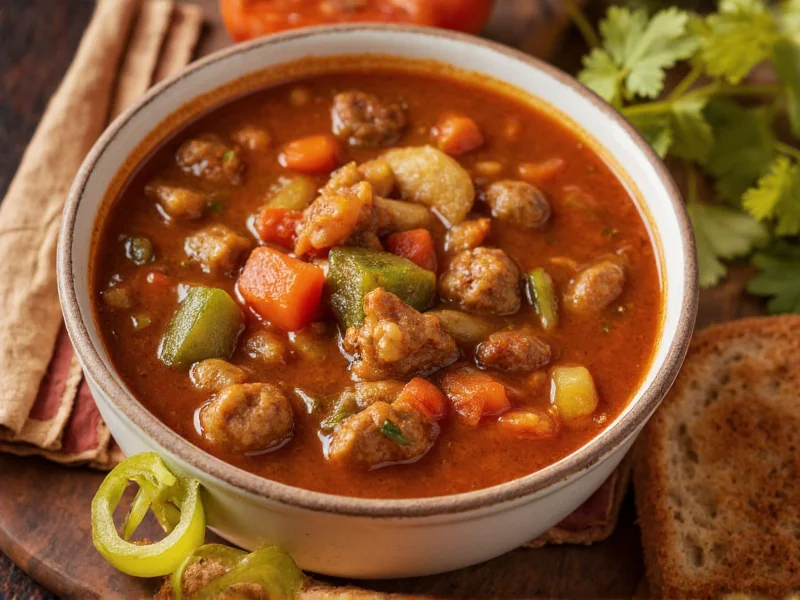
When exploring the question is gumbo a soup, culinary experts generally agree that gumbo occupies a unique space in the world of liquid-based dishes. Unlike conventional soups that prioritize broth as the primary element, gumbo's defining characteristic is its rich, complex base created through a carefully prepared roux—typically made from flour and fat cooked to varying degrees of darkness. This fundamental difference in preparation methodology creates a dish that's thicker and more substantial than what most cultures consider a traditional soup.
Understanding Gumbo's Culinary Classification
The debate around is gumbo considered a soup stems from regional culinary traditions and technical definitions. In Louisiana, where gumbo originated, the dish represents a cultural fusion of French, African, Spanish, and Native American cooking techniques. While it contains liquid elements like soup, gumbo's texture and composition align more closely with what some might call a stew—but even this classification doesn't fully capture its uniqueness.
What makes gumbo different from soup primarily comes down to three factors:
| Characteristic | Traditional Soup | Gumbo |
|---|---|---|
| Base | Broth or stock | Roux (flour and fat) |
| Consistency | Thin to medium | Thick, almost stew-like |
| Primary Thickeners | Rarely thickened | Roux, okra, or filé powder |
| Cultural Origin | Global variations | Distinctly Louisiana/Cajun |
The Role of Roux in Defining Gumbo
The roux serves as gumbo's foundation and directly addresses the question of is gumbo a stew or soup. This cooked mixture of flour and fat (typically oil, butter, or animal fat) requires careful attention—cooking for 20-45 minutes depending on the desired color. The darker the roux, the more complex the flavor, but also the less thickening power it retains. This technique, inherited from French cuisine but adapted by Louisiana cooks, creates a base that's fundamentally different from the broth-based foundations of most soups.
Thickening Agents: What Makes Gumbo Different from Soup
Traditional soups rarely require additional thickeners beyond perhaps a small amount of cornstarch or flour for certain cream-based varieties. Gumbo, however, traditionally employs one of three distinctive thickeners:
- Roux - The primary thickener, made by cooking flour and fat
- Okra - Adds both thickness and distinctive flavor (from African culinary tradition)
- Filé powder - Ground sassafras leaves added at the end (from Native American influence)
Many authentic gumbo recipes use a combination of these thickeners, creating a viscosity that falls somewhere between soup and stew—thicker than most soups but not as dense as traditional stews.
Cultural Context: Why Gumbo Defies Simple Categorization
Attempting to classify gumbo strictly as soup overlooks its cultural significance in Louisiana cuisine. The dish represents a melting pot of culinary traditions where French techniques met African ingredients and Native American practices. This historical context explains why is gumbo thicker than soup—the thickness serves practical purposes in the hot Louisiana climate, helping ingredients stay suspended and flavors meld more effectively.
Food historians note that early gumbo recipes were designed to stretch available ingredients, making the most of whatever proteins (chicken, sausage, seafood) were accessible. This resourcefulness resulted in a dish with more substantial body than typical European soups of the same era.
Evolution of Gumbo: A Historical Timeline
Gumbo's development reflects Louisiana's complex cultural history. This timeline highlights key milestones based on archival records from Louisiana's cultural institutions:
| Time Period | Development | Key Influences |
|---|---|---|
| Early 1700s | Proto-gumbo dishes emerge in colonial Louisiana | French settlers introduced roux techniques while enslaved Africans contributed okra-based stews [Louisiana State Museum] |
| Late 1700s | Tomatoes incorporated into New Orleans Creole versions | Spanish colonial influence introduced tomatoes, creating regional divergence from Cajun preparations [Louisiana Division of the Arts] |
| 1885 | First standardized recipes published | Lafcadio Hearn's "La Cuisine Creole" documented formal techniques, preserving oral traditions [Library of Congress Archive] |
| 2004 | Official state designation | Louisiana House Concurrent Resolution 81 recognized gumbo as the state cuisine [Louisiana State Legislature] |
Context Boundaries: Defining Authentic Gumbo
While regional variations exist, culinary authorities establish clear parameters for authenticity. The Southern Foodways Alliance identifies three non-negotiable boundaries:
- Roux requirement: A properly cooked roux (minimum 20 minutes) is essential. Instant roux substitutes or cornstarch-thickened versions fail authenticity standards regardless of other ingredients [Southern Foodways Alliance].
- Thickener limitations: Okra or filé must be used in specific contexts—okra requires fresh or frozen pods (not powder), while filé is strictly a finishing powder never added during cooking [UNC Press Encyclopedia].
- Regional constraints: Creole gumbo (New Orleans) must include tomatoes, while Cajun versions (southwest Louisiana) exclude them. Dishes violating these geographic markers are considered inauthentic within their claimed tradition [Louisiana State Museum].
Regional Variations and Their Impact on Classification
The question of what makes gumbo different from soup becomes even more nuanced when examining regional variations across Louisiana:
- Creole gumbo - Typically includes tomatoes and seafood, with a medium-dark roux
- Cajun gumbo - Usually tomato-free, with a darker roux and more emphasis on game meats
- Seafood gumbo - Features shrimp, crab, and sometimes oysters
- Chicken and sausage gumbo - The most common variety outside Louisiana
Each variation maintains the essential characteristics that distinguish gumbo from standard soup preparations, though the exact consistency may vary depending on the recipe and cook's preference.
The Expert Consensus on Gumbo's Classification
Culinary authorities generally agree that gumbo represents its own category rather than fitting neatly into existing classifications. As John Folse, renowned Louisiana chef and food historian, explains: "Gumbo is to soup what paella is to rice—it's a specific preparation with its own rules and traditions." This perspective helps clarify the ongoing discussion about why is gumbo not just a soup.
The dish's unique combination of techniques, ingredients, and cultural significance creates something that transcends simple categorization. While it shares liquid elements with soup, its preparation method, texture, and culinary role make it a distinct entity in the world of food.
Practical Implications for Home Cooks
Understanding that gumbo isn't merely a type of soup has practical implications for those attempting to prepare it authentically. Mistaking gumbo for a standard soup often leads to common errors:
- Rushing the roux preparation (resulting in raw flour taste)
- Adding thickeners at incorrect stages
- Using insufficient cooking time for flavors to develop
- Expecting a broth-like consistency rather than the characteristic thickness
Recognizing gumbo's unique nature helps cooks approach the recipe with appropriate techniques and expectations, resulting in a more authentic preparation that honors its cultural heritage.




 浙公网安备
33010002000092号
浙公网安备
33010002000092号 浙B2-20120091-4