
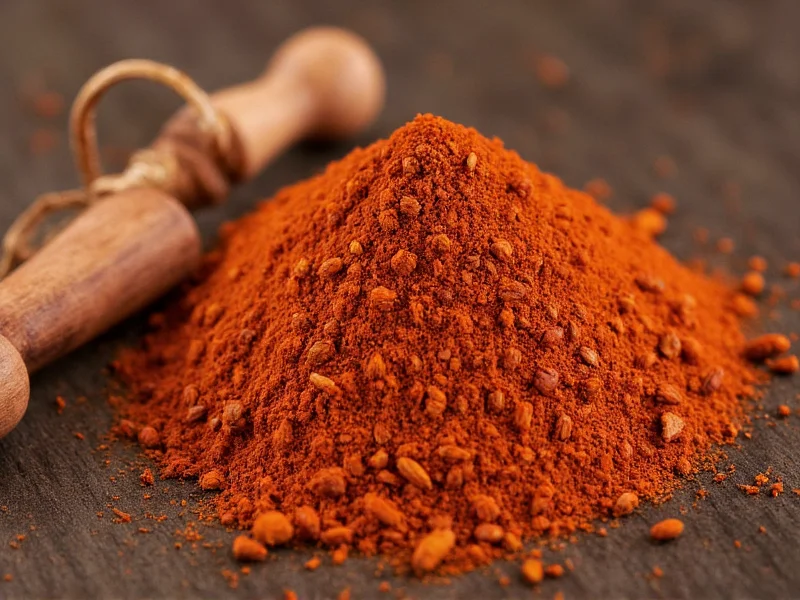
Many home cooks confuse alum with conventional spices, but it functions differently in the kitchen. This mineral compound has been used for centuries in food preparation, though its popularity has declined in modern cooking due to evolving safety perspectives.
Understanding Alum in Culinary Contexts
Alum refers specifically to potassium aluminum sulfate, a crystalline compound that's odorless and colorless when dissolved. Despite the "spice" misconception in search queries, alum serves as a functional ingredient rather than a flavor enhancer. Traditional food preservation methods across various cultures have incorporated food-grade alum for its unique properties.
When exploring alum spice culinary applications, it's crucial to distinguish between food-grade and industrial-grade alum. Only food-grade alum (often labeled as "pickling alum") should ever be considered for culinary use. The compound works by strengthening pectin in fruits and vegetables, which explains its historical role in maintaining texture during preservation.
Traditional Food Preparation Uses
Historical cookbooks and preservation guides document several specific applications where alum for pickling vegetables proved valuable:
- Preserving crispness in fermented foods - Adding small amounts to brine helps maintain cucumber firmness in traditional dill pickles
- Fruit preservation - Used in small quantities when canning apples, peaches, and berries to prevent mushiness
- Cheese making - Some traditional cheese recipes incorporate alum to help coagulate milk proteins
- Baking applications - Rarely used in certain regional baked goods as a stabilizer
| Food Application | Typical Alum Amount | Primary Function |
|---|---|---|
| Vegetable pickling (quart) | 1/8-1/4 teaspoon | Maintains crisp texture |
| Fruit preserves (quart) | 1/16-1/8 teaspoon | Prevents fruit breakdown |
| Cheese making (gallon milk) | 1/4 teaspoon | Assists coagulation |
Historical Evolution and Regulatory Timeline
Alum's culinary journey reflects evolving scientific understanding and regulatory oversight. Documented in 18th century European preservation manuals for pickling and cheese production, its use became standardized in American households by the 19th century. The U.S. Food and Drug Administration (FDA) first formally recognized alum in the 1958 Food Additives Amendment as Generally Recognized As Safe (GRAS) for specific applications at minimal concentrations (21 CFR 182.1123). As aluminum toxicity research advanced, the FDA revised its position in 1989, prohibiting alum in commercial baking powders due to renal risk concerns (Federal Register Vol. 54, No. 139). Contemporary guidelines strictly limit use to pickling at concentrations under 100 ppm, with the FDA emphasizing "occasional use" in home canning contexts (FDA Food Additives Guidelines).
Safety Considerations and Modern Perspectives
When researching is alum safe to consume in food, contemporary food science offers important context. While regulatory agencies permit limited food-grade alum use, health-conscious cooks increasingly seek alternatives due to aluminum content concerns. The compound breaks down into aluminum ions during digestion, and while occasional culinary use falls within acceptable limits, regular consumption warrants caution.
Major food safety organizations note that typical pickling amounts (1/8-1/4 teaspoon per quart) present minimal risk for most people. However, individuals with kidney conditions or aluminum sensitivities should avoid alum entirely. Many modern recipes now substitute calcium chloride or lemon juice for similar textural benefits without aluminum exposure.
Contextual Application Guidelines: When and Where to Use Alum
Modern food science reveals critical limitations in alum's culinary application. The National Center for Home Food Preservation (NCHFP) at the University of Georgia, a USDA-coordinated program, states unequivocally that "alum does not improve the firmness of properly canned pickles" and is unnecessary when following current science-based canning methods (NCHFP Pickling Guidelines). Alum should only be considered in traditional fermentation recipes (e.g., non-processed sauerkraut or kimchi) where precise pH control is absent, and even then, only at the minimal effective dose (1/16 tsp per quart). Crucially, it provides no benefit in modern water-bath canning due to interference with acidification, and the Agency for Toxic Substances and Disease Registry (ATSDR) warns against excessive aluminum intake for vulnerable populations including children and those with kidney impairment (ATSDR Aluminum Profile). Always prioritize context: alum's historical role does not translate to necessity in contemporary preservation.
Practical Usage Guidelines
For those exploring how to use alum in cooking safely:
- Always purchase food-grade alum specifically labeled for culinary use
- Measure precisely using proper kitchen scales or measuring spoons
- Dissolve completely in liquid before adding to food
- Never exceed 1/4 teaspoon per quart of liquid
- Consider alternatives like calcium chloride for similar results
When sourcing alum, look for products labeled "food grade" or "pickling alum" from reputable kitchen supply stores. Avoid industrial-grade alum sold for water treatment or other non-food purposes, as these may contain harmful impurities.
Common Misconceptions Clarified
The search term "alum spice uses" reflects widespread confusion about this ingredient. Unlike true spices that provide flavor, alum serves as a functional additive. It has no discernible taste when used properly and shouldn't be considered part of a dish's flavor profile. Some regional cooking traditions refer to it as a "spice" due to historical terminology, but modern culinary science classifies it differently.
Another frequent misunderstanding involves alum's relationship to baking powder. While some vintage baking powders contained alum, contemporary formulations typically use alternative leavening agents. This historical connection sometimes causes confusion when researching alum in traditional baking recipes.
Alternatives for Modern Cooking
Cooks concerned about aluminum exposure have several effective substitutes for alum alternatives in pickling:
- Calcium chloride - Provides similar crispness without aluminum
- Lemon juice or citric acid - Helps maintain firmness through pH adjustment
- Grape leaves - Traditional method containing tannins that preserve texture
- Proper temperature control - Modern canning techniques reduce need for additives
These alternatives address the same functional needs as alum while aligning with contemporary food safety preferences. Many professional picklers now prefer calcium chloride for its effectiveness and neutral safety profile.




 浙公网安备
33010002000092号
浙公网安备
33010002000092号 浙B2-20120091-4