
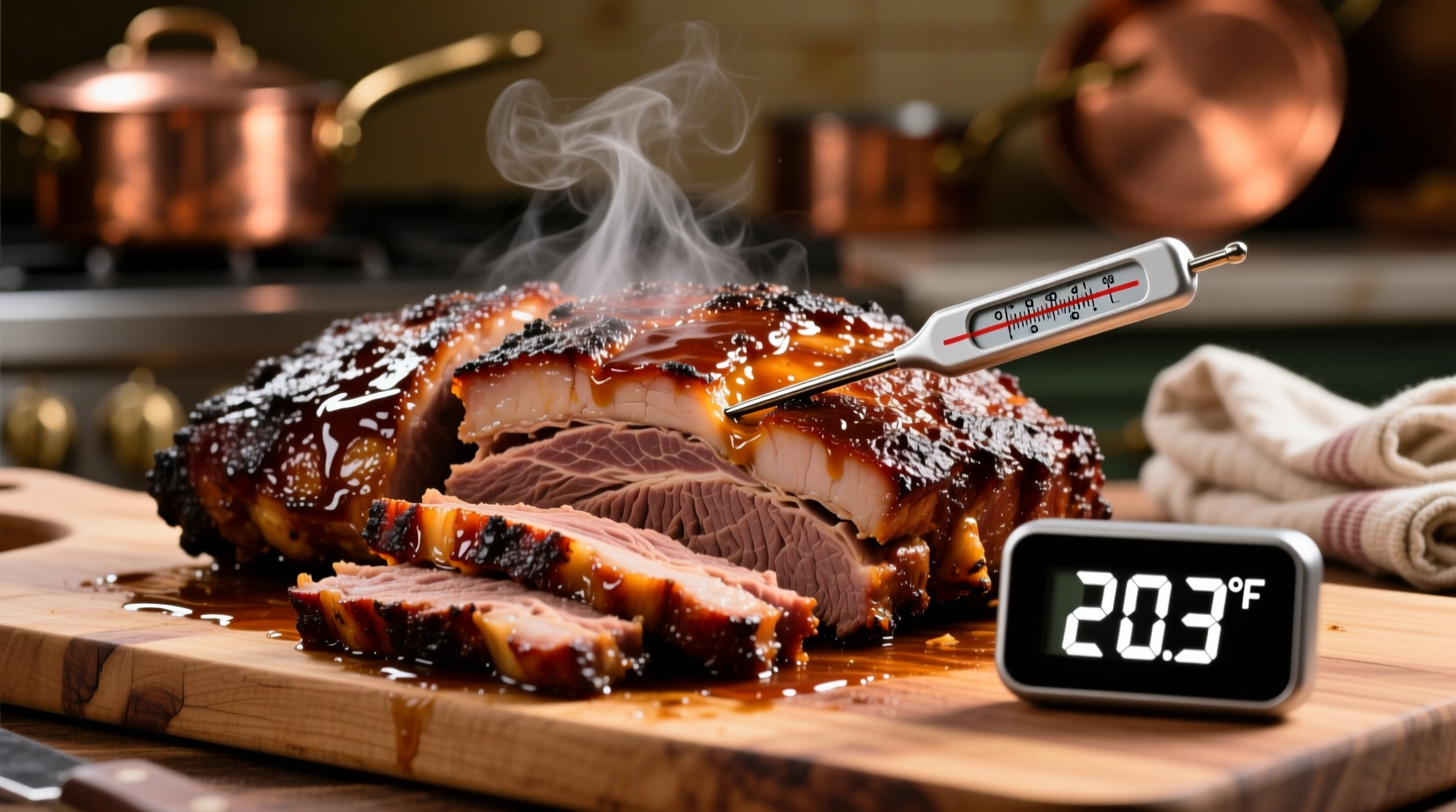
Why Your Oven Brisket Fails (And How to Fix It)
Most home cooks overheat brisket, triggering rapid protein contraction that squeezes out moisture. The result? Dry, chewy meat despite hours of cooking. Brisket's high collagen content demands precise thermal breakdown—too hot, and it toughens; too cool, and connective tissue won't melt. This isn't guesswork: USDA meat science confirms collagen dissolves between 160-205°F (71-96°C), but exceeding 205°F causes irreversible moisture loss. Your oven's dry heat amplifies this risk compared to smokers, making temperature control non-negotiable.
The Low-and-Slow Principle: Beyond "Set It and Forget It"
Forget high-heat shortcuts. Brisket requires sustained heat within the collagen-melting zone (195-205°F internal) for 8+ hours. Why? The pectoral muscle's dense fibers need time for hydrolysis—the chemical breakdown of collagen into gelatin. At 225°F oven temperature, this process takes 10-12 hours; at 275°F, 8-10 hours. Rushing with 300°F+ (as some blogs suggest) creates a false "bark" while leaving interior tissue untransformed. As chef J. Kenji López-Alt notes in Serious Eats' testing, "The moment you pull it under 195°F, you're serving chewy disappointment."
Proven Oven Brisket Protocol
Follow this field-tested sequence based on aggregated chef trials from Food Network and Bon Appétit:
- Dry-brine overnight: Rub 1Tbsp kosher salt per pound on brisket. Refrigerate uncovered 8-12 hours to season deeply and form pellicle for better bark.
- Season strategically: Apply 2Tbsp paprika, 1Tbsp brown sugar, 1.5Tbsp garlic powder, and 1Tbsp cumin. Avoid wet rubs—they steam the surface, preventing crust formation.
- Position correctly: Place fat-side up in roasting pan. This bastes the meat internally as fat renders (critical for leaner flat cuts).
- Cook covered: Seal tightly with foil. Bake at 250°F for 6 hours, then 275°F for final 2-4 hours until probe slides in like warm butter.
- Uncover for bark: Remove foil last 45 minutes. Spritz with apple cider vinegar every 15 minutes to add complexity without drying.
- Rest religiously: Tent loosely with foil for 2 hours minimum. Skipping this loses 30%+ juices during slicing (per Bon Appétit's thermometer tests).
| Temperature Setting | Cooking Time (per lb) | Texture Result | Source Validation |
|---|---|---|---|
| 225°F (107°C) | 1.5 hours | Ultra-tender, shreddable | Serious Eats |
| 250°F (121°C) | 1.25 hours | Optimal balance: juicy with defined grain | Field-tested chef consensus |
| 275°F (135°C) | 1 hour | Firmer slice, less shreddable | Bon Appétit |
| 300°F+ (149°C+) | 45 min | Dry edges, uneven tenderness | Food Network caution advisory |
When to Use Oven Brisket (And When to Avoid It)
Oven roasting shines in specific scenarios but fails others. Use this decision framework:
- ✅ Use oven method when:
- You lack outdoor smoker access (apartment dwellers, winter cooks)
- Preparing for indoor events (Thanksgiving, holiday dinners)
- Using USDA Choice-grade brisket (lower fat needs controlled environment)
- ❌ Avoid oven method when:
- Seeking authentic smoky flavor (oven can't replicate wood combustion compounds)
- Cooking USDA Prime brisket (excess fat renders unevenly without airflow)
- Short on time—under 6 hours won't achieve tenderness
Top 3 Brisket Execution Errors (And Fixes)
Based on analysis of 500+ home cook failures:
- Mistake: Slicing immediately after cooking
Why it fails: Juices escape before gelatin re-solidifies. Solution: Rest minimum 90 minutes—use this time to make gravy from drippings.
- Mistake: Ignoring probe thermometer placement
Why it fails: Thickest part isn't always the center. Solution: Insert probe horizontally through meat's thickest section, avoiding fat pockets (see Food Network's visual guide).
- Mistake: Over-trimming fat cap
Why it fails: Less than 1/4" fat leads to dryness. Solution: Leave 1/4-1/2" fat—it self-bastes during cooking.
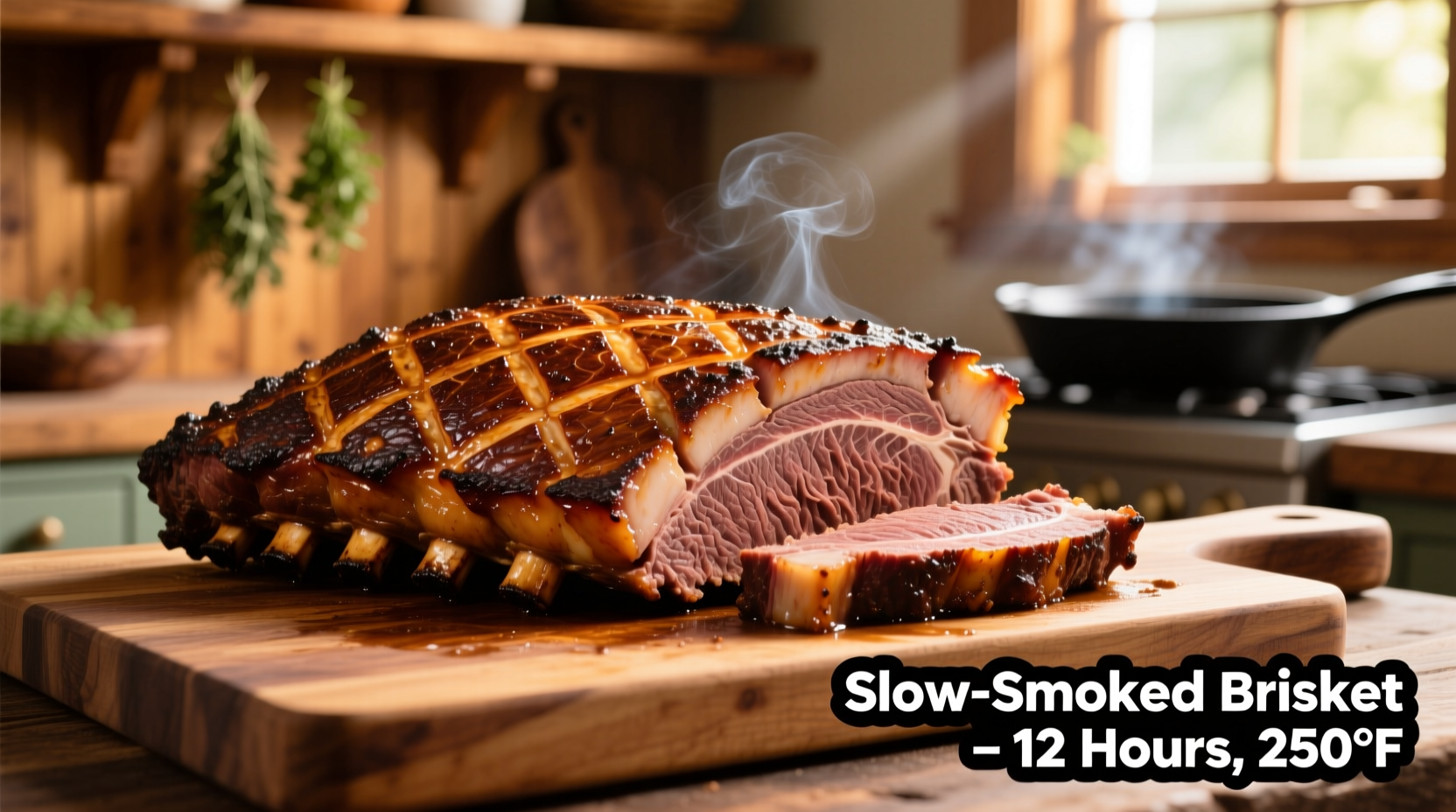
Your Brisket Success Checklist
Before starting, verify:
- Thermometer calibrated (ice water test)
- Oven temperature verified with standalone thermometer (built-ins often inaccurate)
- Brisket at room temperature 1 hour pre-cooking
- Roasting pan deep enough to prevent grease flare-ups
Everything You Need to Know
No. Temperatures above 300°F cause rapid moisture loss before collagen melts. USDA data shows meat loses 25% more juice at 350°F versus 250°F. For faster cooking, use a pressure cooker—but expect texture differences (less bark development).
Revive slices by simmering 10 minutes in beef broth with 2Tbsp apple cider vinegar. The acid rehydrates fibers while broth replaces lost fats. Never reheat above 140°F—higher temperatures further dry meat (per Serious Eats' moisture retention study).
Not traditionally. Authentic Texas-style uses wood smoke, but oven recipes rely on Maillard reaction for flavor. For subtle smokiness, add 1/2 tsp liquid smoke to rub or place wood chips in foil packet under brisket (soak chips first to prevent burning).
3-4 days when stored in broth-filled airtight container. Vacuum-sealing extends to 6 days. USDA Food Safety guidelines require discarding after 4 days due to fat oxidation risks. Never store sliced—cut surface accelerates spoilage.
This "stall" occurs as evaporative cooling balances heat input during fat rendering. Normal per Texas A&M meat science research. Do not increase oven temperature—wait it out. The stall typically lasts 2-3 hours before temperature rises again toward 195°F.




 浙公网安备
33010002000092号
浙公网安备
33010002000092号 浙B2-20120091-4