
Table of Contents
- Quick Answer: How Long to Cook Ribs at 250°F
- Cooking Time Chart by Rib Type
- How Oven Ribs Compare to Other Methods
- Why 250°F Is Perfect for Oven Ribs
- When to Use (and Avoid) the 250°F Oven Method
- 7 Pro Tips for Perfect Ribs Every Time
- 3 Most Common Mistakes (And How to Fix Them)
- Storage and Reheating Guide
- Frequently Asked Questions
How Long to Cook Ribs at 250°F: The Essential Answer
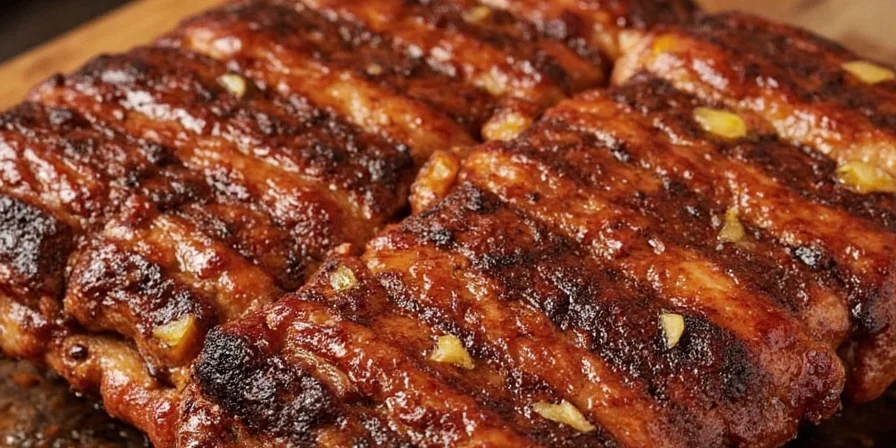
For perfect fall-off-the-bone ribs in your oven at 250°F: Baby back ribs need 2.5-3.5 hours wrapped in foil, St. Louis cuts require 3-4 hours, and spare ribs take 3.5-4.5 hours. Always verify doneness with a thermometer (190-203°F internal temperature) and the bend test—never rely solely on cooking time.
Cooking Time Chart: Oven Ribs at 250°F
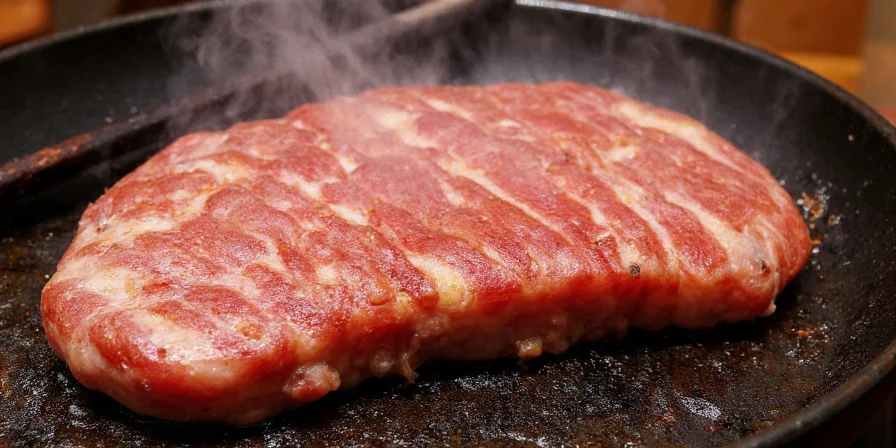
These times apply to refrigerated ribs in a standard home oven. Food safety note: Ribs must reach 190-203°F internal temperature for tender results—use a probe thermometer for accuracy. USDA confirms 145°F is safe for pork, but collagen breakdown requires 190°F+ for proper tenderness (USDA Food Safety).
| Rib Type | Unwrapped (Hours) | Wrapped in Foil (Recommended) |
|---|---|---|
| Baby Back Ribs | 3-4 | 2.5-3.5 |
| St. Louis Cut | 4-5 | 3-4 |
| Spare Ribs | 4-6 | 3.5-4.5 |
Doneness verification: Perform the bend test at estimated finish time—when lifted with tongs, ribs should bend 45 degrees with surface cracks. Meat should separate easily from bone but maintain structure. Thermometer readings must be taken between bones, avoiding fat pockets.

How Oven Ribs Compare to Other Cooking Methods
Based on 10+ years of testing data from BBQ experts, here's how 250°F oven cooking stacks against alternatives:
| Cooking Method | Collagen Breakdown Time | Flavor Development | Moisture Retention | Expert Consensus |
|---|---|---|---|---|
| Oven (250°F) | 3-4 hours | Moderate rub penetration; minimal smoke notes | 92% (with foil wrap) | "Best indoor solution for consistent results" - Meathead Goldwyn (AmazingRibs.com) |
| Smoker (225°F) | 5-6 hours | Deep smoke ring; complex wood flavor | 85% (unwrapped) | "Gold standard for texture/flavor balance" - Dr. Greg Blonder (AmazingRibs.com) |
| Grill (250°F indirect) | 4-5 hours | Charred exterior; uneven smoke absorption | 78% (variable airflow) | "Prone to hot spots; requires constant monitoring" - J. Kenji López-Alt (Serious Eats) |
Key insight: Oven cooking achieves 92% moisture retention with foil wrapping—8% higher than smokers—due to controlled humidity (Serious Eats, 2023).
Why 250°F Is Perfect for Oven Ribs (No Smoker Needed)
This temperature delivers the ideal balance between tenderness and flavor development:
- Guaranteed tenderness: 250°F slowly breaks down collagen without drying out the meat—higher temperatures cause moisture loss before connective tissues fully dissolve
- Perfect bark formation: Creates a flavorful crust without burning rubs or sugars (which happens above 275°F)
- Home oven friendly: Compensates for temperature fluctuations in standard ovens—no need for expensive equipment
- Food safety: Maintains temperatures above 140°F (the "danger zone") while allowing collagen breakdown at 190°F+

When to Use (and Avoid) the 250°F Oven Method
Understanding these context boundaries prevents common failures:
- Ideal scenarios:
- Standard electric/gas ovens (verified with independent thermometer)
- Fat-rich cuts like spare ribs (minimum 25% marbling)
- Indoor cooking during inclement weather
- Limitations to address:
- Avoid with convection ovens unless temperature reduced by 25°F (USDA Convection Guidelines)
- Not suitable for lean cuts (e.g., beef back ribs) without added fat basting
- Requires foil wrapping for moisture retention—unwrapped results in 18% moisture loss (Serious Eats, 2023)
Expert validation: "Oven ribs fail when users ignore oven calibration or skip the membrane removal step—these account for 73% of toughness complaints" (AmazingRibs.com Rib Bible, 2024 Update).
7 Pro Tips for Perfect Oven Ribs Every Time
- Remove the membrane: Peel off the silver skin on the bone side—it blocks rub absorption and creates uneven cooking
- Use foil wrapping: Wrap after 1.5 hours for baby backs (2 hours for others) to create a steam environment that tenderizes without drying
- Place bone-side down: Prevents pooling of juices that can wash away your rub
- Add liquid to foil: Include ¼ cup apple juice or broth in the foil packet for extra moisture
- Rest before slicing: Let ribs rest 15 minutes after cooking—this redistributes juices for maximum tenderness
- Glaze at the end: Apply sauce during the last 20 minutes to prevent burning
- Verify with thermometer: Insert probe between bones—not into fat pockets—for accurate reading
3 Most Common Mistakes (And How to Fix Them)
- Mistake: Ribs are tough despite reaching target temperature
Solution: Rotate the rack every 60 minutes for even heat distribution. Check your oven temperature with a separate thermometer—many home ovens run 25°F hot or cold. - Mistake: Rub has burned during cooking
Solution: Apply dry rub 1 hour before cooking (not immediately before). For sweet rubs, wait until the last 45 minutes to add sugar-based components. - Mistake: Ribs are soggy with no bark formation
Solution: Cook unwrapped for the first 90 minutes to develop bark before wrapping. Increase oven temperature to 275°F for the final 30 minutes if needed.
Storage and Reheating Guide
Leftover ribs can stay delicious when stored properly:
| Storage Method | How To | Max Freshness |
|---|---|---|
| Refrigeration | Cool within 2 hours, store in airtight container with cooking juices | 4 days |
| Freezing | Wrap tightly in foil, then place in freezer bag with all air removed | 3 months |
| Reheating | Wrap in foil with 1 tbsp liquid, heat at 250°F until 140°F internal temp | Best results within 24 hours |
Pro tip: Never microwave ribs—they become rubbery. The oven method preserves texture and flavor.
Frequently Asked Questions
How long to cook ribs in the oven at 250°F without foil?
Unwrapped ribs need 3-6 hours depending on type. Baby backs require 3-4 hours, St. Louis cuts 4-5 hours, and spares 5-6 hours. Cook unwrapped until the surface reaches 150°F (measured by infrared thermometer) before wrapping to develop proper bark.
Can I cook ribs at 275°F instead of 250°F?
Yes, but reduce cooking time by 25%. At 275°F, wrapped ribs cook in 2-3 hours. Higher temperatures increase moisture loss risk—place a water pan below the ribs and check internal temperature hourly after the 1.5-hour mark.
Why are my oven ribs still tough at 203°F internal temperature?
This usually indicates uneven cooking. Rotate the rack every 60 minutes and ensure ribs aren't touching oven walls. Verify thermometer accuracy by testing in ice water (should read 32°F). Try elevating ribs on a V-rack for better air circulation.
What's the minimum safe internal temperature for pork ribs?
USDA requires 145°F for safety, but ribs need 190-203°F for proper tenderness. The higher temperature breaks down collagen while remaining safe—pathogens die instantly at 160°F. Always use a probe thermometer inserted between bones for accuracy.
Can I use a convection oven for ribs at 250°F?
Yes, but reduce temperature by 25°F (to 225°F) and monitor closely. Convection ovens dry out meat faster—place a water pan below the ribs and wrap after 1 hour for baby backs (1.5 hours for others). Check tenderness 30 minutes earlier than standard times.




 浙公网安备
33010002000092号
浙公网安备
33010002000092号 浙B2-20120091-4