
Why Your Spices Lose Flavor Faster Than Necessary
Ever opened a spice jar only to find faded color and weak aroma? You're not alone. Improper storage wastes $1.2 billion annually in degraded spices (SafetyCulture). Most home cooks unknowingly accelerate flavor loss by storing spices near stoves, in clear containers, or past arbitrary "6-month" timelines. The truth? With science-backed methods, your cinnamon sticks could stay vibrant for four years—not six months.
Debunking the 6-Month Spice Myth
That viral "replace spices every 6 months" rule lacks evidence. David DeSouza of Monterey Bay Herb Co. clarifies: "Ground spices last 1–3 years and whole spices last longer. They don’t spoil but lose flavor over time—use your senses." (Fox News). Real degradation happens through four silent killers:
Spice Degradation Factors
- 🔥 Heat: Accelerates oil evaporation (optimal: 10–21°C/50–70°F)
- 💧 Humidity: >60% causes clumping and microbial growth
- ☀️ Light: Breaks down pigments like curcumin in turmeric
- 🌬️ Oxygen: Oxidizes essential oils within hours of grinding
Source: Eurofins Shelf Life Analysis
Optimal Storage Conditions: Beyond the Basics
Temperature and humidity control matters more than container choice. SafetyCulture's dry food guidelines mandate storing spices 15cm off floors on non-porous shelving. But kitchen realities create trade-offs:
| Storage Factor | Ideal Condition | When to Avoid | Practical Compromise |
|---|---|---|---|
| Temperature | 10–21°C (50–70°F) | Near stoves/windows (exceeds 27°C/80°F) | Pantry interior wall (not cabinet above oven) |
| Humidity | <60% RH | Bathrooms/dishwasher proximity | Add silica packets to containers in humid climates |
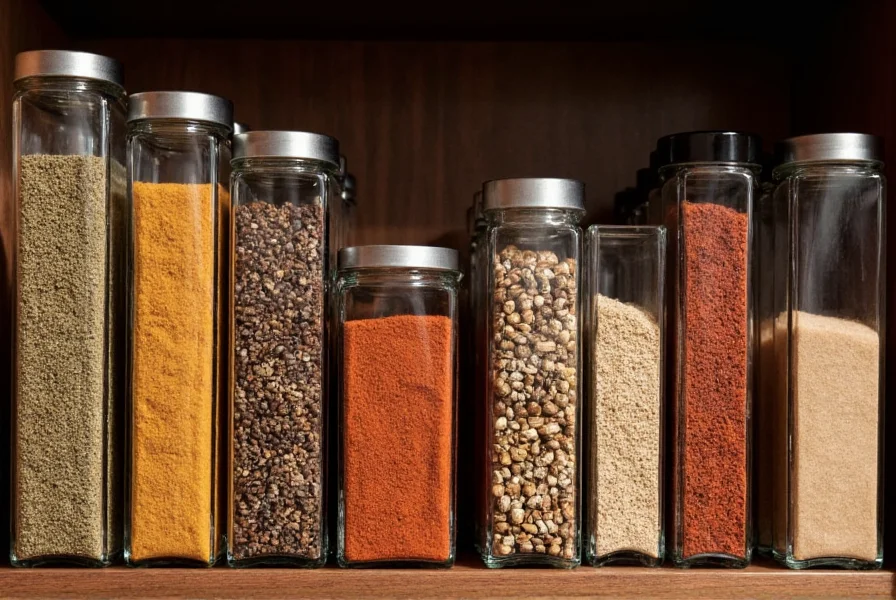
| Light Exposure | Total darkness | Clear containers on open shelves | Opaque tins or UV-blocking glass (like Miron) |
| Container Material | Glass/metal | Plastic with oily spices (paprika, chili) | Stainless steel for long-term whole spice storage |
Spice-Specific Storage Guide
Not all spices degrade equally. Whole forms consistently outperform ground versions. Eurofins' shelf life analysis reveals critical differences:
| Spice | Whole Form Shelf Life | Ground Form Shelf Life | Key Vulnerability | Pro Tip |
|---|---|---|---|---|
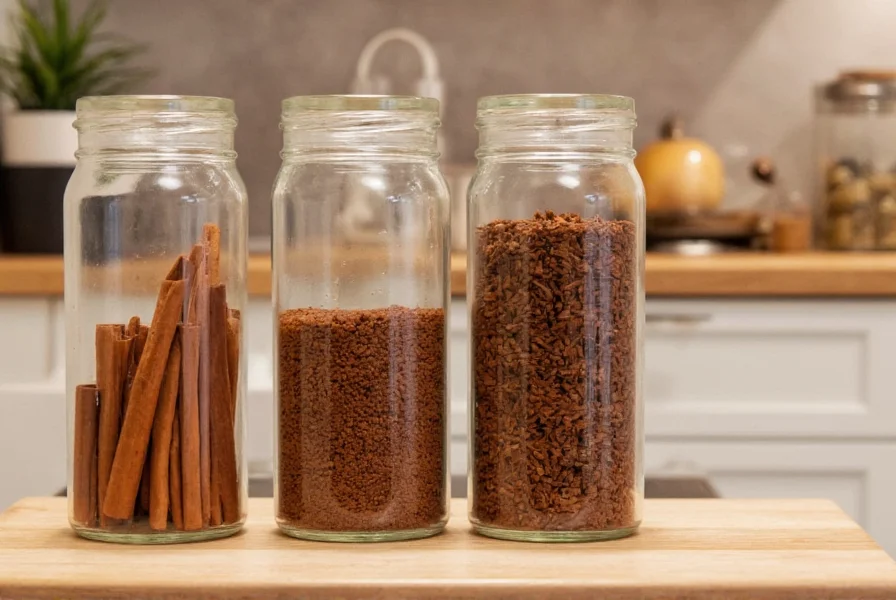
| Cinnamon | 3-4 years | 1-2 years | Light exposure degrades cinnamaldehyde | Store sticks vertically to preserve oils |
| Turmeric | 2-3 years | 1-1.5 years | Light destroys curcumin potency | Use amber glass to block UV rays |
| Cumin | 3-4 years | 1-2 years | Moisture causes rapid clumping | Grind only what you'll use in 2 weeks |
| Paprika | N/A | 2-3 years | Oily content degrades plastic containers | Never use plastic—opt for metal tins |
| Ginger | 3-4 years | 1-2 years | Heat accelerates gingerol breakdown | Freeze whole root; grate as needed |
How to Test Spice Freshness (No Guesswork)
Forget expiration dates. Use these sensory checks:
- Aroma test: Rub 1/4 tsp between palms. Fresh spices release strong, complex scents within 10 seconds.
- Color check: Compare to new spices. Faded red (paprika) or yellow (turmeric) indicates degradation.
- Taste test: Sprinkle on plain rice. Weak flavor? It's time to replace.
Pro chefs note: "White pepper for béchamel sauce loses its sharpness after 18 months—freshly ground makes the difference between bland and brilliant," shares Chef Elena Rodriguez of Culinary Institute of America.
5 Costly Storage Mistakes (and How to Fix Them)
- Mistake: Storing spices above the stove
Solution: Move to a cool interior cabinet—heat reduces potency by 50% in 6 months (Eurofins) - Mistake: Using original clear bottles
Solution: Transfer to opaque containers; light degrades spices 3x faster - Mistake: Buying bulk ground spices
Solution: Purchase whole spices and grind small batches—preserves volatile oils - Mistake: Storing near salt (hygroscopic)
Solution: Keep 30cm away to prevent moisture transfer - Mistake: Refrigerating dry spices
Solution: Condensation causes clumping—only refrigerate fresh herbs
Your Action Plan for Flavor Preservation
- Transfer spices to airtight glass/metal containers immediately after purchase
- Store in darkest pantry area at consistent 15–20°C (60–68°F)
- Label containers with purchase date and "grind date" for ground spices
- Conduct quarterly freshness tests using aroma/color checks
- Replace ground spices after 2 years, whole spices after 4 years
This system prevents the $200 average annual waste from degraded spices (SafetyCulture). Remember: Proper storage doesn't make spices last forever—it preserves their peak flavor window.
Everything You Need to Know
Whole spices retain full flavor for 3–4 years when stored in airtight containers away from light and heat. Ground spices last 1–3 years depending on oil content. Source: Eurofins Shelf Life Analysis. Always test aroma before use—spices don't spoil but lose potency.
Refrigeration causes condensation that accelerates clumping and mold growth. SafetyCulture's dry food guidelines specify 10–21°C (50–70°F) as optimal. Freezing works only for fresh herbs—not dried spices. Exceptions: Oily spices like paprika in humid climates may use freezer storage with desiccant packets, but room-temperature dark storage is universally recommended.
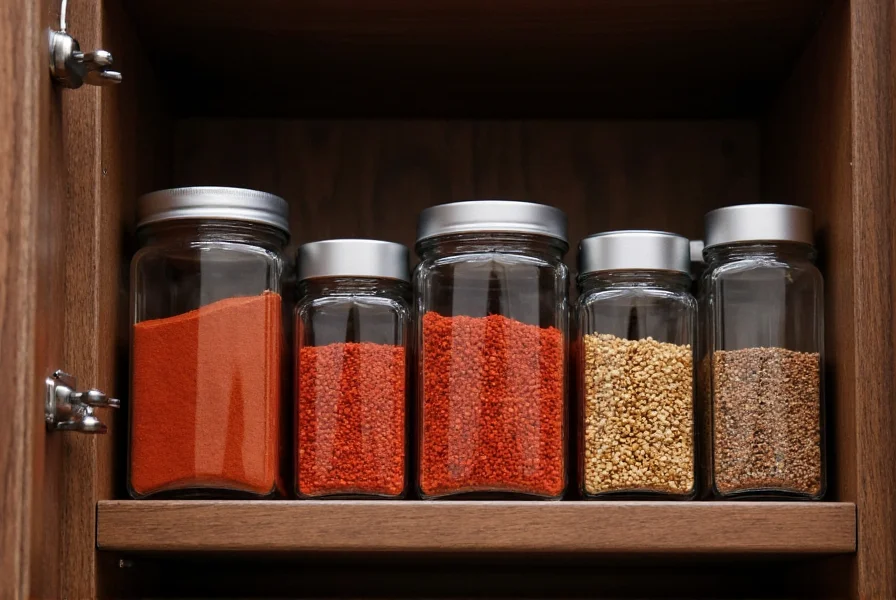
Glass or metal containers outperform plastic. Opaque glass blocks 99% of UV light while preventing oxygen transfer. Metal tins (like stainless steel) are ideal for whole spices over 2 years. Avoid plastic with oily spices—paprika and chili degrade plastic within 6 months, leaching chemicals. Eurofins confirms airtight seals reduce oxidation by 70% compared to original packaging.
Spices rarely spoil but lose potency. Check for: Faded color (e.g., bright red paprika turning orange), weak aroma (rub between palms—fresh spices should smell strong in 10 seconds), and flat taste. Clumping indicates moisture exposure—discard if mold appears. Never use spices with off odors; this signals oxidation beyond safe levels per SafetyCulture guidelines.
Yes for longevity. Whole spices retain 90% of volatile oils for 3–4 years versus 1–2 years for pre-ground versions (Eurofins). Grind only what you'll use within 2 weeks—essential oils evaporate rapidly after grinding. Exception: Turmeric and ginger benefit from grinding for curcumin absorption, but store ground versions in amber glass immediately. This practice extends usable flavor by 6–8 months.




 浙公网安备
33010002000092号
浙公网安备
33010002000092号 浙B2-20120091-4