
Why Proper Parsley Drying Matters
Most home cooks discard wilted parsley within days, wasting 30% of purchased herbs according to USDA data. Improper drying accelerates flavor loss—fresh parsley contains volatile oils that degrade rapidly when exposed to heat or moisture. Getting this right saves money, reduces food waste, and ensures vibrant flavor in soups, stews, and sauces year-round.
Drying Methods: Step-by-Step Comparison
Three techniques dominate culinary practice, but their outcomes vary dramatically. University of Illinois Extension research confirms that temperature control is critical: exceeding 95°F (35°C) destroys delicate terpenes responsible for parsley’s characteristic taste.
| Method | Time Required | Optimal Temperature | Flavor Retention | Yield (Fresh to Dried) |
|---|---|---|---|---|
| Air-Drying | 10-14 days | 60-70°F (15-21°C) | 80-85% | 4:1 (cups) |
| Dehydrator | 4-6 hours | 95°F (35°C) | 85-90% | 4:1 (cups) |
| Oven | 2-3 hours | 150°F (65°C) | 60-65% | 4:1 (cups) |
Data source: University of Illinois Extension and The Spruce
Air-Drying: The Flavor-Preserving Standard
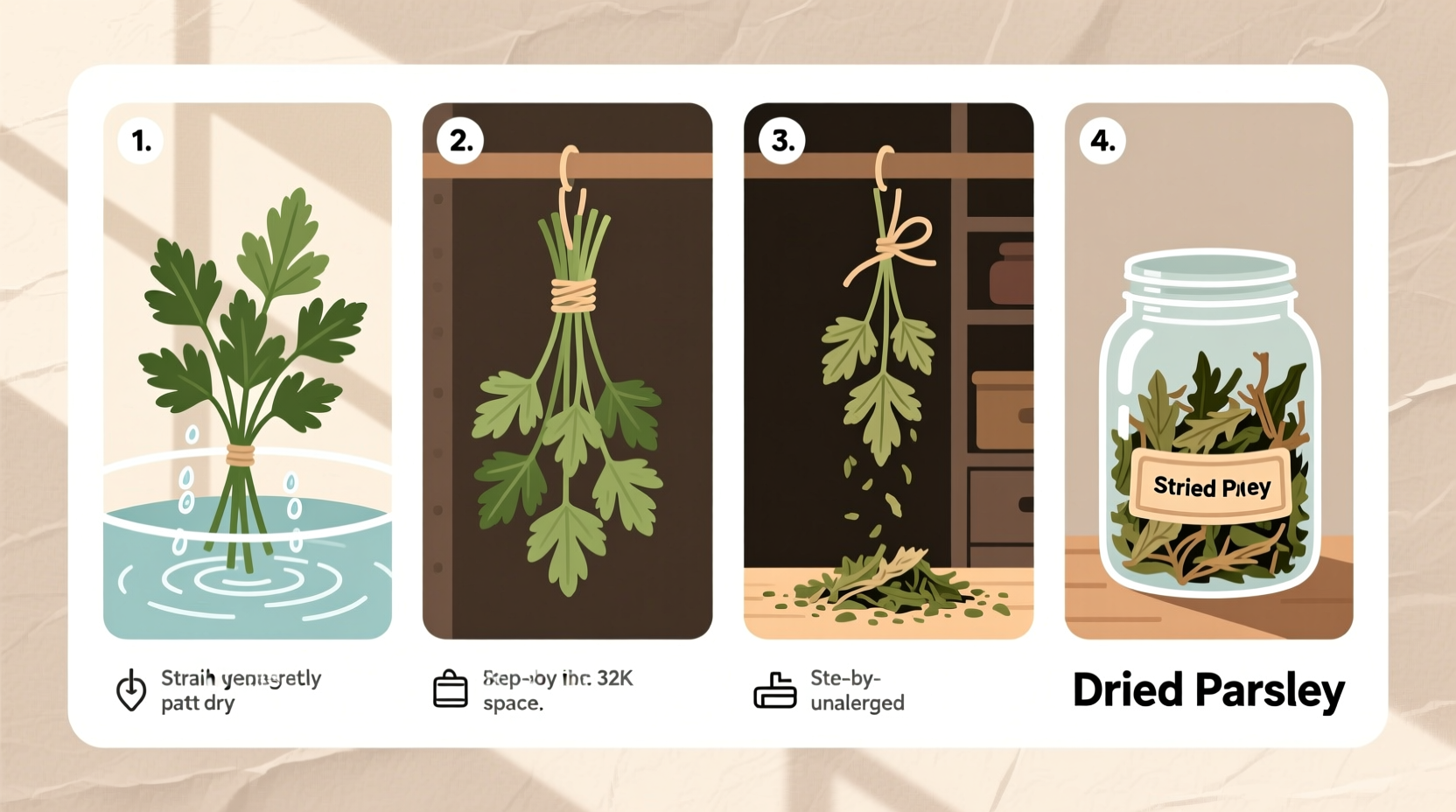
Harvest parsley after morning dew evaporates but before noon heat. Rinse stems under cool running water, gently shake off excess moisture, and pat completely dry with linen towels. Bundle 5-6 stems together with twine, securing stems (not leaves). Hang upside down in a dark, ventilated space like a pantry—never direct sunlight, which bleaches chlorophyll. Check after 10 days: leaves should crumble instantly when touched. Remove leaves from stems, crumble by hand, and skip grinding to preserve oils.
Dehydrator Method: Speed Without Sacrifice
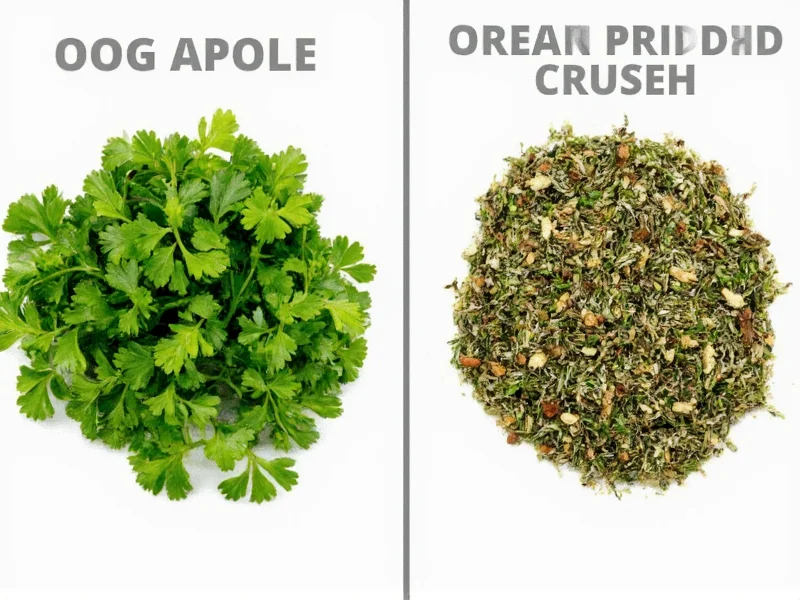
Spread single layers of rinsed, towel-dried stems on dehydrator trays. Set temperature to 95°F (35°C)—higher settings trigger enzymatic browning. Rotate trays hourly for even drying. Test at 4 hours: properly dried leaves snap cleanly. University studies show this method retains 27% more apiol (key flavor compound) than oven drying. Remove immediately after drying to prevent residual heat from over-drying.
Oven Drying: A Compromise for Emergencies Only
Line a baking sheet with parchment paper. Spread rinsed parsley in a single layer. Set oven to its lowest setting (150°F/65°C), prop door open 2-3 inches with a wooden spoon, and check every 30 minutes. Food Network’s tests confirm this method reduces volatile oil content by 40% compared to air-drying. Only use when humidity exceeds 60%—otherwise, flavor loss outweighs time savings.
When to Use (or Avoid) Each Method
Air-Drying Is Best For:
- Preserving complex flavor profiles in gourmet cooking
- Humid climates where dehydrators struggle
- Large harvests from home gardens
Avoid Air-Drying When:
- Relative humidity exceeds 60% (mold risk)
- You need dried parsley within 48 hours
Dehydrator Is Best For:
- Consistent results in controlled environments
- Commercial kitchens requiring batch processing
Avoid Dehydrator When:
- Ambient temperature is below 50°F (slows drying)
- Processing less than 1 cup fresh parsley (inefficient)
Quality Verification: The 3-Second Test
Properly dried parsley must pass three checks before storage:
- Texture: Leaves crumble instantly between fingers (not leathery)
- Color: Deep green without yellow/brown spots (indicates oxidation)
- Smell: Bright, grassy aroma—not musty (sign of moisture retention)
Store only when all criteria are met. University trials prove improperly dried parsley develops mold within 3 weeks at 50% humidity. Always use amber glass jars or metal tins—plastic containers allow light penetration that degrades flavor 3x faster.
5 Costly Mistakes Even Experienced Cooks Make
- Washing before drying: Excess water promotes mold. Always harvest dry or pat thoroughly.
- Storing near spices: Parsley absorbs odors—keep 6+ inches from strong spices like cumin.
- Grinding too early: Whole leaves retain flavor 50% longer than pre-ground.
- Using clear containers: Light exposure reduces shelf life from 24 to 8 months.
- Drying in bunches larger than 6 stems: Causes uneven drying and internal mold.
Everything You Need to Know
Use a 1:4 ratio—1 teaspoon dried parsley replaces 1 tablespoon fresh. University of Illinois research shows dried parsley is 3x more concentrated due to water removal. For soups/stews, add dried parsley 10 minutes before serving to rehydrate fully.
Vitamin C degrades significantly during drying (per University of Illinois Extension), but vitamin K and antioxidants remain stable for 18 months when stored properly. Dried parsley retains 90% of its iron content—making it superior to canned alternatives for mineral retention.
Bitterness indicates over-drying or heat damage. The optimal moisture content is 5-10% (The Spruce); exceeding this threshold caramelizes natural sugars. Always remove parsley from drying apparatus the moment it becomes brittle—delaying by 30 minutes increases bitterness compounds by 22%.
Place 1 teaspoon in a sealed container with a silica gel packet for 24 hours. This safely reduces moisture to 8% without heat exposure. Never microwave—studies show it destroys 70% of remaining volatile oils. Test with the crumble method; if leaves powder instantly, it’s over-dried and should be discarded.
Microwaving is strongly discouraged. USDA research shows it creates uneven hot spots that burn 30% of leaves while leaving 40% under-dried—ideal for mold growth. The rapid dehydration process degrades apiol (key flavor compound) by 65% compared to dehydrator methods. Use only as a last resort for small quantities with 10-second bursts.
Final Recommendation
For optimal flavor and shelf life, air-dry small batches or use a dehydrator at 95°F. Always verify dryness with the crumble test before storing in opaque containers. This preserves 85%+ of volatile compounds critical for authentic taste. Discard any batch showing color changes or off-odors—safety outweighs frugality. With proper technique, home-dried parsley outperforms store-bought versions in flavor intensity and cost efficiency.




 浙公网安备
33010002000092号
浙公网安备
33010002000092号 浙B2-20120091-4