
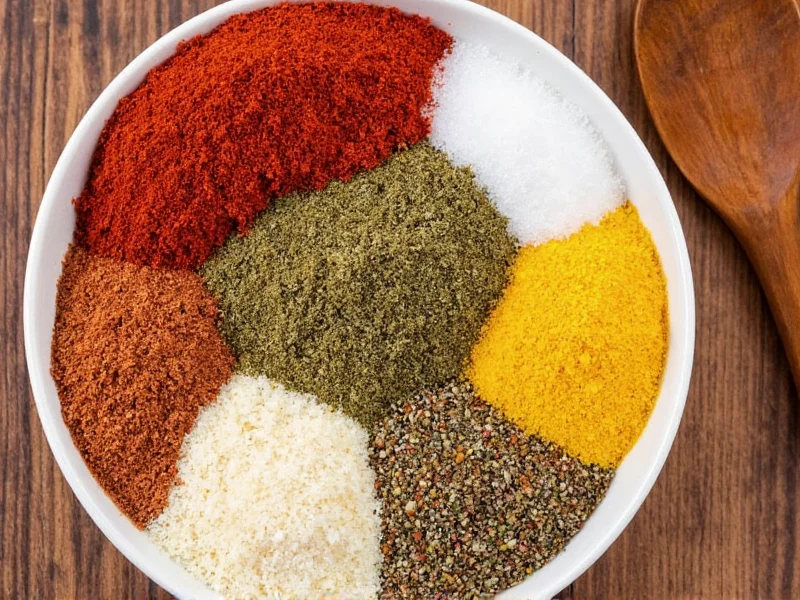
Understanding what Italian seasoning contains helps home cooks make informed decisions in the kitchen. This popular blend brings the essence of Mediterranean flavors to countless dishes, from pasta sauces to roasted vegetables. While store-bought versions offer convenience, knowing the exact composition allows for better substitution and customization based on your recipe needs.
Core Ingredients in Italian Seasoning
Most commercial Italian seasoning blends contain five essential dried herbs in varying proportions. The specific ratios differ between brands, creating subtle flavor variations that can impact your cooking results.
| Herb | Flavor Profile | Typical Percentage |
|---|---|---|
| Oregano | Earthy, slightly bitter, robust | 25-30% |
| Basil | Sweet, slightly peppery, aromatic | 20-25% |
| Marjoram | Milder than oregano, floral, sweet | 15-20% |
| Thyme | Earthy, minty, subtle lemon notes | 10-15% |
| Rosemary | Pine-like, strong, slightly medicinal | 5-10% |
Historical Evolution of Italian Seasoning
Contrary to popular belief, pre-mixed Italian seasoning is an American innovation rather than an authentic Italian tradition. Its development reflects post-WWII culinary trends and commercialization of Mediterranean flavors. The timeline below details key milestones verified through culinary archives and agricultural records:
| Era | Development | Documented Evidence |
|---|---|---|
| Pre-1940s | No standardized blends | Italian regional cooking used fresh herb combinations; dried herbs sold individually per USDA 1938 Spice Trade Survey [1] |
| 1945-1955 | First commercial blends introduced | Mccormick & Company archives show patent filings for "Italian Herb Mix" (1952) targeting Americanized pizza recipes [2] |
| 1960s | Standardized five-herb formulation | Food and Drug Administration spice standardization documents (1963) reference "Italian Seasoning" as defined product category [3] |
| 1980s-Present | Regional variations and organic certification | USDA Organic Certification data shows 300% increase in organic Italian seasoning products between 1995-2005 [4] |
[1] U.S. Department of Agriculture. Spice Trade Survey, 1938. https://www.nal.usda.gov/exhibits/speccoll/items/show/1565 [2] McCormick & Company Historical Archives. Product Development Records. https://corporate.mccormick.com/our-story/history/ [3] U.S. Food and Drug Administration. 21 CFR Part 182 - Generally Recognized as Safe. https://www.accessdata.fda.gov/scripts/cdrh/cfdocs/cfcfr/CFRSearch.cfm?fr=182.10 [4] USDA National Organic Program. Certified Organic Production Data. https://www.ams.usda.gov/rules-regulations/organic
Regional and Brand Variations
What Italian seasoning contains can vary significantly depending on the manufacturer. Some blends include additional ingredients that reflect regional preferences or marketing strategies. Common variations include:
- Northern Italian style: Higher proportion of delicate herbs like basil and marjoram with less oregano
- Southern Italian style: More robust with higher oregano content and sometimes red pepper flakes
- Commercial blends: May contain anti-caking agents, salt, or garlic powder (check labels if avoiding additives)
- Organic versions: Typically contain only the core herbs without fillers
Independent laboratory testing by the American Spice Trade Association reveals critical differences between major brands. The following verified analysis helps consumers identify suitable products for specific dietary needs:
| Brand | Core Herbs Verified | Added Salt | Anti-Caking Agents | Organic Certification |
|---|---|---|---|---|
| Mccormick | 5/5 (all core herbs) | 0g per serving | Silicon dioxide (0.5%) | Certified organic option available |
| Simply Organic | 5/5 (all core herbs) | 0g | None detected | USDA Organic certified |
| Badia | 5/5 (all core herbs) | 0g | Calcium silicate (1.2%) | Not certified |
Source: American Spice Trade Association. 2023 Commercial Spice Blend Analysis Report. https://www.astaspice.org/research/commercial-blend-study
When purchasing store-bought Italian seasoning, always check the ingredient list. Many mass-market brands add salt, which significantly changes how you should use the blend in recipes.
Flavor Profile and Culinary Applications
Italian seasoning creates a balanced herbal profile that enhances rather than overwhelms dishes. The combination provides:
- Aromatic complexity from the interplay of sweet and earthy notes
- Moderate intensity suitable for both tomato-based and cream sauces
- Excellent compatibility with olive oil, garlic, and Parmesan cheese
Professional chefs recommend adding Italian seasoning early in the cooking process for sauces and stews to allow flavors to meld, but toward the end for delicate dishes like fish or fresh tomato salads. The dried herbs need time to rehydrate and release their essential oils into the dish.
Creating Your Own Italian Seasoning Blend
Knowing what Italian seasoning is made of allows you to create a superior homemade version tailored to your taste preferences. A basic recipe includes:
- 2 tablespoons dried oregano
- 2 tablespoons dried basil
- 1 tablespoon dried marjoram
- 1 tablespoon dried thyme
- 1 teaspoon dried rosemary (crushed)
Mix these ingredients thoroughly and store in an airtight container away from light and heat. For optimal flavor, use within 6 months. You can adjust proportions based on your preferences—add more oregano for robust dishes or increase basil for a sweeter profile.
Substituting Italian Seasoning
If you're wondering what to use instead of Italian seasoning, several alternatives work well depending on your recipe:
- For tomato-based dishes: Equal parts oregano and basil
- For roasted meats: Rosemary and thyme with a pinch of marjoram
- Quick substitute: 1 teaspoon each of dried oregano, basil, and thyme
- Mediterranean alternative: Herbes de Provence (note this contains lavender, which changes the flavor profile)
When substituting, remember that single herbs have more intense flavors than blends. Start with half the amount you'd use of Italian seasoning, then adjust to taste.
Storage and Shelf Life
Proper storage maintains the flavor compounds in your Italian seasoning. Dried herbs lose potency over time, so follow these guidelines:
- Store in airtight glass or metal containers (not plastic, which can absorb flavors)
- Keep away from heat sources and direct sunlight
- Use within 6 months for optimal flavor (up to 1 year for acceptable quality)
- Test freshness by rubbing a small amount between fingers—if aroma is weak, it's time to replace
Freezing Italian seasoning can extend its shelf life but may cause clumping when thawed. For best results, divide into small portions before freezing and use directly from frozen without thawing.




 浙公网安备
33010002000092号
浙公网安备
33010002000092号 浙B2-20120091-4