
When you see “natural flavors” on a food label, you're encountering one of the most misunderstood terms in modern food labeling. This single phrase appears in thousands of products yet reveals almost nothing about what’s actually inside. Understanding what natural flavors truly mean empowers you to make more informed choices about the foods you consume.
Decoding the Official Definition
The U.S. Food and Drug Administration (FDA) provides the legal definition that governs how “natural flavors” can be labeled in the United States. According to 21 CFR 101.22, natural flavors are “the essential oil, oleoresin, essence or extractive, protein hydrolysate, distillate, or any product of roasting, heating or enzymolysis, which contains the flavoring constituents derived from a spice, fruit or fruit juice, vegetable or vegetable juice, edible yeast, herb, bark, bud, root, leaf or similar plant material, meat, seafood, poultry, eggs, dairy products, or fermentation products thereof, whose significant function in food is flavoring rather than nutritional.”
This definition creates several important distinctions:
- Natural flavors must originate from plant or animal sources
- They’re defined by their original source, not their processing
- Their primary purpose must be flavoring, not nutrition
- They can contain additional ingredients like solvents and preservatives
Natural vs. Artificial: Understanding the Key Differences
While both natural and artificial flavors serve the same purpose—enhancing taste—their origins and production methods differ significantly. The following comparison clarifies these distinctions:
| Characteristic | Natural Flavors | Artificial Flavors |
|---|---|---|
| Source Material | Plant or animal origin | Synthetic chemical compounds |
| Production Process | Extraction, distillation, or other physical processes | Chemical synthesis in laboratories |
| Chemical Composition | Identical or similar to compounds found in nature | May not exist in nature |
| Labeling Requirement | Listed as “natural flavors” | Listed as “artificial flavors” |
| Regulatory Oversight | FDA under 21 CFR 101.22 | FDA under 21 CFR 101.22 |
Interestingly, the chemical composition of natural and artificial flavors can be identical. Vanillin, the primary component of vanilla flavor, can be extracted from vanilla beans (natural) or synthesized from petrochemicals (artificial), yet the molecules are structurally the same.
The Manufacturing Journey: From Source to Shelf
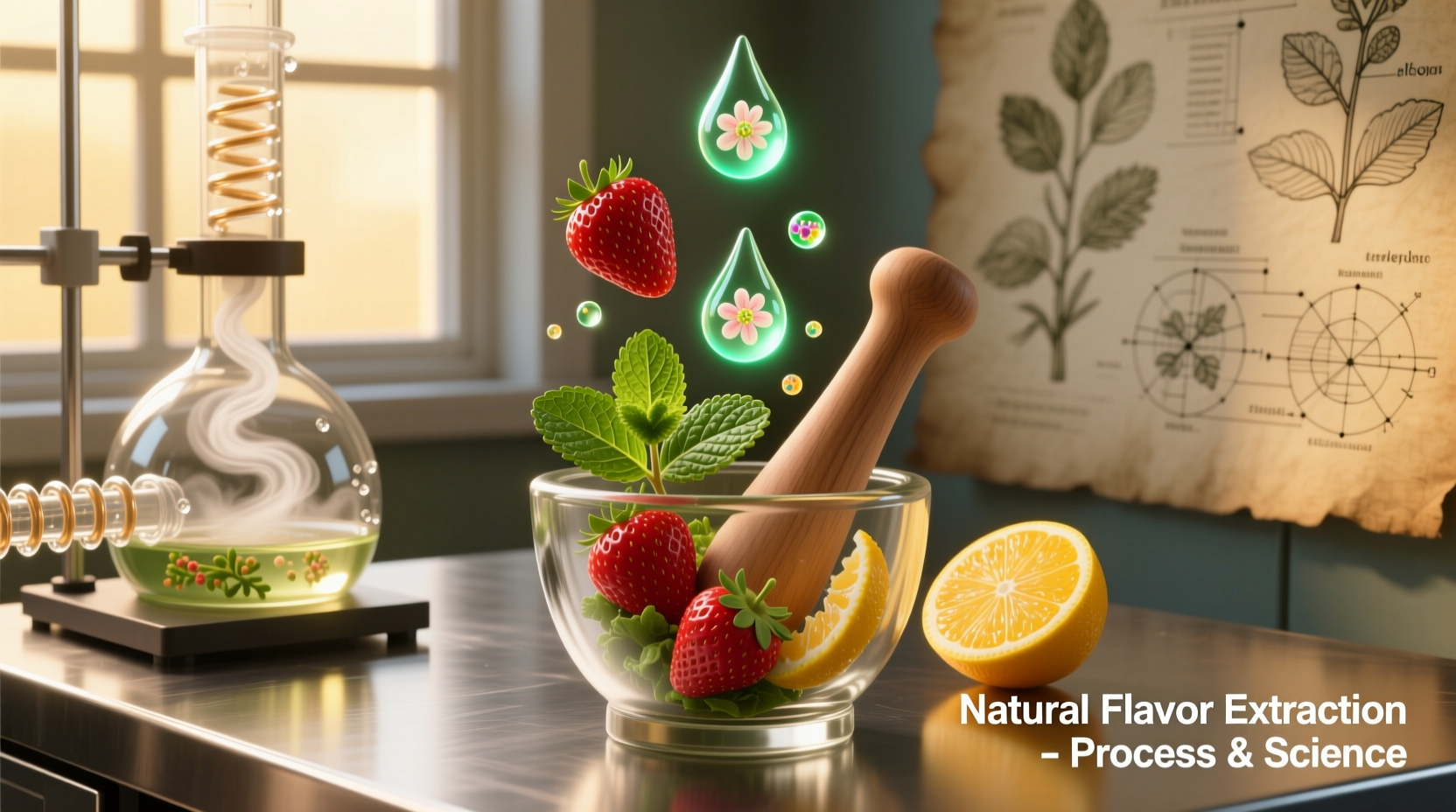
Despite the “natural” label, the path from raw material to flavoring agent involves sophisticated processing. The typical production sequence includes:
- Source Selection: Manufacturers choose specific plant varieties or animal products known for desirable flavor compounds
- Extraction: Using methods like cold pressing, distillation, or solvent extraction to isolate flavor compounds
- Concentration: Removing water and non-flavor components to create potent flavoring agents
- Standardization: Blending extracts to ensure consistent flavor profile across batches
- Carrier Addition: Mixing with solvents, preservatives, or anti-caking agents for stability
- Final Product: A highly processed flavoring agent that bears little resemblance to the original source
This extensive processing explains why “natural strawberry flavor” might contain no actual strawberries. Instead, flavor chemists identify the key compounds that create strawberry taste and replicate them using other natural sources that are more cost-effective or stable.
Regulatory Timeline: How Flavor Labeling Evolved
The regulation of flavorings has evolved significantly over the past century. Understanding this historical context reveals why current labeling practices exist:
- 1906: Pure Food and Drug Act established first federal regulations for food labeling
- 1938: Federal Food, Drug, and Cosmetic Act created modern regulatory framework
- 1969: FDA establishes Flavor and Extract Manufacturers Association (FEMA) as authority on flavor safety
- 1993: FDA finalizes definition of “natural” for labeling purposes
- 2000s: Consumer demand drives increased use of natural flavors over artificial alternatives
- 2016: FDA issues guidance on use of “natural” claims but stops short of strict definition
- 2020s: Ongoing debates about mandatory disclosure of specific natural flavor components
Common Misconceptions About Natural Flavors
Several persistent myths surround natural flavors that deserve clarification:
“Natural Flavors Are Healthier Than Artificial Ones”
While consumers often assume natural equals healthier, the reality is more complex. Both natural and artificial flavors are used in minute quantities that contribute negligible nutrition. Some natural flavors undergo more processing than their artificial counterparts. The health impact depends more on what the flavor is added to (soda vs. yogurt) than the flavor type itself.
“Natural Flavors Contain Only Natural Ingredients”
Under FDA rules, natural flavor products can contain additional ingredients like solvents, preservatives, and carriers that aren't themselves “natural.” These auxiliary components can make up to 80% of the final flavoring product yet don't require individual listing on food labels.
“Organic Products Can't Contain Natural Flavors”
Organic regulations actually permit certain natural flavors in organic products, provided they meet specific criteria. The USDA National Organic Program maintains a list of approved natural flavoring substances that can be used in organic foods.
Practical Guidance for Consumers
When navigating products with natural flavors, consider these practical strategies:
- Check for specificity: Some manufacturers voluntarily disclose flavor sources (e.g., “strawberry flavor from strawberries”)
- Consider the product context: Natural flavors in yogurt differ significantly from those in soda
- Research brands: Companies committed to transparency often provide additional information on their websites
- Understand limitations: Even “no artificial flavors” doesn't mean “no flavor additives”
- Ask questions: Contact manufacturers directly for more detailed ingredient information
Certain populations should exercise particular caution with natural flavors. Individuals with specific food allergies may react to natural flavors derived from allergenic sources, even when those sources aren't explicitly listed. Similarly, those following strict dietary restrictions (vegan, kosher, halal) may find natural flavors problematic due to undisclosed animal-derived components.
The Transparency Movement: What’s Next for Flavor Labeling?
Consumer advocacy groups like the Center for Science in the Public Interest (CSPI) have petitioned the FDA to require more specific labeling of natural flavors. Current proposals include:
- Mandatory disclosure of major allergen sources in natural flavors
- Requirement to specify plant or animal origin categories
- Clearer distinction between “natural” and “organic” flavorings
- Standardized definitions across international markets
Until regulations change, the most transparent approach remains choosing whole foods with minimal processing. When purchasing packaged goods, look for products that specify flavor sources rather than using the generic “natural flavors” designation.




 浙公网安备
33010002000092号
浙公网安备
33010002000092号 浙B2-20120091-4