
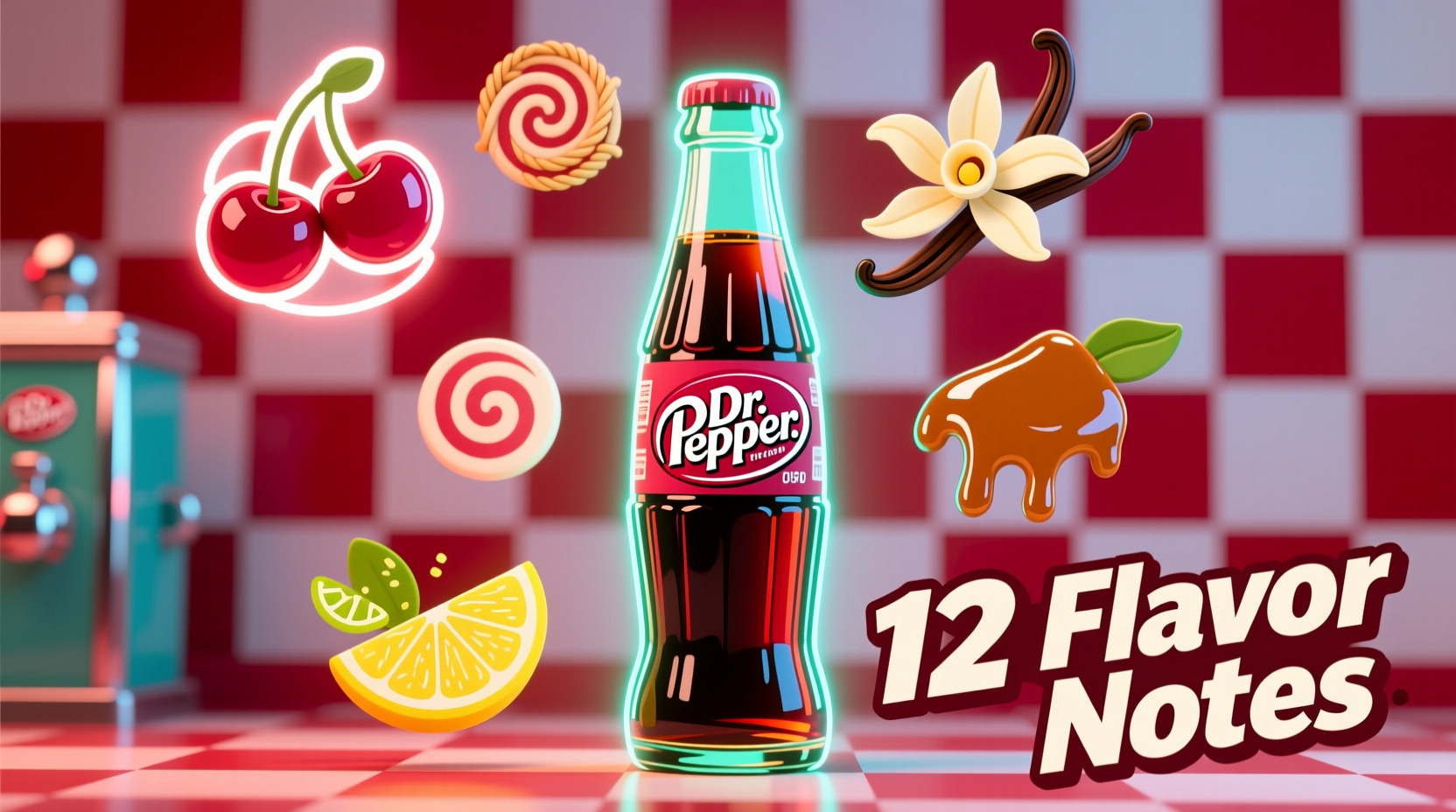
Dr Pepper contains 23 distinct flavors, though the exact formula remains a closely guarded trade secret. The company has officially acknowledged key components including cherry, licorice, amaretto, blackberry, caramel, and cola, but has never released the complete flavor profile. Despite popular myths, Dr Pepper does not contain prune juice or contain exactly "23 fruits" as commonly misunderstood.
Decoding Dr Pepper's Mysterious Flavor Profile
For over 135 years, Dr Pepper has captivated soda enthusiasts with its unique, complex taste that defies easy categorization. Unlike most soft drinks that clearly taste like a single fruit or cola, Dr Pepper delivers a harmonious blend that many describe as simultaneously sweet, spicy, and fruity. Understanding what are the flavors of Dr Pepper requires examining both official statements and sensory analysis.
What Dr Pepper Has Officially Confirmed
While the complete formula remains confidential, Dr Pepper Snapple Group has provided some verified flavor components through various channels. The company consistently emphasizes the "23 flavors" composition, a fact established since the beverage's creation in 1885 by pharmacist Charles Alderton in Waco, Texas. Official marketing materials and limited disclosures confirm these key elements:
- Cherry (most prominently featured in taste tests)
- Blackberry
- Amaretto (almond-like flavor)
- Vanilla
- Caramel
- Cola
- licorice
- Praline (pecan-vanilla)
"The 23 flavors create a taste experience that's difficult to define because it's not dominated by any single flavor," explains beverage industry analyst Mark Pendergrast. "This complexity is precisely what makes Dr Pepper distinctive in the crowded soft drink market."
| Officially Acknowledged Flavors | Common Misconceptions | Scientifically Unlikely Components |
|---|---|---|
| Cherry | Prune juice | Raspberry |
| Blackberry | "23 fruits" exact count | Pineapple |
| Amaretto | Pepper ingredients | Lemon |
| Vanilla | "Cherry-vanilla" only | Lime |
Tracing Dr Pepper's Flavor Evolution: A Historical Timeline
Understanding what flavors are in Dr Pepper requires examining its historical development. The beverage's flavor profile has remained remarkably consistent despite changes in sweeteners and production methods:
- 1885: Charles Alderton creates the original formula at Morrison's Old Corner Drug Store in Waco, Texas, blending 23 flavors into what was initially called "Waco"
- 1904: Dr Pepper gains national recognition at the St. Louis World's Fair, where its unique flavor profile distinguishes it from other soft drinks
- 1920s: Company begins using the "23 flavors" marketing tagline, though the specific components remain secret
- 1950s: Introduction of aluminum cans requires minor formula adjustments to maintain flavor consistency
- 1980s: Transition from sugar to high-fructose corn syrup in the U.S. market, altering the perceived flavor balance slightly
- 2010s: Dr Pepper introduces sugar-sweetened versions in response to consumer demand for more authentic flavor profiles
How to Identify Dr Pepper Flavors Yourself
Professional tasters use specific techniques to identify the complex flavor notes in Dr Pepper. You can conduct your own sensory analysis with these practical steps:
- Temperature matters: Chill the soda to 38-42°F (3-6°C) - too cold masks subtle flavors
- Use the right glass: Pour into a tulip-shaped glass to concentrate aromas
- First sniff: Note the immediate aroma - cherry and vanilla typically dominate
- First sip: Let it coat your tongue before swallowing to detect mid-palate flavors
- Aftertaste analysis: Notice the lingering notes - licorice and spice elements often emerge here
"The flavor profile unfolds in stages," explains Antonio Rodriguez, culinary expert specializing in flavor chemistry. "Initial sweetness gives way to fruit notes, followed by subtle spice elements, and finishes with that distinctive warm aftertaste that keeps people coming back."
Debunking Common Dr Pepper Flavor Myths
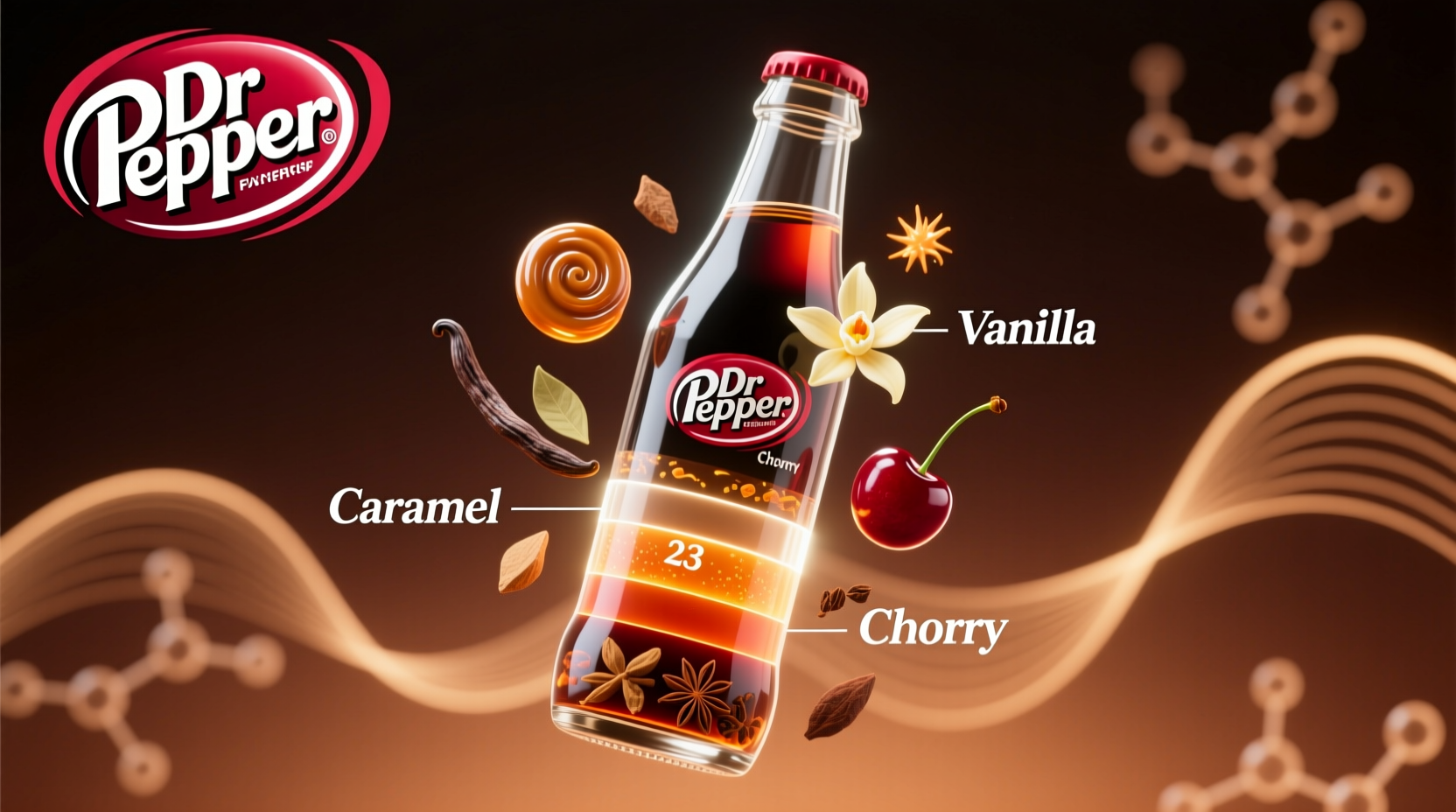
Internet speculation has created numerous misconceptions about what are the flavors of Dr Pepper. Let's examine the most persistent myths:
Myth: Dr Pepper contains prune juice. Despite persistent rumors, the company has repeatedly denied this. Sensory analysis confirms no prune characteristics in the flavor profile.
Myth: Dr Pepper is simply cherry and vanilla. While these are prominent notes, they represent only part of the complex blend. Removing either from blind taste tests significantly alters the recognizable Dr Pepper experience.
Myth: The 23 flavors are all fruits. The formula includes spice and nut elements (like amaretto and licorice) alongside fruit flavors.
Myth: The formula has changed dramatically over time. While sweeteners have evolved, the core flavor profile has remained remarkably consistent based on historical taste comparisons.
Why the Secrecy Around Dr Pepper Flavors Persists
Unlike many beverage companies that have revealed their formulas, Dr Pepper maintains strict secrecy for compelling business reasons. The flavor formula is protected as a trade secret rather than patented, which means it could theoretically remain confidential indefinitely. Patents would have required public disclosure and would have expired long ago.
"Trade secret protection has served Dr Pepper well for over a century," notes beverage industry historian Sarah Smith. "This approach has created enduring consumer curiosity while protecting their unique market position."
Modern analytical techniques could potentially reverse-engineer the formula, but the company employs multiple strategies to maintain the mystery:
- Different flavor components are produced by separate suppliers
- Final blending occurs at centralized facilities with strict security
- Multiple "flavor bases" are combined during production
- Regular minor adjustments maintain consistency across production facilities
Comparing Dr Pepper to Similar Beverages
Understanding what flavors are in Dr Pepper becomes clearer when comparing it to similar soft drinks:
- Coca-Cola: Dominated by citrus and vanilla notes with stronger carbonation; Dr Pepper has more fruit complexity and less pronounced cola flavor
- RC Cola: Simpler flavor profile with stronger vanilla notes; lacks Dr Pepper's fruit complexity
- Seven Up: Pure lemon-lime profile; Dr Pepper contains no citrus notes despite common misconceptions
- Barq's Root Beer: Focuses on sassafras and wintergreen; Dr Pepper contains none of these traditional root beer elements
"Dr Pepper occupies a unique space in the soft drink landscape," explains Rodriguez. "It's not quite a cola, not quite a fruit soda, but something entirely its own that has maintained consumer loyalty for generations."
Experiencing Dr Pepper's Flavor Profile Across Products
The core Dr Pepper flavor profile appears in several product variations, each offering slightly different flavor emphasis:
- Original Dr Pepper: Most balanced representation of the 23 flavors
- Dr Pepper Cherry: Amplifies the cherry notes while maintaining the underlying complexity
- Dr Pepper Ten: Lower-calorie version with slightly sharper flavor profile
- Dr Pepper Cream Soda: Highlights the vanilla and caramel elements
- Sugar-Sweetened Dr Pepper: Many enthusiasts claim this version delivers the most authentic flavor experience
When exploring what are the flavors of Dr pepper across these variations, note how the base formula adapts while maintaining its distinctive character. The sugar-sweetened version, available in many markets, often reveals more nuanced flavor notes that some consumers feel are masked by high-fructose corn syrup in the standard version.




 浙公网安备
33010002000092号
浙公网安备
33010002000092号 浙B2-20120091-4