
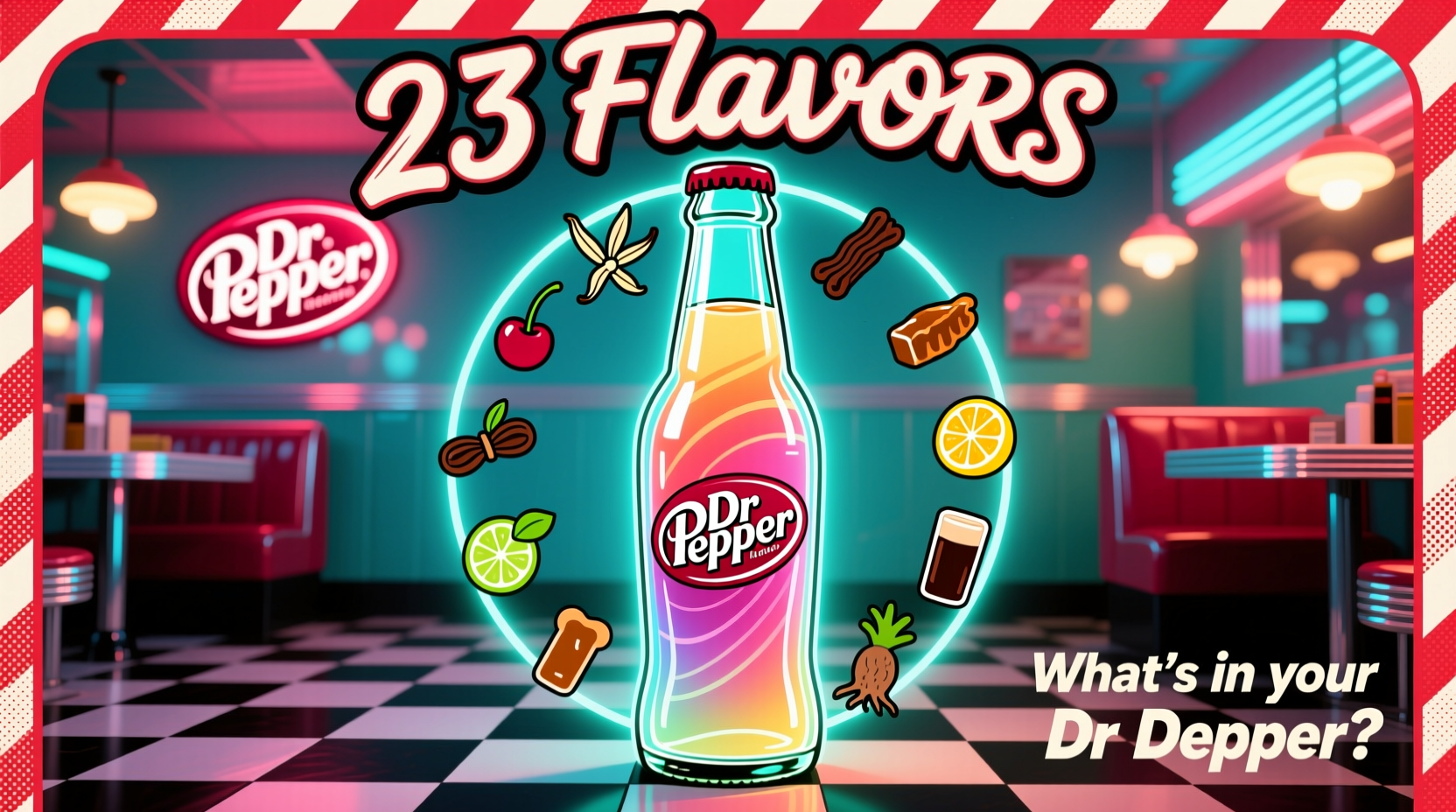
Dr Pepper has never officially confirmed the exact 23 flavors that comprise its distinctive taste. While the brand has marketed itself as containing “23 flavors” since the early 20th century, the specific ingredients remain one of the beverage industry's most closely guarded trade secrets. What we do know is that Dr Pepper's flavor profile combines fruit, spice, and herbal notes into a unique blend that’s neither cola nor root beer.
The Truth Behind Dr Pepper's 23 Flavors Mystery
For over a century, the “23 flavors” claim has captivated soda enthusiasts, yet the precise components remain undisclosed. Unlike many beverages that list ingredients, Dr Pepper’s formula is protected as a trade secret—similar to Coca-Cola’s famous recipe. What makes this case particularly intriguing is how the company has carefully maintained this marketing narrative while never actually revealing the specific flavors.
Why the 23 Flavors Claim Persists
The “23 flavors” marketing concept dates back to 1920s advertising campaigns, though Dr Pepper was created in 1885 by pharmacist Charles Alderton in Waco, Texas. Historical records show the number “23” was likely chosen for its memorable quality rather than representing an exact count of ingredients. Early promotional materials featured the phrase “Drink a Bite to Eat at 23”—referencing the time of day (11am) when workers would take a break.
| Timeline | Marketing Claim | Documentation Source |
|---|---|---|
| 1885 | Original creation as “Waco” beverage | Waco Historical Museum archives |
| 1920s | “Drink a Bite to Eat at 23” campaign | Dr Pepper Museum marketing collection |
| 1930s | Explicit “23 Flavors” branding begins | USPTO trademark filings |
| Present | Formula remains undisclosed | Dr Pepper Snapple Group statements |
What Flavor Experts Have Identified
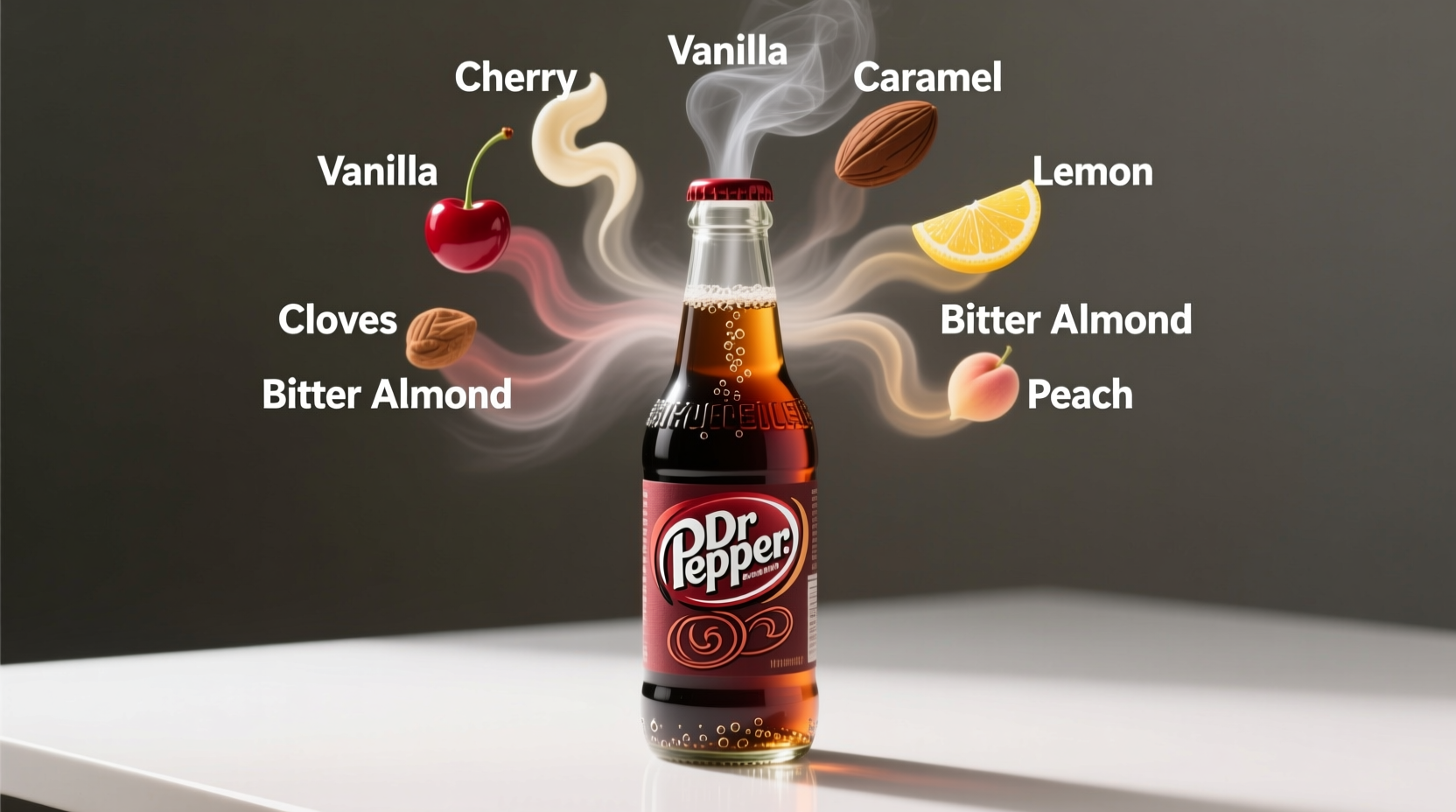
While we can't know the exact composition, sensory experts and independent analyses suggest Dr Pepper's flavor profile includes combinations of:
- Fruit notes: cherry, blackberry, plum, orange, and prune
- Spice elements: licorice, cinnamon, and clove
- Herbal components: amaretto (almond), vanilla, and mint
- Subtle undertones: caramel, molasses, and sarsaparilla
It's important to understand that “23 flavors” doesn't necessarily mean 23 distinct ingredients. In flavor chemistry, multiple compounds can create a single perceived flavor, and some ingredients may contribute to multiple flavor notes. The beverage industry commonly uses concentrated flavor oils where one component might deliver several sensory impressions.
Common Misconceptions About the 23 Flavors
Several persistent myths cloud the Dr Pepper flavor discussion:
- The “Official List” Myth: Numerous websites claim to have the “definitive list” of 23 flavors, but none come from Dr Pepper itself. These lists often include improbable combinations like “strawberry” or “watermelon” that don't align with the beverage's actual taste profile.
- The “Exact Count” Misunderstanding: The number 23 likely represents a marketing device rather than a precise ingredient count. Flavor chemists note that modern soft drinks typically contain 20-40 flavor components, but these create fewer distinct taste perceptions due to blending.
- The “Secret Ingredient” Fallacy: Many believe one mysterious “secret” ingredient makes Dr Pepper unique, when in reality it's the precise balance of multiple components that creates its distinctive profile.
How Flavor Combinations Actually Work
Understanding Dr Pepper's flavor requires knowledge of how taste perception works. According to flavor chemistry research from the Institute of Food Technologists, when multiple flavor compounds combine, they don't simply add up—they interact to create entirely new sensory experiences. What we perceive as “one flavor” in Dr Pepper is actually an emergent property of the entire blend.
Professional flavorists explain that Dr Pepper’s distinctive taste likely comes from:
- Synergy effects: Certain combinations (like cherry and licorice) create a new flavor perception greater than the sum of individual parts
- Masking: Some components may be present to suppress undesirable notes from other ingredients
- Temporal release: Different flavors may be designed to emerge at different times during consumption
What We Can Verify About Dr Pepper's Composition
While the exact formula remains secret, we can confirm certain aspects through ingredient labeling requirements:
- Carbonated water, high fructose corn syrup, caramel color, phosphoric acid, and natural and artificial flavors appear on the label
- The beverage contains no actual pepper (despite the name)
- Independent laboratory analyses have detected traces of prune, cherry, and licorice compounds
- The distinctive red color comes from caramel and potentially fruit extracts
The Dr Pepper Snapple Group has consistently maintained that revealing the exact formula would compromise their competitive advantage. As stated in their 2022 corporate communications: “The precise blend of flavors in Dr Pepper is our most valuable trade secret, protected with the same rigor as other iconic beverage formulas.”
Why This Mystery Endures
The 23 flavors question persists because it taps into our natural curiosity about hidden knowledge. Unlike most consumer products, Dr Pepper has successfully maintained an air of mystery for over 90 years of active marketing. This approach has created a powerful brand identity where the unknown becomes part of the product's appeal.
From a practical standpoint, attempting to reverse-engineer the exact 23 components is largely futile—even if we could identify all chemical compounds present, we wouldn't know which ones the company considers “flavors” versus “background notes” or “processing aids.” What matters most is the distinctive taste experience that has made Dr Pepper a cultural icon.
Practical Takeaways for Beverage Enthusiasts
Instead of focusing on unverifiable claims about 23 specific flavors, consider these practical approaches:
- Conduct a taste analysis: Try Dr Pepper alongside potential component flavors (cherry soda, root beer, cream soda) to identify notes you perceive
- Explore similar beverages: Compare Dr Pepper to other spice-forward sodas like Barq's or Cheerwine to understand flavor spectrum
- Consider historical context: Research early 20th century flavor trends to understand what “23 flavors” might have meant at the time
- Appreciate the blend: Focus on how the flavors work together rather than trying to isolate individual components
Understanding Dr Pepper's flavor is less about counting ingredients and more about appreciating how master flavorists create complex, balanced taste experiences that resonate with consumers across generations.
Has Dr Pepper ever officially confirmed the 23 flavors?
No, Dr Pepper has never officially confirmed the exact 23 flavors that comprise its formula. The company has maintained the secrecy of its recipe since 1885, treating it as a valuable trade secret similar to Coca-Cola's formula.
Why does Dr Pepper claim to have 23 flavors if they won't reveal them?
The “23 flavors” marketing concept originated in the 1920s as a memorable branding strategy. The number was likely chosen for its distinctive quality rather than representing an exact ingredient count. This mystery has become integral to Dr Pepper's brand identity.
What flavors can actually be detected in Dr Pepper?
Independent analyses and sensory evaluations suggest Dr Pepper contains fruit notes (cherry, prune, blackberry), spice elements (licorice, cinnamon), and herbal components (amaretto, vanilla, mint), though the exact combination remains undisclosed by the company.
Is there actually pepper in Dr Pepper?
No, despite the name, Dr Pepper contains no actual pepper. The origin of the name remains debated, with theories ranging from honoring a customer named Dr. Pepper to being named after the creator's friend's father who was a doctor.




 浙公网安备
33010002000092号
浙公网安备
33010002000092号 浙B2-20120091-4