
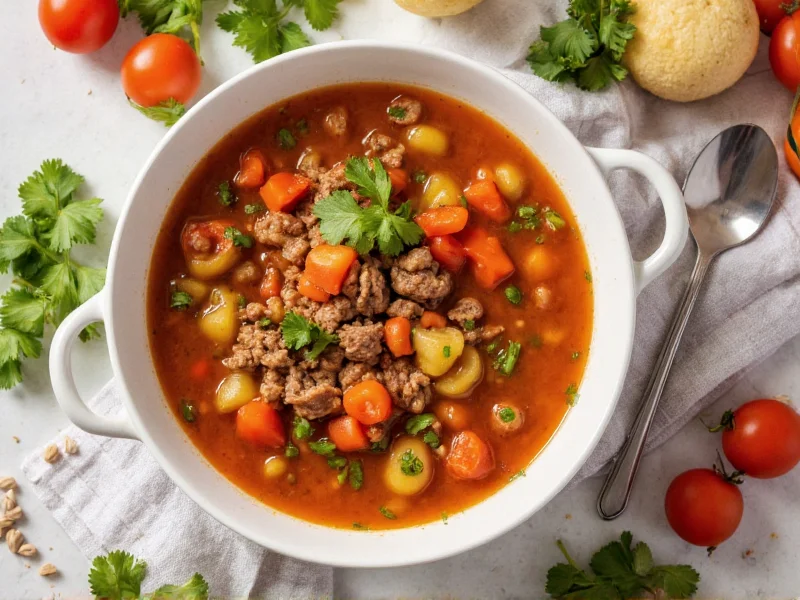
Nothing comforts quite like a warm bowl of vegetable soup with ground beef on a chilly day. This classic American dish brings together the rich flavor of ground beef with the natural sweetness of vegetables for a meal that's both satisfying and nutritious. Whether you're looking for an easy weeknight dinner or a make-ahead meal for busy days, this versatile soup delivers on taste and convenience.
The Perfect Balance of Protein and Produce
What makes vegetable soup with ground beef stand out from other soup recipes is its perfect balance of protein-rich ground beef and colorful vegetables. The beef adds heartiness while the vegetables contribute essential nutrients and vibrant flavors. This combination creates a complete meal in one bowl that satisfies hunger without weighing you down.
Essential Ingredients for Vegetable Soup with Ground Beef
The beauty of this easy vegetable soup with ground beef recipe lies in its simplicity and flexibility. Here's what you'll need for the classic version:
- 1 pound lean ground beef (90% lean)
- 1 tablespoon olive oil
- 1 large onion, diced
- 3 cloves garlic, minced
- 4 cups mixed vegetables (carrots, celery, zucchini, green beans)
- 1 can (14.5 oz) diced tomatoes, undrained
- 6 cups low-sodium beef or vegetable broth
- 1 teaspoon dried thyme
- 1 teaspoon dried oregano
- 1 bay leaf
- Salt and freshly ground black pepper to taste
- Optional: ½ cup pearl barley or small pasta for added texture
Step-by-Step Preparation Guide
Creating the best vegetable soup with ground beef requires just a few simple steps that build layers of flavor:
- Brown the beef: In a large pot or Dutch oven over medium-high heat, cook the ground beef with olive oil until browned, about 5-7 minutes. Break it into small pieces as it cooks.
- Add aromatics: Drain excess fat, then add diced onion and cook until translucent (about 5 minutes). Stir in minced garlic and cook for 1 minute until fragrant.
- Build the soup base: Add mixed vegetables, diced tomatoes with their juice, broth, thyme, oregano, and bay leaf. If using barley or pasta, add it now.
- Simmer to perfection: Bring to a boil, then reduce heat to low. Cover and simmer for 25-30 minutes, or until vegetables are tender.
- Season and serve: Remove bay leaf, then season with salt and pepper to taste. For a richer flavor, let the soup sit for 10 minutes before serving to allow flavors to meld.
Nutritional Benefits of Vegetable Soup with Ground Beef
This hearty vegetable soup with ground beef isn't just delicious—it's packed with nutritional benefits that make it a smart choice for health-conscious eaters:
| Nutrient | Per Serving (1.5 cups) | Daily Value % |
|---|---|---|
| Calories | 300 | 15% |
| Protein | 22g | 44% |
| Fiber | 6g | 24% |
| Vitamin A | 120% | 120% |
| Vitamin C | 35% | 35% |
| Iron | 20% | 20% |
The combination of lean ground beef and colorful vegetables creates a nutrient-dense meal that supports overall health. The vegetables provide essential vitamins, minerals, and fiber, while the lean beef contributes high-quality protein and iron. This healthy vegetable soup with ground beef makes an excellent choice for those seeking balanced nutrition without sacrificing flavor.
Variations for Every Taste Preference
One reason this vegetable soup with ground beef recipe has remained popular for generations is its adaptability. Try these variations to suit different dietary needs and preferences:
- Gluten-free version: Ensure your broth is certified gluten-free and omit any barley or pasta.
- Low-carb option: Increase non-starchy vegetables like zucchini and mushrooms while reducing carrots and omitting any grains.
- Spicy kick: Add ¼ teaspoon red pepper flakes or a diced jalapeño with the onions.
- Italian-style: Add 2 tablespoons tomato paste and substitute Italian seasoning for individual herbs.
- Crockpot method: After browning beef and sautéing onions, transfer everything to a slow cooker and cook on low for 6-8 hours.
Storage and Meal Prep Tips
Vegetable soup with ground beef for meal prep is exceptionally convenient because it stores and reheats beautifully:
- Refrigeration: Store in airtight containers for up to 5 days.
- Freezing: Freeze portions in freezer-safe containers for up to 3 months. Thaw overnight in the refrigerator before reheating.
- Reheating: Warm on the stovetop over medium-low heat, stirring occasionally. Add a splash of broth if the soup has thickened.
- Batch cooking: Double the recipe and freeze individual portions for quick, healthy meals throughout the month.
Common Mistakes to Avoid
Even the best vegetable soup with ground beef recipe can go wrong if you make these common errors:
- Overcooking vegetables: Add delicate vegetables like zucchini in the last 10 minutes to prevent mushiness.
- Skipping the browning step: Properly browning the ground beef develops essential flavor compounds.
- Using too much salt: Start with less salt and adjust at the end, especially if using store-bought broth.
- Rushing the simmer time: Allowing the soup to simmer adequately lets flavors meld properly.
- Adding pasta too early: If including pasta, add it in the last 10 minutes to prevent it from becoming soggy.
Serving Suggestions for Vegetable Soup with Ground Beef
Elevate your vegetable soup with ground beef experience with these serving ideas:
- Top with freshly grated Parmesan cheese for added richness
- Serve with crusty whole-grain bread for dipping
- Add a dollop of plain Greek yogurt for creaminess and protein
- Garnish with fresh parsley or basil for color and freshness
- Pair with a simple green salad for a complete meal
Frequently Asked Questions
Can I make vegetable soup with ground beef in a crockpot?
Yes, you can easily adapt this recipe for a slow cooker. Brown the ground beef and sauté the onions and garlic first, then transfer everything to your crockpot. Add the remaining ingredients and cook on low for 6-8 hours. Add delicate vegetables like zucchini during the last hour to prevent overcooking.
How can I make vegetable soup with ground beef lower in calories?
To reduce calories in your vegetable soup with ground beef, use extra-lean ground beef (95% lean), increase the proportion of non-starchy vegetables, and use low-sodium vegetable broth instead of beef broth. You can also add more leafy greens like spinach or kale in the last few minutes of cooking for added nutrients without significant calories.
What vegetables work best in vegetable soup with ground beef?
The best vegetables for this soup include carrots, celery, onions, and garlic for the flavor base. For added nutrition and texture, include zucchini, green beans, bell peppers, and tomatoes. Root vegetables like potatoes or sweet potatoes hold up well during cooking. Add delicate vegetables like spinach or peas in the last 5-10 minutes to maintain their texture and color.
Can I freeze vegetable soup with ground beef?
Yes, vegetable soup with ground beef freezes exceptionally well. Cool the soup completely before transferring to freezer-safe containers, leaving about 1 inch of space for expansion. Properly stored, it will maintain best quality for 2-3 months. When ready to eat, thaw overnight in the refrigerator and reheat on the stovetop, adding a splash of broth if needed.
How do I prevent my vegetable soup with ground beef from becoming too watery?
To prevent a watery texture in your vegetable soup with ground beef, try these techniques: 1) Let the browned ground beef drain well before adding other ingredients, 2) Use less broth initially (start with 5 cups instead of 6), 3) Simmer uncovered for the last 10-15 minutes to reduce the liquid, or 4) Create a slurry with 1 tablespoon cornstarch mixed with 2 tablespoons cold water and stir it in during the last few minutes of cooking.




 浙公网安备
33010002000092号
浙公网安备
33010002000092号 浙B2-20120091-4