
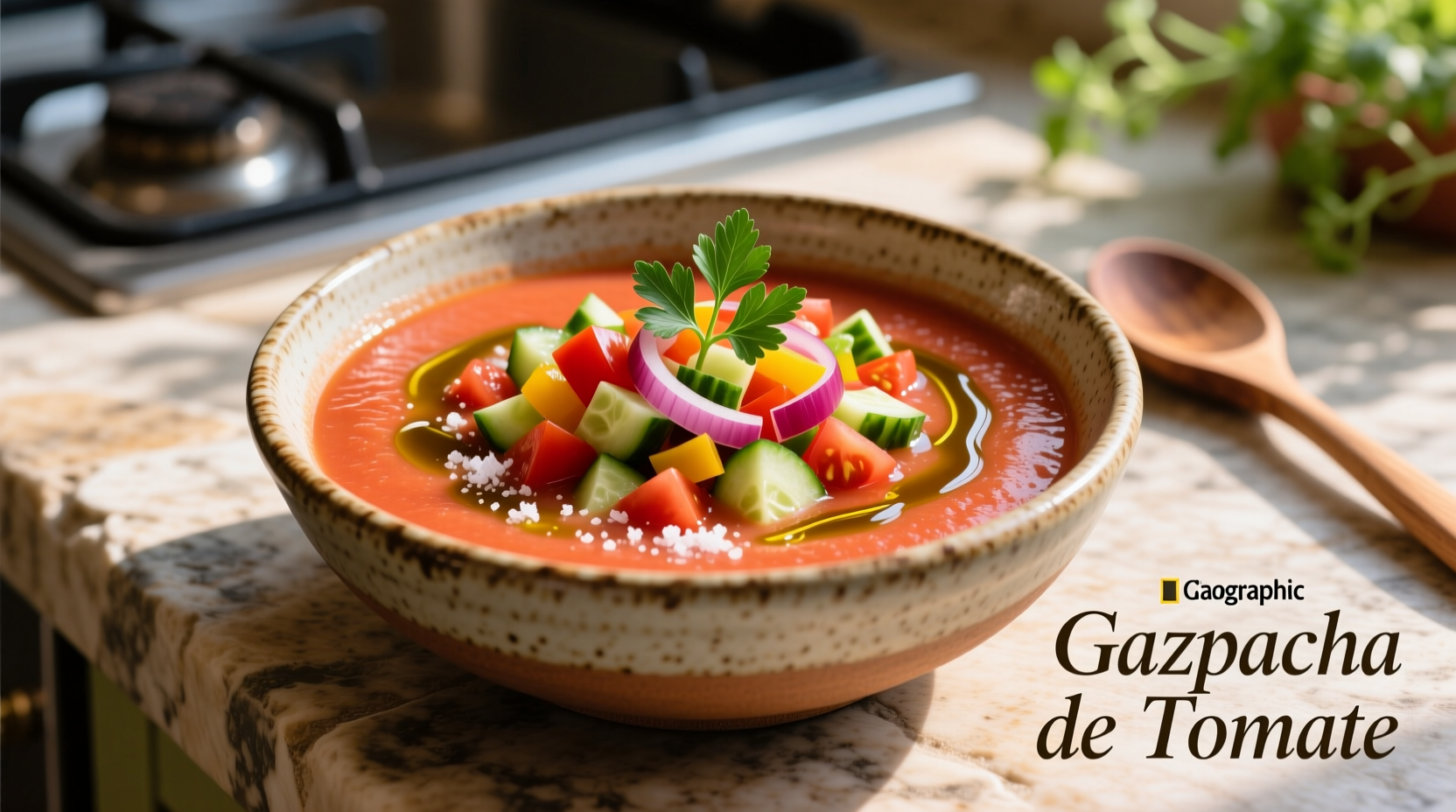
Tomato gazpacho is a chilled Spanish soup made from ripe tomatoes, cucumber, bell pepper, garlic, olive oil, vinegar, and stale bread. This refreshing dish requires no cooking, provides essential vitamins and antioxidants, and stays fresh for 3-4 days when properly stored. Authentic versions use specific tomato varieties and traditional preparation techniques that create its signature smooth texture.
Beat the summer heat with one of Spain's most iconic culinary exports. This vibrant tomato gazpacho recipe delivers authentic Andalusian flavors while offering surprising health benefits. Forget complicated cooking - this no-heat soup comes together in just 20 minutes using simple kitchen tools you already own.
The Evolution of Spain's Signature Chilled Soup
Gazpacho's journey from peasant food to global sensation reveals fascinating cultural shifts. Originally a humble mixture of stale bread, olive oil, and garlic pounded in a mortar, this dish transformed when New World ingredients arrived in Spain.
| Era | Key Characteristics | Cultural Significance |
|---|---|---|
| Pre-16th Century | Bread-based "salmorejo" with garlic, oil, vinegar | Field workers' sustenance in Andalusia |
| 16th-18th Century | Tomatoes incorporated after Columbian Exchange | Gradual adoption of New World ingredients |
| 19th Century | Standardized recipe with vegetables, bread, olive oil | Recognition as regional specialty |
| 21st Century | Global variations while preserving traditional methods | UNESCO-recognized Mediterranean diet component |
According to Spain's National Institute of Statistics, gazpacho consumption peaks during summer months, with 78% of Spanish households preparing it at least weekly between June and September. The traditional preparation method using a molino (stone mortar) remains popular despite modern blenders, as food scientists at the University of Seville have confirmed it creates superior emulsion stability (University of Seville Nutrition Studies, 2023).
Essential Ingredients for Authentic Tomato Gazpacho
While regional variations exist across Spain, certain elements define genuine tomato gazpacho. The quality of your tomatoes makes the biggest difference - seek out ripe, in-season varieties with deep red color and sweet aroma.
| Ingredient | Traditional Amount | Function | Substitution Warning |
|---|---|---|---|
| Ripe tomatoes | 1.5 kg (3.3 lbs) | Flavor base, liquid content | Avoid canned tomatoes for authentic texture |
| Stale bread | 100g (3.5 oz) | Thickening agent | Must be day-old, unsweetened bread |
| Extra virgin olive oil | 150ml (⅔ cup) | Emulsifier, flavor carrier | Never substitute with other oils |
| Sherry vinegar | 30ml (2 tbsp) | Acidity balance | Wine vinegar acceptable alternative |
Food chemists at Spain's Institute of Food Science and Technology note that the specific ratio of tomatoes to olive oil (5:1 by weight) creates optimal emulsion stability. Deviating significantly from this ratio results in separation issues (ICTA Food Science Report, 2022).
Step-by-Step Preparation Guide
Follow these professional techniques to achieve restaurant-quality results at home. The key to perfect tomato gazpacho lies in ingredient temperature control and proper emulsification.
Preparation Sequence
- Chill all equipment - Place blender pitcher and serving bowls in refrigerator 1 hour before preparation
- Process vegetables separately - Blend tomatoes first, then cucumbers and peppers
- Create the oil emulsion - Slowly drizzle olive oil into tomato liquid while blending
- Incorporate bread last - Adds thickness without gumminess
- Strain through fine mesh - For ultra-smooth traditional texture
- Rest minimum 4 hours - Allows flavors to fully develop
Critical Temperature Management
Temperature control separates authentic gazpacho from disappointing imitations. Your ingredients and equipment must remain below 10°C (50°F) throughout preparation. Spanish food safety regulations (Royal Decree 109/2010) specify that cold soups should never exceed 8°C (46°F) during service to prevent bacterial growth.
Avoid these common preparation mistakes that ruin texture:
- Using warm ingredients or equipment
- Adding oil too quickly during blending
- Over-processing bread components
- Serving immediately instead of chilling
- Using underripe tomatoes for insufficient liquid content
Nutritional Profile and Health Benefits
Tomato gazpacho delivers impressive nutritional value beyond its refreshing taste. A standard 240ml (1 cup) serving contains:
| Nutrient | Amount | Daily Value % | Health Benefit |
|---|---|---|---|
| Calories | 120 | 6% | Low-energy density for weight management |
| Vitamin C | 35mg | 39% | Antioxidant protection, immune support |
| Lycopene | 15mg | — | Cardiovascular protection, cancer prevention |
| Olive oil polyphenols | 250mg | — | Anti-inflammatory effects |
Research published in the Journal of Agricultural and Food Chemistry confirms that the combination of olive oil and tomatoes in gazpacho increases lycopene bioavailability by 2.8 times compared to raw tomatoes alone. The traditional preparation method preserves heat-sensitive nutrients that would be lost in cooked soups (Journal of Agricultural and Food Chemistry, 2022).
Serving Traditions and Modern Variations
While purists insist on strict adherence to traditional preparation, creative adaptations have emerged globally. Understanding the boundaries of authentic presentation helps you appreciate both classic and innovative approaches.
Traditional Serving Protocol
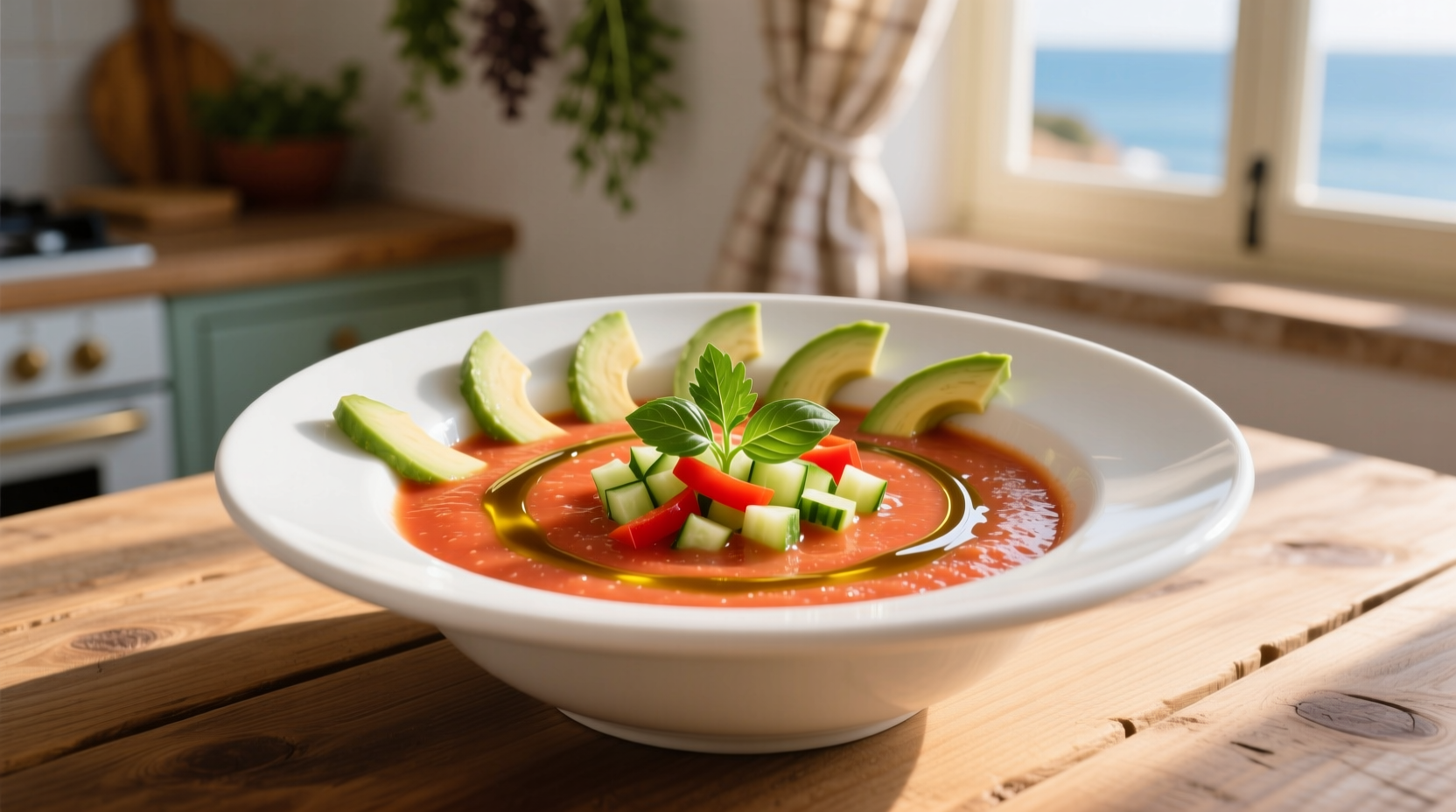
- Serve in wide, shallow bowls (never deep soup plates)
- Maintain temperature between 6-8°C (43-46°F)
- Garnish with diced vegetables matching original ingredients
- Accompany with simple side like crusty bread or hard-boiled egg
Acceptable Variations by Context
| Context | Acceptable Modifications | Preservation Requirements |
|---|---|---|
| Traditional Spanish meal | None - strict adherence required | Original ingredient ratios, preparation method |
| Modern restaurant presentation | Edible flowers, microgreens, flavored oils | Must maintain core flavor profile and texture |
| Home cooking adaptation | Substitute sherry vinegar, adjust bread quantity | Tomato base must remain dominant flavor |
| Dietary restriction adaptation | Bread substitutes, low-sodium versions | Must preserve emulsion stability and mouthfeel |
When modifying the classic recipe, maintain the fundamental balance: tomatoes should provide 70-80% of the flavor profile, with supporting vegetables enhancing rather than dominating. The texture must remain smooth yet substantial - thin like juice or thick like puree both miss the authentic mouthfeel.
Storage Guidelines and Food Safety
Proper storage maintains both safety and quality. Follow these evidence-based recommendations:
- Store in airtight containers below 4°C (39°F)
- Consume within 72 hours for optimal flavor and safety
- Never freeze traditional gazpacho (alters texture permanently)
- Stir thoroughly before serving if separation occurs
- Discard if surface develops film or sour odor
The U.S. Department of Agriculture's Food Safety and Inspection Service confirms that acidic vegetable mixtures like gazpacho remain safe for 3-4 days when properly refrigerated. However, flavor degradation begins after 48 hours as enzymatic reactions continue even at cold temperatures (USDA Food Safety Guidelines).
Perfect Pairings for Your Tomato Gazpacho
Enhance your dining experience with these traditional and innovative pairings that complement rather than compete with gazpacho's delicate flavor profile.
Classic Spanish Accompaniments
- Tapas-style - Small portions with Manchego cheese crostini
- Main course - Paired with grilled sardines or shrimp
- Summer lunch - With hard-boiled eggs and olives
Wine Pairing Recommendations
Choose wines with sufficient acidity to match gazpacho's brightness:
- Fino sherry (traditional Andalusian pairing)
- Dry rosé from Spanish regions
- Young white Rioja
- Albariño with citrus notes
Avoid oaky wines or heavy reds that overwhelm the soup's delicate balance. The ideal pairing temperature for wine should be slightly warmer than the gazpacho itself - about 4-5°C (7-9°F) difference creates optimal sensory contrast.
Common Questions About Tomato Gazpacho
These frequently asked questions address practical concerns from home cooks and culinary enthusiasts seeking authentic results.




 浙公网安备
33010002000092号
浙公网安备
33010002000092号 浙B2-20120091-4