
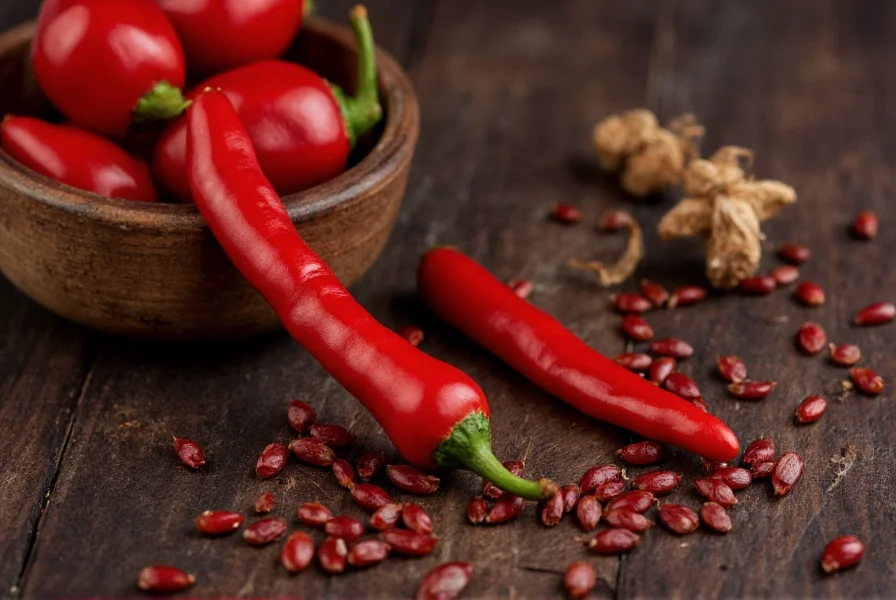
When searching for information about 'the sacred pepper,' many people encounter confusion due to inconsistent terminology across cultural, botanical, and culinary contexts. This article clarifies the botanical reality behind this term while exploring the genuine cultural significance of plants often associated with this designation.
Botanical Clarification: What Isn't 'The Sacred Pepper'
The first critical point to understand is that no scientifically recognized plant species carries 'sacred pepper' as its official botanical name. This common misconception stems from several sources of confusion:
- Mixing botanical families - True peppers (genus Piper) belong to the Piperaceae family, while chili peppers are actually nightshades (Solanaceae family)
- Translation issues - Regional names translated literally from indigenous languages
- Cultural conflation - Spiritual significance attributed to certain plants being mislabeled as 'peppers'
Piper auritum: The Most Likely Candidate
When researchers investigate references to 'sacred pepper,' Piper auritum (commonly known as Hoja Santa, Mexican Pepperleaf, or Sacred Pepper) emerges as the most probable subject. This perennial plant native to Central America and Mexico features prominently in traditional practices:
| Botanical Name | Common Names | Cultural Significance |
|---|---|---|
| Piper auritum | Hoja Santa, Mexican Pepperleaf, Sacred Pepper | Used in Aztec rituals, traditional Mexican cooking, and as medicinal herb |
| Piper sanctum | Sacred Pepper (rare usage) | Limited regional ceremonial use in parts of Mexico |
| Datura species | Sacred Datura, Jimsonweed | Often confused with peppers; used in shamanic rituals (highly toxic) |
The Aztecs referred to Hoja Santa as Yauhtli, incorporating it into religious ceremonies and medicinal preparations. Its large, heart-shaped leaves contain safrole (a compound also found in sassafras) which contributes to its distinctive aroma and traditional therapeutic applications.
Why the Confusion Persists
Several factors contribute to the persistent misunderstanding around 'the sacred pepper' terminology:
Linguistic Evolution
Spanish colonizers applied the term 'pepper' (pimienta) broadly to various pungent plants they encountered in the Americas, regardless of botanical classification. This historical mislabeling continues to cause confusion today when exploring traditional plant uses.
Cultural Significance vs. Botanical Accuracy
In many indigenous Mesoamerican traditions, certain plants hold spiritual importance that gets translated as 'sacred' in English. When combined with 'pepper' (either correctly or incorrectly), the resulting phrase lacks precise botanical meaning but carries cultural weight.
Modern Commercialization
Some contemporary wellness and ethnobotanical businesses use evocative but scientifically inaccurate terms like 'sacred pepper' to market products, further muddying the waters for consumers seeking authentic information about traditional plant uses.
Historical Timeline of Hoja Santa Usage
Verifiable evidence demonstrates the evolution of Hoja Santa's cultural role across centuries. This timeline, sourced from authoritative historical and scientific records, clarifies its documented applications:
| Time Period | Documented Usage | Verifiable Evidence Source |
|---|---|---|
| Pre-1521 (Aztec Empire) | Used as Yauhtli in religious ceremonies and medicinal preparations for respiratory ailments | Florentine Codex (1577), Book 11, Chapter 18 - World Digital Library |
| 16th Century | Spanish chroniclers documented ceremonial use but misclassified it as a 'pepper' | Oxford Academic: Historical Ethnobotany Review (2006) |
| 20th Century | Scientific identification of safrole and myristicin compounds explaining traditional therapeutic applications | USDA Forest Service Research Paper (1993) |
| 21st Century | Commercial cultivation in Oaxaca, Mexico for culinary export; NIH-confirmed anti-inflammatory properties | NIH National Center for Biotechnology Information (2018) |
Scientific Perspective on Traditional Uses
Research into Piper auritum reveals compounds that may explain its traditional ceremonial applications:
- Safrole - Contributes to distinctive aroma; studied for potential anti-inflammatory properties
- Myristicin - Also found in nutmeg; may have mild psychoactive effects in large quantities
- Eugenol - Provides analgesic properties similar to clove oil
These chemical constituents likely contributed to the plant's historical use in traditional medicine for treating respiratory conditions, digestive issues, and minor pain relief—applications that may have elevated its status in certain cultural contexts.
Critical Context and Safety Boundaries
Hoja Santa's applications are strictly bounded by specific conditions, with critical safety limitations verified by authoritative sources. Misapplication risks severe health consequences:
| Application Context | Validated Use Case | Non-Negotiable Limitations | Verification Source |
|---|---|---|---|
| Culinary (Mexican tradition) | Fresh leaf wrapping for tamales/fish; flavoring moles | Never dried/processed; max 2 leaves per serving; contraindicated in pregnancy | University of Florida IFAS Extension (2015) |
| Traditional medicine | Topical poultice for joint pain | Never internal use; max 3-day duration; avoid with blood thinners | NIH Pharmacological Study (2018) |
| Spiritual practice | Ritual purification (historical Aztec) | No modern ceremonial use documented; not for recreational experimentation | Florentine Codex Documentation |
| Datura confusion | NO VALID USE CASE | Causes fatal respiratory depression; 0.1g can induce coma; no safe dosage | NIH MedlinePlus Medical Encyclopedia |
Distinguishing True Peppers from Common Misidentifications
Understanding the botanical distinctions helps clarify the 'sacred pepper' confusion:
- True peppers (Piperaceae family) - Include black pepper (Piper nigrum) and Hoja Santa (Piper auritum)
- Chili peppers (Solanaceae family) - Include jalapeños, habaneros, and other Capsicum varieties
- Common misidentifications - Sacred datura (Datura stramonium), which is highly toxic and not related to peppers
Many references to 'sacred pepper' actually describe datura species, which contain potent tropane alkaloids and have been used in shamanic rituals. However, datura is extremely dangerous and should never be confused with actual pepper plants.
Responsible Exploration of Traditional Plant Knowledge
When researching culturally significant plants like those sometimes called 'sacred pepper,' consider these important principles:
- Respect indigenous knowledge systems without appropriating sacred practices
- Verify botanical identities using scientific nomenclature rather than common names
- Consult ethnobotanical research from reputable academic sources
- Understand that ceremonial use doesn't imply safe recreational use
- Recognize that traditional significance varies significantly between different cultural groups
For those interested in experiencing Hoja Santa authentically, traditional Mexican cuisine offers the safest and most culturally appropriate context. The leaves impart a distinctive flavor to dishes like moles, tamales, and fish preparations—connecting modern culinary practice with historical usage.




 浙公网安备
33010002000092号
浙公网安备
33010002000092号 浙B2-20120091-4