
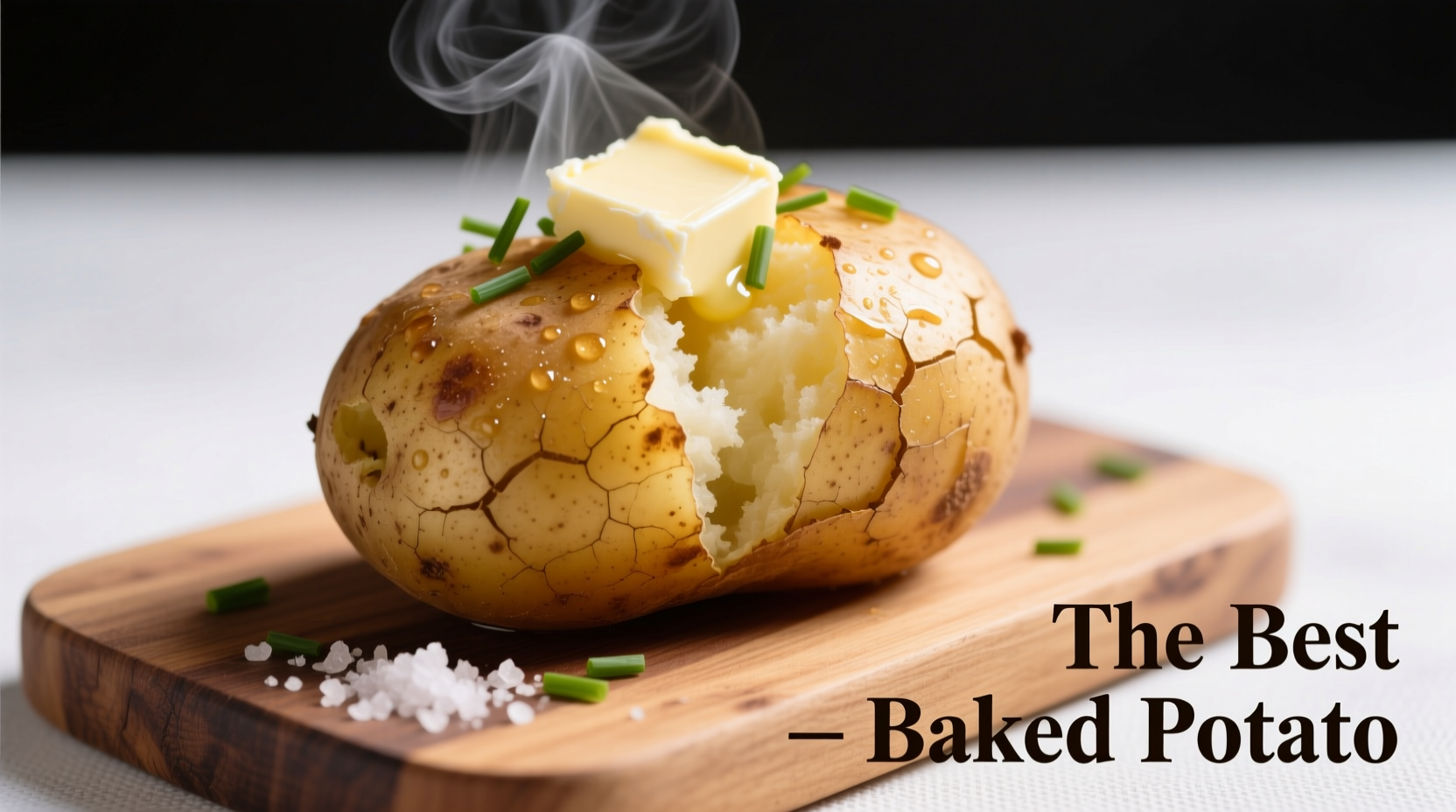
The Science Behind the Perfect Baked Potato
Understanding the food science transforms your baked potato from ordinary to extraordinary. When Russet potatoes reach 212°F (100°C), their starch granules absorb water and swell—a process called gelatinization. At 204°F (96°C), the ideal internal temperature for fluffy texture, moisture evaporates while maintaining structure. Baking at 400°F creates the perfect balance: hot enough to crisp the skin through Maillard reaction, but not so hot that the exterior burns before the interior cooks.
| Baking Method | Time Required | Skin Texture | Interior Quality | Energy Use |
|---|---|---|---|---|
| Oven (400°F) | 55-65 minutes | Crisp, flavorful | Fluffy, evenly cooked | Moderate |
| Convection Oven | 45-55 minutes | Extra crispy | Lightest texture | Moderate |
| Direct Flame | 40-50 minutes | Rustic, charred | Smoky flavor | Low |
| Traditional Microwave | 8-12 minutes | Soggy, pale | Dense, uneven | Low |
Step-by-Step Guide to Baking the Ultimate Potato
Follow this professional chef-tested method for consistently perfect results:
Preparation Phase: Setting the Foundation
- Select quality potatoes: Choose uniform Russets (Idaho or Burbank varieties) weighing 8-10 ounces each. Their high starch content creates the fluffiest interior.
- Clean thoroughly: Scrub potatoes under cold running water with a vegetable brush to remove all dirt. This prevents ash from contaminating the flesh.
- Dry completely: Pat potatoes dry with paper towels—moisture on the skin prevents crisping. For professional results, let them air-dry 15 minutes.
- Oil and salt: Rub with 1 tsp canola oil per potato and sprinkle with coarse sea salt. Oil promotes browning while salt enhances flavor penetration.
Baking Process: Achieving Culinary Perfection
- Preheat oven: Set to 400°F (204°C) with rack in center position. Allow full preheating (20-25 minutes) for consistent temperature.
- Prepare baking surface: Place potatoes directly on oven rack with a baking sheet on the rack below to catch drips. Alternatively, use a wire rack on a baking sheet.
- Monitor cooking: Bake 55-65 minutes until internal temperature reaches 204°F (96°C). Rotate potatoes halfway through for even cooking.
- Rest properly: Remove from oven and let rest 5-7 minutes. This allows residual heat to finish cooking while steam escapes, preventing sogginess.
Avoiding Common Baking Mistakes
Even experienced cooks make these critical errors that compromise results:
- Skipping the drying step: Moisture on the skin creates steam instead of crispiness. Always dry potatoes thoroughly before oiling.
- Piercing too deeply: While some recommend piercing, deep holes allow moisture loss. If piercing, use one shallow poke per side with a thin skewer.
- Incorrect temperature: Baking below 375°F yields dense texture; above 425°F risks burnt skin before interior cooks. 400°F is the scientific sweet spot.
- Ignoring potato size: Adjust cooking time based on weight—add 10 minutes per additional 4 ounces. Use an instant-read thermometer for precision.
Contextual Considerations for Different Situations
The "best" method varies based on your specific circumstances:
- Time-constrained cooking: When pressed for time, microwave for 5 minutes then finish in 425°F oven for 15-20 minutes. This hybrid method achieves 85% of oven-baked quality in half the time.
- Large batch preparation: For 6+ potatoes, reduce oven temperature to 375°F and extend time by 15-20 minutes. This prevents the oven from cycling temperature excessively.
- Outdoor cooking: When using campfire or grill, wrap potatoes in foil with 1 tsp oil and 1/4 tsp salt. Cook directly on hot coals for 45-55 minutes, turning frequently.
- Special dietary needs: For lower glycemic impact, cool baked potatoes completely before eating. This increases resistant starch content by up to 50% according to USDA research.
Professional Topping Recommendations
Elevate your baked potato with these chef-approved combinations:
- Classic perfection: 2 tbsp cultured butter (not margarine) melted over split potato, followed by 2 tbsp sour cream and fresh chives
- Protein boost: Shredded sharp cheddar (1/4 cup) with 2 tbsp crumbled bacon and 1 tbsp green onions
- Healthy alternative: Greek yogurt (2 tbsp), steamed broccoli (1/4 cup), and toasted pumpkin seeds
- Gourmet option:
- Timing matters: Add toppings immediately after splitting while the potato is hot. The residual heat slightly melts toppings and allows flavors to meld.
Troubleshooting Guide
Solve these common baked potato problems with professional solutions:
- Dense interior: Potatoes were undercooked or had insufficient drying time. Next time, verify internal temperature reaches 204°F (96°C) and allow potatoes to air-dry 15 minutes after washing.
- Soggy skin: Result of excess moisture or insufficient oil. Ensure thorough drying and apply oil evenly before baking. For extra-crisp skin, increase oven temperature to 425°F for the final 10 minutes.
- Burnt spots: Caused by uneven oven heating or potatoes touching rack wires. Rotate potatoes 180 degrees halfway through baking and use a wire rack for air circulation.
- Uneven cooking: Potatoes varied significantly in size. Always select similarly sized potatoes (within 2 ounces) and arrange them with space between each on the baking surface.




 浙公网安备
33010002000092号
浙公网安备
33010002000092号 浙B2-20120091-4