
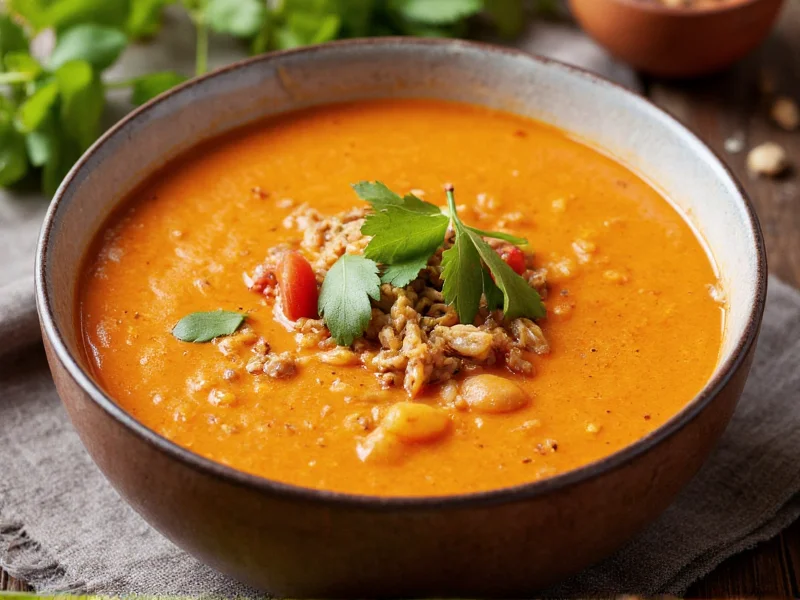
Understanding authentic Thai curry soup requires recognizing its foundation in balance—spicy, sweet, sour, and salty elements working in harmony. Unlike Westernized versions that often oversimplify or distort the recipe, genuine Thai curry soup showcases regional variations and careful ingredient selection that define Thailand's rich culinary heritage.
The Four Authentic Thai Curry Soup Varieties
Thai cuisine features several distinct curry soups, each originating from different regions of Thailand and serving unique cultural purposes. The primary varieties include:
| Curry Type | Key Ingredients | Flavor Profile | Regional Origin |
|---|---|---|---|
| Red Curry (Gaeng Phed) | Dried red chilies, garlic, lemongrass, kaffir lime leaves | Spicy with subtle sweetness | Central Thailand |
| Green Curry (Gaeng Keow Wan) | Fresh green chilies, cilantro root, peppercorns | Bright, herbal, moderately spicy | Central Thailand |
| Yellow Curry (Gaeng Gari) | Turmeric, cumin, corander, cinnamon | Mild, aromatic, slightly sweet | Southern Thailand |
| Massaman Curry | Peanuts, tamarind, cardamom, star anise | Rich, nutty, mildly spiced | Thai-Muslim influence |
Essential Components of Authentic Thai Curry Soup
Creating genuine Thai curry soup requires understanding its fundamental building blocks. Many Western recipes substitute ingredients that compromise authenticity, but traditional preparation follows specific principles.
Curry Paste: The Flavor Foundation
Authentic Thai curry begins with freshly made curry paste—a complex blend of herbs and spices pounded in a mortar and pestle. Commercial pastes often contain preservatives and sugar that alter the flavor profile. Traditional red curry paste requires 15-20 ingredients including:
- Dried red chilies (soaked in water)
- Garlic and shallots
- Lemongrass and galangal
- Kaffir lime zest and leaves
- Shrimp paste (kapi) for umami depth
Coconut Milk Technique
Proper handling of coconut milk separates authentic Thai curry soup from inauthentic versions. Chefs "crack" the coconut milk by simmering it until the oil separates before adding curry paste. This technique, called kaeng tai pla, creates a richer flavor base and prevents curdling.
Cultural Context and Regional Variations
Thai curry soup reflects Thailand's regional diversity. Northern Thailand features milder curries with fewer chilies, while Southern Thai curries incorporate more seafood and intense heat. Central Thai curries balance all flavor elements, representing the culinary standard most recognized internationally.
Massaman curry demonstrates cultural exchange, incorporating Persian and Indian influences through its use of nuts and warm spices. This curry traditionally includes potatoes and is often served with roti bread rather than rice.
Historical Evolution of Thai Curry Soup
Thai curry soup has evolved through documented historical exchanges, with verifiable milestones shaping modern varieties:
- Late 15th Century: Portuguese traders introduced chili peppers to Thailand, replacing native peppers in curry pastes. Prior to this, black pepper provided primary heat in regional dishes. (Source: National Geographic)
- 17th-18th Century: Persian and Indian Muslim traders established trade routes bringing cardamom, cinnamon, and peanut-based cooking techniques that evolved into Massaman curry. Historical records show Persian merchants settled in Ayutthaya (Thailand's capital 1351-1767). (Source: Journal of Ethnic Foods)
- Early 20th Century: Standardization occurred under King Rama VI's cultural reforms, with royal kitchens documenting regional variations. Yellow curry (Gaeng Gari) emerged as a distinct category during this period, influenced by Indian curry traditions. (Source: Journal of Ethnic Foods)
Avoiding Common Authenticity Mistakes
Many home cooks and restaurants make critical errors that compromise Thai curry soup authenticity:
- Using coconut cream instead of proper coconut milk—authentic recipes use first-press coconut milk for richness, not the thickened cream common in Western supermarkets
- Overcooking delicate ingredients—fish sauce, lime juice, and fresh herbs should be added at the end to preserve their volatile aromatics
- Substituting ingredients without understanding purpose—palm sugar provides specific caramel notes that white sugar cannot replicate
- Serving with inappropriate accompaniments—traditional Thai curry soup is served with jasmine rice, not noodles or bread
Contextual Boundaries: When Authenticity Matters
Authenticity operates within specific cultural and practical frameworks, verified through culinary research:
- Historical Documentation Context: When preserving cultural heritage (e.g., museum exhibits or academic research), substitutions alter documented traditions. Palm sugar's mineral content affects fermentation in curry pastes—a chemical property white sugar cannot replicate. (Source: Journal of Ethnic Foods)
- Regional Appropriateness: Green curry is historically absent in Northern Thailand due to climate limitations for growing green chilies. Massaman curry remains concentrated in Southern regions with Muslim communities, rarely appearing in traditional Northern hill tribe cuisine. (Source: Journal of Ethnic Foods)
- Dietary Adaptation Limits: Substitutions like coconut aminos for fish sauce are acceptable for allergies, but omitting lime juice disrupts the essential sour element Thai consumers identify as "curry soup." Maintaining the four fundamental tastes (spicy, sweet, sour, salty) is non-negotiable for authenticity. (Source: National Geographic Travel)
Traditional Preparation Method
The authentic preparation sequence matters as much as the ingredients themselves:
- "Crack" the coconut milk by simmering until oil separates
- Add curry paste and fry until aromatic (2-3 minutes)
- Incorporate protein and simmer until partially cooked
- Add vegetables that require longer cooking
- Finish with fish sauce, palm sugar, and lime juice
- Add delicate ingredients like fresh basil and kaffir lime leaves
This method preserves the layered complexity that defines genuine Thai curry soup. The order of operations affects how flavors meld and develop, creating the distinctive balance Thai cuisine is known for.
Serving Traditions
In Thailand, curry soup functions as part of a shared meal rather than a standalone dish. It's typically served alongside other dishes including:
- Steamed jasmine rice
- Yam (spicy salads)
- Grilled proteins
- Stir-fried vegetables
The proper Thai dining experience balances multiple flavors and textures across several dishes, with curry soup contributing its specific role in the overall harmony.




 浙公网安备
33010002000092号
浙公网安备
33010002000092号 浙B2-20120091-4