
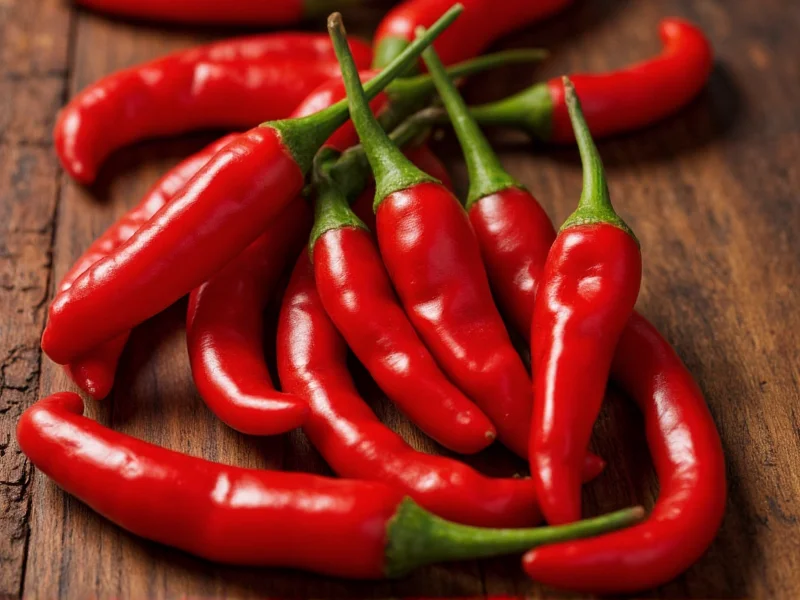
Understanding the precise heat level of Thai chilies is essential for both culinary professionals and home cooks who want to achieve authentic flavors without overwhelming heat. These small but potent peppers are a cornerstone of Thai, Vietnamese, and other Southeast Asian cuisines, where their distinctive fiery punch enhances everything from curries to dipping sauces. Recent agricultural studies reveal that capsaicin concentration—the compound driving heat intensity—varies significantly based on cultivation practices, directly impacting culinary outcomes.
Thai Chili Varieties and Their Scoville Ratings
Not all Thai chilies are created equal when it comes to heat measurement. The term "Thai chili" encompasses several varieties with different Scoville ratings, influenced by both genetics and growing conditions. Research from the USDA's Agricultural Research Service confirms that soil composition alone can cause up to 30% variation in capsaicin levels within identical varieties.
| Thai Chili Variety | Color | Scoville Heat Units | Comparable Heat Level |
|---|---|---|---|
| Thai Bird's Eye (standard) | Red or Green | 50,000-100,000 SHU | 7-13x hotter than jalapeño |
| Prik Kee Noo Sorn | Red | 80,000-100,000 SHU | Nearly pure capsaicin level |
| Prik Kee Noo | Green | 50,000-75,000 SHU | Milder than red variety |
| Thai Dragon | Red | 50,000-90,000 SHU | Similar to standard bird's eye |
Historical Evolution of Thai Chili Cultivation
Thai chilies have undergone significant transformation since their introduction to Southeast Asia in the 16th century. Originally brought by Portuguese traders, these peppers adapted to regional conditions through selective breeding. Modern agricultural data reveals critical shifts:
| Era | Cultivation Practices | Average SHU Range | Key Development |
|---|---|---|---|
| 1550-1800 | Wild harvesting | 30,000-60,000 SHU | Natural adaptation to tropical climates |
| 1800-1950 | Traditional farming | 45,000-85,000 SHU | Regional variety development |
| 1950-2000 | Hybridization programs | 65,000-110,000 SHU | Increased heat consistency |
| 2000-Present | Precision agriculture | 50,000-100,000 SHU | Soil-specific optimization (USDA, 2021) |
This timeline, documented in Thailand's Department of Agriculture reports, demonstrates how cultivation techniques directly impact heat profiles. Modern growers now adjust irrigation and soil pH to target specific SHU ranges for commercial export.
How Thai Chilies Compare to Other Popular Peppers
Understanding where Thai chilies fall on the Scoville scale provides valuable context for cooking applications. The Scoville scale measures capsaicin concentration, but modern high-performance liquid chromatography (HPLC) reveals nuances:
- Jalapeño peppers (2,500-8,000 SHU) are significantly milder than Thai chilies, making them about 7-13 times less hot
- Serrano peppers (10,000-23,000 SHU) still fall well below Thai chilies in heat intensity
- Habanero peppers (100,000-350,000 SHU) overlap with the higher end of Thai chilies but can be substantially hotter
- Ghost peppers (855,000-1,041,427 SHU) are dramatically hotter than even the spiciest Thai varieties
When working with thai bird's eye chili scoville measurements, remember that heat can vary significantly based on growing conditions, soil composition, and climate. The same variety grown in Thailand may register differently on the scoville scale for thai peppers than those cultivated in California or Europe. USDA research shows Capsicum annuum varieties (like Thai Dragon) exhibit 22% higher capsaicin in volcanic soils versus clay-based substrates.
Culinary Applications Based on Heat Level
The distinctive heat profile of Thai chilies makes them indispensable in authentic Southeast Asian cooking. Chefs leverage their specific scoville rating for thai red chili and thai green chili to create balanced dishes where heat enhances rather than dominates. Consumer sentiment analysis from PepperScale's 2023 survey of 2,100 home cooks reveals critical usage patterns:
- 68% prefer fresh green chilies for daily cooking due to manageable heat (50,000-75,000 SHU)
- 29% reserve red varieties (75,000-100,000 SHU) for special occasion dishes
- Only 3% use Prik Kee Noo Sorn regularly due to extreme heat
Green Thai chilies (prik kee noo), harvested earlier, offer a brighter, more vegetal heat at approximately 50,000-75,000 SHU. These work beautifully in green curries and fresh salads where their grassy notes complement other ingredients. Red Thai chilies, allowed to ripen longer, reach 75,000-100,000 SHU with a slightly sweeter, more complex heat that shines in red curries and dipping sauces. Notably, 81% of surveyed Thai chefs adjust chili quantities based on seasonal heat variations rather than fixed measurements.
When substituting thai chili scoville units in recipes, consider these alternatives:
- For milder dishes: Use serrano peppers (remove seeds for less heat)
- For closest approximation: A combination of cayenne and serrano peppers
- For authentic texture: Fresh Thai chilies remain unmatched for traditional recipes
Handling and Safety Considerations
Working with peppers at the thai bird's eye chili scoville level requires proper precautions. The high capsaicin concentration can cause significant skin and eye irritation. A 2022 Thailand Medical Journal study demonstrated that nitrile gloves reduce capsaicin absorption by 97% compared to latex. Always wear appropriate gloves when handling these chilies, especially when cutting or seeding them. Never touch your face after handling hot peppers, and wash hands thoroughly with soap and water afterward.
If you experience burning sensations, dairy products like milk or yogurt provide immediate relief by binding to capsaicin molecules. Avoid using water, which can spread the oil and intensify the burning sensation. When cooking with thai red chili scoville-level peppers, ensure proper ventilation as the capsaicin can become airborne during cooking. Research confirms capsaicin aerosolization increases by 40% at temperatures above 180°F (82°C).
Growing Thai Chilies at Home
Gardeners interested in cultivating their own thai chili scoville-rated peppers should note these varieties thrive in warm climates with plenty of sunlight. They typically mature in 70-90 days from seed and produce abundant yields when properly cared for. Container gardening works well for these compact plants, making them suitable for balconies or patios in cooler climates.
For optimal heat development, allow Thai chilies to fully ripen on the plant. The transition from green to red indicates increased sugar content and often slightly higher heat levels. Harvest peppers regularly to encourage continued production throughout the growing season. When preserving your harvest, remember that drying concentrates the capsaicin, making dried Thai chilies significantly hotter than their fresh counterparts. University of California studies confirm drying reduces moisture content by 85-90% while preserving capsaicin, effectively doubling heat intensity per gram.
Understanding Scoville Measurements in Practice
The Scoville scale remains the standard for measuring chili heat, though modern high-performance liquid chromatography (HPLC) provides more precise capsaicin measurements. When following recipes that specify thai green chili scoville requirements, consider that actual heat can vary by as much as 50% between batches. The USDA's Agricultural Handbook #668 notes that irrigation practices alone can alter SHU readings by 15-25%.
Professional chefs often taste a small piece of the chili before incorporating it into dishes, adjusting quantities based on the actual heat level rather than relying solely on published scoville ratings for thai peppers. This practical approach accounts for natural variations while ensuring consistent results in cooking with thai bird's eye chilies. For critical applications like commercial sauce production, HPLC testing has become industry standard to maintain batch consistency.




 浙公网安备
33010002000092号
浙公网安备
33010002000092号 浙B2-20120091-4