
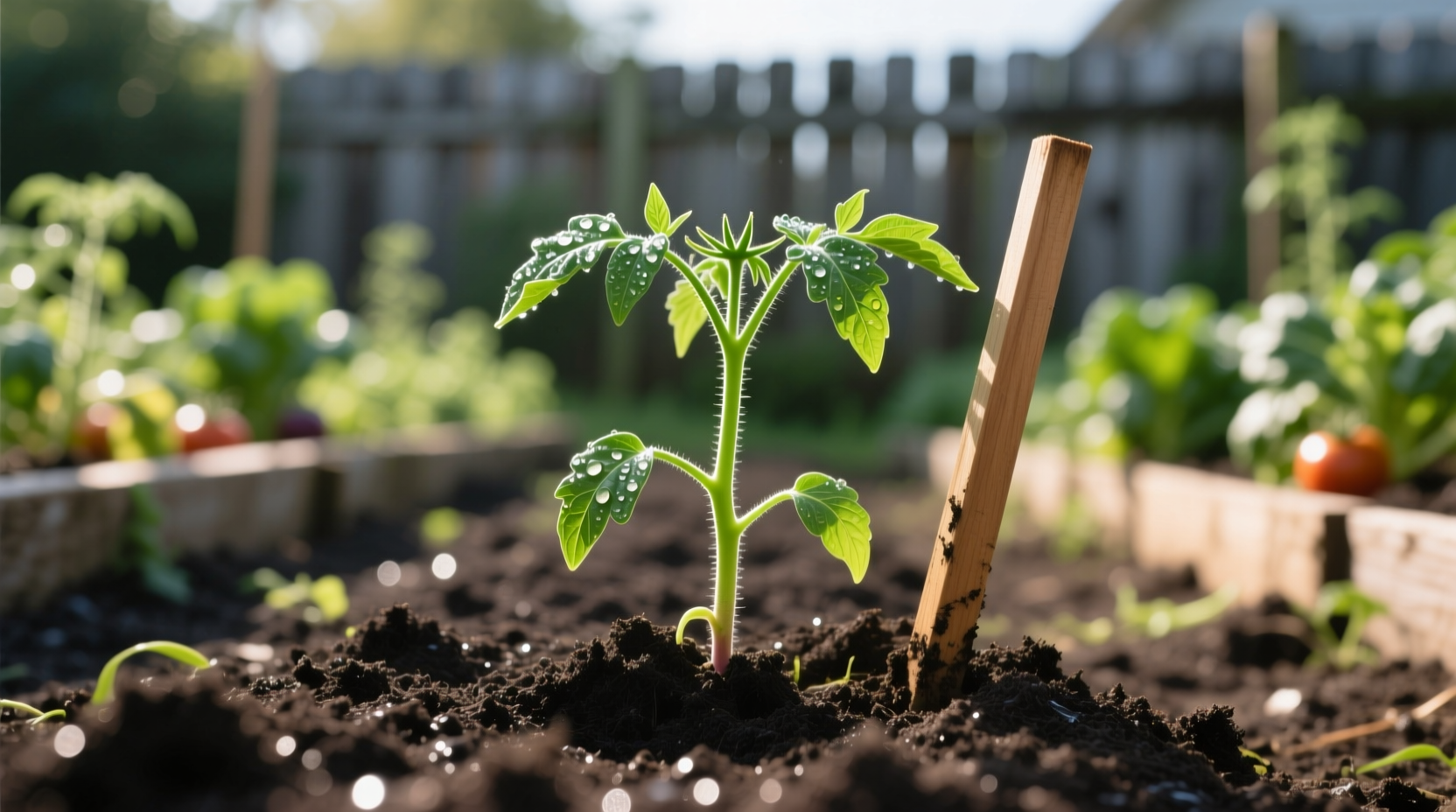
Tomato plants naturally sprawl across the ground, but without proper support, they become vulnerable to disease, pests, and reduced fruit production. Whether you're growing cherry tomatoes in containers or heirloom varieties in garden beds, staking transforms your harvest potential. This guide delivers actionable techniques backed by horticultural research to help you implement the right staking system for your specific growing conditions.
Why Staking Tomatoes Matters: Beyond Just Upright Growth
Tomato plants evolved as sprawling vines in South America, but modern cultivation requires vertical support for optimal results. When tomatoes grow along the ground, soil-borne pathogens like Alternaria solani (early blight) splash onto leaves during rain, while fruit resting on damp soil develops rot. The University of California Agriculture and Natural Resources confirms that staked plants show up to 50% less fungal disease compared to unsupported plants.
Proper staking also improves air circulation around foliage, allowing leaves to dry faster after watering or rain. This simple practice significantly reduces the humidity microclimate that encourages diseases like powdery mildew and botrytis. Additionally, sunlight penetrates deeper into the plant canopy, enhancing photosynthesis and promoting more even ripening of fruit.
When to Stake Tomatoes: Timing Is Everything
Install supports when plants reach 12-18 inches tall—before they develop extensive lateral growth. Waiting until plants are larger risks root damage during stake placement and makes training more difficult. For container gardeners, insert stakes at planting time to avoid disturbing roots later.
| Growth Stage | Staking Action | Consequence of Delay |
|---|---|---|
| Seedling (6-12" tall) | Prepare supports | Root disturbance risk increases |
| Early Vegetative (12-18" tall) | Install primary supports | Optimal window for clean installation |
| Flowering Stage | Add secondary ties | Fruit development compromised |
| Fruit Set | Adjust ties as needed | Stem damage from tight ties |
According to Cornell University's Cooperative Extension, staking too late forces plants to redirect energy from fruit production to recovering from root disturbance. Their field trials demonstrate that timely staked plants produce 20-30% more marketable fruit than those supported after visible stress symptoms appear.
Choosing Your Staking Method: Three Proven Systems
No single staking method works for all situations. Your choice depends on tomato variety, garden space, and personal maintenance preferences. Understanding these differences prevents wasted effort and ensures season-long support.
Single Stake Method: Best for Determinate Varieties
Ideal for bush-type determinate tomatoes that reach fixed heights (typically 3-4 feet), this method uses one sturdy stake per plant. Drive 7-foot wooden or metal stakes 12-18 inches deep, 3-4 inches from the main stem. As the plant grows, tie the main stem to the stake every 8-12 inches using soft twine, cloth strips, or specialized plant ties.
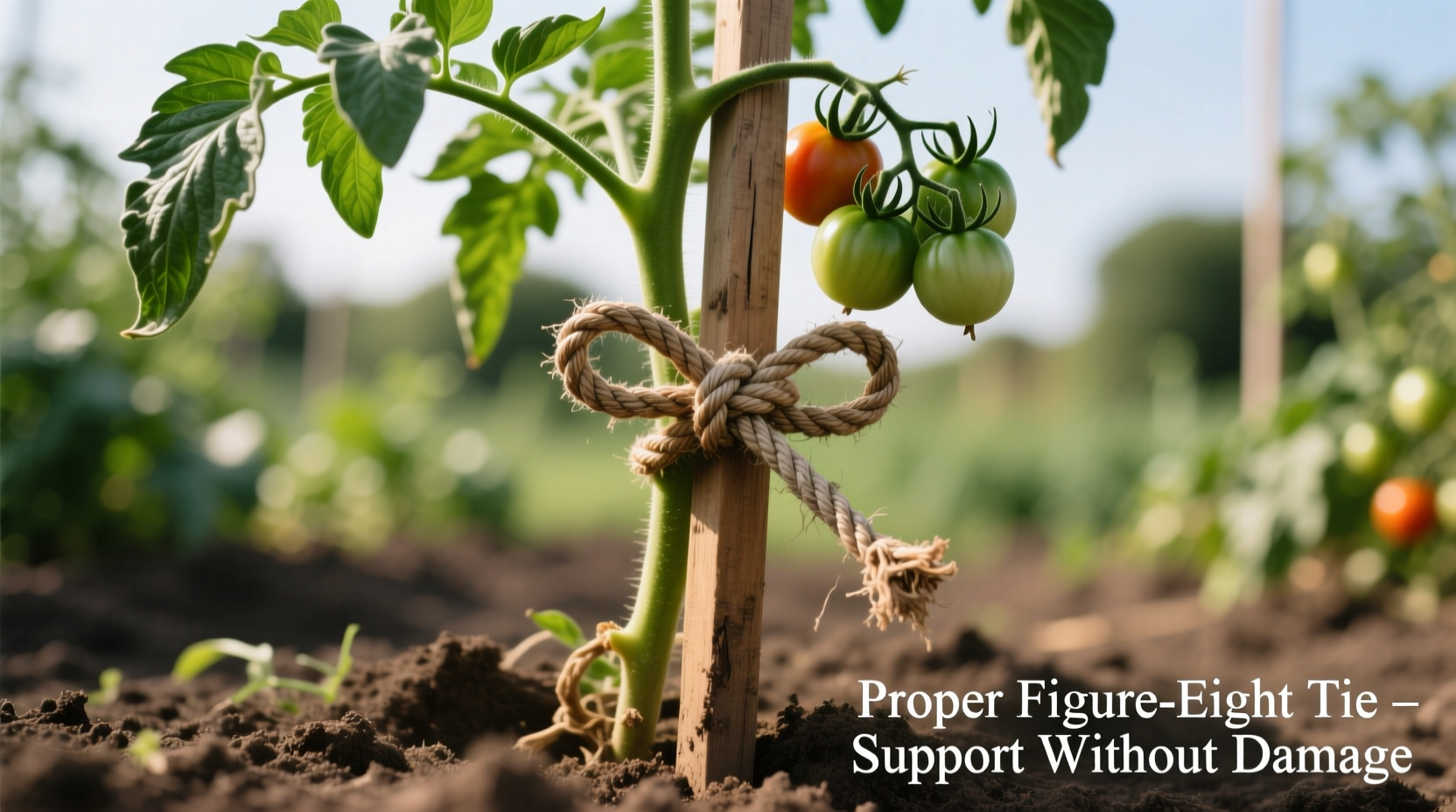
Pro tip: Position ties in a figure-eight pattern around both stake and stem to prevent constriction as the plant thickens. Check ties weekly during peak growth and loosen as needed.
Florida Weave Technique: Efficient for Garden Rows
Perfect for multiple indeterminate plants in straight rows, this method creates a continuous support system. Place sturdy posts at row ends and every 3-4 plants. Starting when plants reach 12-18 inches, weave twine horizontally between plants at 12-inch intervals as they grow, creating a ladder-like support.
The USDA Agricultural Research Service reports this method reduces labor by 40% compared to individual staking while providing comparable yield improvements. It works best with plants spaced 24-36 inches apart in rows 4-5 feet wide.
Cage-and-Stake Hybrid: Maximum Support for Heavy Producers
For large-fruited varieties like 'Beefsteak' or 'Brandywine', combine a sturdy tomato cage with additional central stakes. Drive a 7-foot stake through the cage center, then secure the cage base to the ground with U-shaped pins. As the plant grows, gently tuck branches inside the cage and tie heavy fruit clusters to horizontal cage wires.
This hybrid approach prevents the common problem of cages tipping over under fruit weight. University extension trials show it supports 25% more fruit per plant than cages alone without increasing disease risk.
Step-by-Step Staking Implementation
Materials Checklist
- 7-foot stakes (wooden, bamboo, or metal)
- Soft plant ties (cloth strips, rubber-coated wire, or velcro straps)
- Hammer or mallet for stake installation
- Gloves for handling thorny varieties
- Pruners for selective branch removal
Installation Process
- Position stakes 3-4 inches from the main stem on the north side to avoid shading
- Drive stakes 12-18 inches deep using a mallet (avoid hitting roots)
- Create figure-eight ties at the first leaf node above soil line
- Add new ties every 8-12 inches of growth, matching plant's natural spiral pattern
- Adjust ties weekly during rapid growth periods
Troubleshooting Common Staking Problems
Plants Outgrowing Supports
If your indeterminate tomatoes exceed stake height, don't cut the top—this redirects energy to fruit production. Instead, carefully lower the top portion and secure it to a lower section of the stake or add an extension. The University of Maryland Extension recommends this "topping" technique only when plants reach 10% beyond support height to maintain natural growth patterns.
Storm Damage Recovery
After high winds, check for snapped stems. If the break occurs above the first flower cluster, remove damaged portions and train a strong sucker to become the new main stem. Stake immediately with additional support. Plants typically recover within 7-10 days if at least 50% of healthy foliage remains.
Improper Tying Techniques
Tight ties cause girdling that restricts nutrient flow, creating weak points prone to breakage. Check ties weekly during peak growth and loosen any that indent the stem. Replace rigid materials with stretchy alternatives like rubber-coated wire or specialized plant tape that expands with growth.
Advanced Staking Strategies for Maximum Yield
Professional growers employ these techniques to optimize their staking systems:
- Sun exposure management: Position stakes to encourage V-shaped growth patterns that maximize morning sun exposure while providing afternoon shade
- Selective pruning: Remove suckers below the first flower cluster but allow 1-2 above to fill support structure
- Season extension: In cooler climates, use black plastic mulch around staked plants to absorb and radiate heat
- Fruit cluster support: Use mesh bags or soft slings for heavy fruit clusters to prevent branch breakage
Remember that staking works best as part of an integrated approach. Combine proper support with consistent watering, appropriate fertilization, and regular pest monitoring for the healthiest plants and highest yields. The most successful gardeners treat staking as an ongoing process rather than a one-time task, making small adjustments throughout the growing season.




 浙公网安备
33010002000092号
浙公网安备
33010002000092号 浙B2-20120091-4