
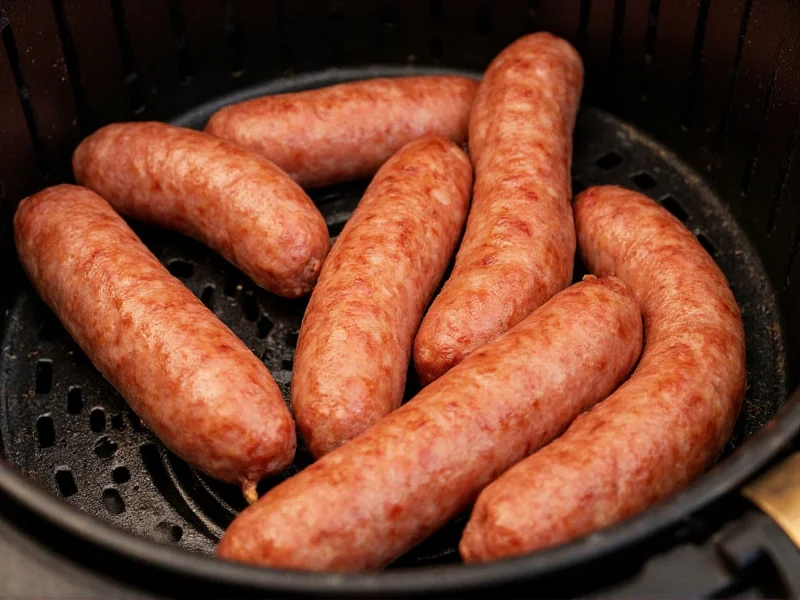
Smoked sausage is a versatile protein that's already fully cooked through the smoking process, but heating it properly unlocks its best flavor and texture. The air fryer has become the preferred method for many home cooks due to its ability to create that perfect crispy exterior while keeping the interior juicy — all without added oil. Unlike traditional methods that can dry out sausage or create uneven cooking, the air fryer's rapid hot air circulation ensures consistent results every time.
Understanding Smoked Sausage: Is It Already Cooked?
Many consumers wonder whether smoked sausage needs cooking at all. The answer depends on the type:
| Type of Smoked Sausage | Pre-Cooked? | Recommended Air Fryer Treatment |
|---|---|---|
| Hot Smoked (126°F-140°F) | Yes — fully cooked | Heating only (8-10 minutes) |
| Cold Smoked (below 86°F) | No — requires full cooking | Cook thoroughly (12-15 minutes) |
| Kielbasa | Typically yes | Heating only (9-11 minutes) |
| Andouille | Typically yes | Heating only (8-10 minutes) |
Most commercially available smoked sausages in grocery stores are hot smoked and fully cooked. Always check packaging for "fully cooked" or "ready to eat" labels. When in doubt, use a meat thermometer to verify the internal temperature has reached 160°F for safety.
Step-by-Step Air Fryer Cooking Guide
Follow these precise steps for perfect smoked sausage every time:
- Preparation: Remove sausage from packaging and pat dry with paper towels. For even cooking, cut thicker sausages (over 1” diameter) lengthwise or into 2-inch pieces.
- Preheat: Set air fryer to 375°F and allow to preheat for 3 minutes (critical for consistent results).
- Arrange: Place sausages in a single layer with space between them. Do not overcrowd — cook in batches if necessary.
- Cook: Air fry at 375°F for 8-12 minutes, flipping halfway through cooking time.
- Check Temperature: Insert meat thermometer into thickest part. Should read 160°F for safety and optimal texture.
- Rest: Let sausages rest for 2-3 minutes before serving to allow juices to redistribute.
Perfect Timing for Different Sausage Types
Cooking times vary based on sausage thickness and type. These guidelines ensure perfect results:
- Standard smoked sausage (1” diameter): 8-10 minutes at 375°F
- Kielbasa: 9-11 minutes at 375°F
- Andouille: 8-10 minutes at 375°F
- Thin smoked sausage links: 6-8 minutes at 375°F
- Thick smoked sausage (over 1.5”): 12-15 minutes at 375°F, turning every 4 minutes
For extra crispy skin, increase temperature to 400°F for the final 2 minutes of cooking. Always check internal temperature rather than relying solely on time, as air fryer models vary.
Visual Doneness Indicators
While a meat thermometer provides the most accurate doneness check, these visual cues confirm properly cooked smoked sausage:
- Crispy, golden-brown exterior with slight charring in spots
- Juices run clear when pierced (not pink)
- Firm texture that springs back when pressed
- Internal temperature of 160°F when measured with thermometer
Avoid cutting into sausage to check doneness, as this releases precious juices. If you must check visually, make a small slit in the thickest part to inspect the interior color.
Troubleshooting Common Issues
Even with precise instructions, issues can arise. Here's how to solve them:
Sausage Drying Out
This happens when cooking time exceeds recommendations or temperature is too high. Solution: Reduce cooking time by 2 minutes or lower temperature to 360°F. For particularly lean sausages, lightly brush with oil before cooking.
Uneven Cooking
Occurs when sausages are overcrowded or not flipped. Solution: Cook in single layer with space between pieces and flip halfway through cooking. For thick sausages, rotate 90 degrees at the halfway point.
Excessive Smoke
Caused by fat dripping onto heating element. Solution: Place a slice of bread in the bottom of the air fryer basket to absorb excess grease, or line with parchment paper (with holes for air circulation).
Flavor Enhancements and Serving Suggestions
Elevate your air fryer smoked sausage with these professional techniques:
- Pre-cooking treatment: Score the sausage casing in 3-4 places to prevent bursting and allow seasonings to penetrate
- Seasoning options: Toss with 1 tsp smoked paprika, 1/2 tsp garlic powder, and a pinch of cayenne before cooking
- Finishing touch: After cooking, brush with honey mustard glaze or sprinkle with fresh herbs
Perfect pairings for air fryer smoked sausage include:
- Classic: Served with sauerkraut and mustard
- Cajun style: With air-fried bell peppers and onions
- Breakfast option: Sliced and added to scrambled eggs
- Meal prep: Chopped into pasta salads or grain bowls
Storage and Reheating Guidelines
Proper storage maintains quality for future meals:
- Refrigeration: Store cooled sausage in airtight container for up to 4 days
- Freezing: Place in freezer bag with air removed; keeps for 2-3 months
- Reheating: Air fry at 350°F for 3-5 minutes until heated through — superior to microwave for maintaining texture
When reheating, avoid high temperatures that can further dry out the sausage. The air fryer's dry heat makes it ideal for restoring that fresh-from-cooking crispness without adding moisture like a microwave would.
Why Air Fryer Outperforms Other Methods
Compared to traditional cooking methods, the air fryer offers distinct advantages for smoked sausage:
- Texture control: Achieves crispy exterior without drying interior — difficult with boiling or microwaving
- Time efficiency: Cooks 30% faster than oven methods with no preheating required
- Health benefits: Requires no added oil while still creating satisfying crispness
- Consistency: Eliminates uneven cooking common with stovetop methods
- Cleanliness: Contains splatter better than pan-frying, with easy-to-clean components
Professional chefs increasingly prefer air fryers for smoked sausage preparation because they deliver restaurant-quality results with minimal effort and cleanup. The precise temperature control prevents the common pitfalls of other methods — boiling leaches flavor, microwaving creates rubbery texture, and pan-frying often results in uneven browning.
Frequently Asked Questions
Do I need to poke holes in smoked sausage before air frying?
No, puncturing smoked sausage causes precious juices to escape, resulting in dry meat. Modern sausage casings are designed to withstand cooking temperatures without bursting. If concerned about bursting, score the surface lightly with a knife instead of poking holes.
Can you cook frozen smoked sausage in an air fryer?
Yes, but with adjustments. Add 3-5 minutes to the cooking time and flip more frequently. For best results, cook at 350°F rather than 375°F to ensure the interior heats thoroughly before the exterior overcooks. Always verify internal temperature reaches 160°F.
How do I prevent smoked sausage from sticking in the air fryer?
Ensure the sausage and air fryer basket are completely dry before cooking. Lightly brush the basket with oil or use a parchment liner with perforations for air circulation. Avoid spraying oil directly on the sausage as this can cause excessive smoking. Proper preheating also creates a natural non-stick surface.
Is it safe to cook smoked sausage that's past its sell-by date?
Smoked sausage typically remains safe for 1-2 weeks past the sell-by date when properly refrigerated. Always check for signs of spoilage: sour smell, slimy texture, or grayish color. When in doubt, use a meat thermometer to verify it reaches 160°F during cooking, which kills potential bacteria.
Can I cook smoked sausage and vegetables together in the air fryer?
Yes, but with timing considerations. Place harder vegetables like potatoes or carrots in first for 3-4 minutes, then add sausage and softer vegetables like bell peppers. Toss everything with 1 tsp oil and your favorite seasonings. Cook at 375°F for 8-10 minutes, shaking the basket halfway through for even cooking.




 浙公网安备
33010002000092号
浙公网安备
33010002000092号 浙B2-20120091-4