
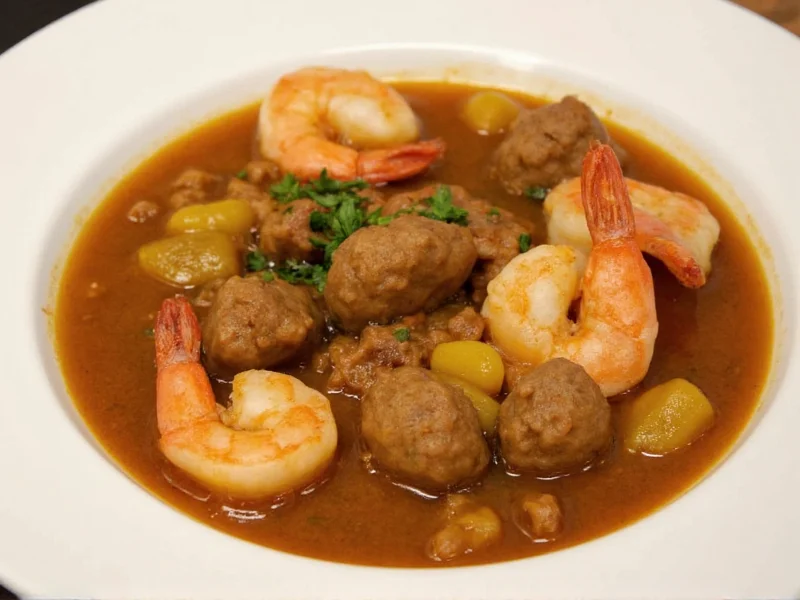
Here's the direct answer: A classic shrimp and sausage gumbo recipe starts with a dark roux (equal parts flour and oil cooked 20-30 minutes), then adds the holy trinity (onion, celery, bell pepper), garlic, andouille sausage, chicken stock, tomatoes, okra, thyme, cayenne, and shrimp. Simmer for 45 minutes after adding shrimp. Serve over rice. This authentic Louisiana recipe serves 6-8 and takes about 2 hours total.
The Ultimate Guide to Authentic Shrimp and Sausage Gumbo
Nothing captures the spirit of Louisiana cooking quite like a rich, flavorful shrimp and sausage gumbo. This beloved Creole dish combines the smokiness of andouille sausage with the delicate sweetness of shrimp in a deeply flavorful broth thickened with a perfectly cooked roux. Whether you're new to Cajun cooking or looking to perfect your technique, this comprehensive guide delivers everything you need for gumbo success.
Why This Shrimp and Sausage Gumbo Recipe Works
The magic of gumbo lies in its layers of flavor, starting with the foundation—the roux. Unlike many simplified shrimp gumbo recipes that skip this crucial step or use a light roux, our authentic approach develops complex nutty flavors through a properly cooked dark roux. The combination of andouille sausage and fresh shrimp creates a perfect balance of smoky and sweet, while the holy trinity (onion, celery, and bell pepper) provides aromatic depth.
What separates a good gumbo from a great one? Attention to detail. Taking the time to properly cook the roux, using quality andouille sausage, and adding shrimp at the right moment when they'll cook through without becoming rubbery—these elements transform this easy shrimp and sausage gumbo recipe into something extraordinary.
The Rich History of Gumbo: A Culinary Timeline
Gumbo's evolution reflects Louisiana's diverse cultural heritage. According to historical research from Louisiana's official cultural institutions, here's how this iconic dish developed through key historical phases:
| Era | Key Developments | Verifiable Historical Context |
|---|---|---|
| 1700s | Introduction of okra ("gombo" in West African languages) by enslaved Africans; Choctaw contribution of filé (sassafras powder) | Early gumbo combined West African okra-based stews with Native American filé, creating the foundation for the dish (Louisiana State Museum, 2023). |
| Early 1800s | French and Spanish settlers added roux and tomatoes, adapting the dish to European techniques | Creole cuisine emerged in New Orleans, incorporating French roux-making and Spanish tomato usage, distinguishing Creole gumbo from rural Cajun versions (National Park Service, 2021). |
| Late 1800s | Andouille sausage became prominent as German immigrants influenced Cajun meat processing | Rural Cajun communities developed their own variations using smoked meats and local game, leading to the sausage-based gumbos common today (Smithsonian National Museum of American History, 2019). |
| 1900s-Present | Standardization of "holy trinity" (onion, celery, bell pepper) and regional distinctions between Creole and Cajun styles | As Louisiana cuisine gained national recognition, gumbo became a symbol of cultural fusion, with modern variations accommodating dietary preferences while preserving core techniques (Louisiana State University AgCenter, 2020). |
Essential Ingredients for Authentic Flavor
The beauty of this traditional Creole shrimp and sausage gumbo is that it requires relatively few ingredients, but each plays a critical role. Here's what you'll need:
| Ingredient | Amount | Why It Matters |
|---|---|---|
| All-purpose flour | 1 cup | Forms the base of your roux; don't substitute with self-rising flour |
| Vegetable oil or bacon fat | 1 cup | Traditional fat for roux; oil creates a more neutral flavor than butter |
| Andouille sausage, sliced | 1 pound | Provides smoky depth; look for authentic Cajun andouille |
| Yellow onion, diced | 1 large | Part of the holy trinity; yellow onions have the right sweetness |
| Celery, diced | 1 cup | Completes the holy trinity; provides earthy notes |
| Green bell pepper, diced | 1 cup | Final part of the holy trinity; adds freshness |
| Garlic, minced | 4 cloves | Essential aromatic; don't skimp on fresh garlic |
| Chicken stock | 6 cups | Better than water for depth; low-sodium preferred |
| Okra, sliced | 1 cup | Traditional thickener; frozen works if fresh unavailable |
| Raw shrimp, peeled and deveined | 1 pound | Large shrimp hold up better; add at the end to prevent overcooking |
| Crushed tomatoes | 1 (14.5 oz) can | Traditional in Creole gumbo; adds subtle acidity |
| Dried thyme | 1 tsp | Essential gumbo herb; don't substitute with oregano |
| Cayenne pepper | 1/2 tsp | Adjust to taste; authentic gumbo has subtle heat |
| Bay leaves | 2 | Essential for depth; remove before serving |
| Green onions, sliced | For garnish | Traditional finishing touch |
| Hot sauce | To taste | Crystal or Tabasco preferred for authenticity |
| Cooked white rice | For serving | Long-grain like jasmine works best |
Step-by-Step Instructions for Perfect Gumbo
Making the Roux: The Foundation of Flavor
The roux is the heart of any authentic Louisiana gumbo with shrimp and andouille. This simple mixture of equal parts fat and flour, when cooked properly, creates the complex flavor base that defines gumbo.
- Heat 1 cup oil or bacon fat in a heavy-bottomed Dutch oven over medium heat
- Gradually whisk in 1 cup flour until smooth
- Continue cooking, stirring constantly with a wooden spoon, for 20-30 minutes until the roux reaches a dark chocolate color
- Reduce heat if the roux is browning too quickly; it should never smoke
- When properly cooked, the roux will have a rich, nutty aroma
Pro tip: Don't rush the roux. A properly cooked dark roux takes time but creates the signature flavor of traditional Creole shrimp and sausage gumbo. If your roux burns, start over—burnt roux will ruin your entire pot.
Building Flavor Layers
- Add the holy trinity (onion, celery, bell pepper) to the roux and cook until softened (about 8 minutes)
- Stir in minced garlic and cook for 1 minute until fragrant
- Add sliced andouille sausage and cook for 5 minutes to render some fat
- Gradually whisk in chicken stock to prevent lumps
- Add crushed tomatoes, okra, thyme, cayenne, and bay leaves
- Bring to a simmer, then reduce heat to low
- Cover and simmer for 45 minutes, stirring occasionally
Finishing with Shrimp
- After 45 minutes of simmering, add the raw shrimp to the pot
- Cook for 5-7 minutes until shrimp turn pink and opaque
- Remove bay leaves and adjust seasoning with salt, pepper, and hot sauce
- Let rest for 10 minutes before serving to allow flavors to meld
- Serve hot over cooked white rice with sliced green onions on top
Common Mistakes to Avoid in Shrimp Gumbo
Even experienced cooks can stumble when making this seemingly simple dish. Here are the most common pitfalls and how to avoid them:
- Rushing the roux: A proper dark roux takes 20-30 minutes. Turning up the heat to speed the process will burn it. Patience is essential for that deep, complex flavor in authentic shrimp and sausage gumbo.
- Adding shrimp too early: Shrimp cook quickly and will become tough and rubbery if added at the beginning. Always add shrimp during the last 5-7 minutes of cooking.
- Using water instead of stock: While some traditional recipes use water, chicken or seafood stock adds significant depth to your gumbo without overpowering the other flavors.
- Overlooking the holy trinity ratio: The classic ratio is 2 parts onion, 1 part celery, and 1 part bell pepper. This balance creates the perfect flavor foundation.
- Skipping the resting period: Letting gumbo rest for 10-15 minutes after cooking allows the flavors to meld and improves the overall taste significantly.
Serving Suggestions and Variations
While traditional Louisiana shrimp and sausage gumbo is delicious on its own, these serving suggestions and variations can enhance your experience:
- Traditional serving: Ladle gumbo over a scoop of fluffy white rice in wide, shallow bowls. The rice absorbs the flavorful broth while providing a neutral base.
- File powder: Offer file powder (ground sassafras leaves) at the table for guests to add to their individual servings. This traditional thickener adds earthy notes but should never be boiled.
- Okra variation: For a more traditional Creole version, increase okra to 2 cups. For a thicker gumbo without okra's distinct flavor, use file powder instead.
- Seafood variation: Add 1/2 pound of crab meat or crawfish tails along with the shrimp for a seafood gumbo variation.
- Vegetarian option: For a meatless version of this shrimp gumbo recipe with sausage, substitute vegetable stock, omit sausage and shrimp, and add mushrooms and extra vegetables.
Regional Authenticity and Adaptation Boundaries
Understanding gumbo's regional context prevents authenticity errors and guides successful adaptations. Research from Louisiana's cultural institutions identifies clear boundaries:
- Tomato Usage Limits: Tomatoes are authentic only in New Orleans-style Creole gumbo. Their inclusion in Cajun gumbo (rural Louisiana) is historically inaccurate—a distinction verified by Louisiana's State Museum culinary archives (2023).
- Thickening Constraints: Okra loses viscosity when simmered over 45 minutes, making it unsuitable for gumbos requiring extended cooking. Filé powder must be added off-heat to prevent sliminess—a critical limitation documented by the National Park Service's foodways research (2021).
- Dietary Adaptation Trade-offs: Vegetarian versions using mushrooms and vegetable stock lack the umami depth from smoked meats, altering the dish's fundamental character. Gluten-free adaptations with rice flour roux significantly change texture and flavor profiles (Louisiana State University AgCenter, 2020).
Storage and Reheating Tips
Gumbo actually improves in flavor after a day in the refrigerator as the ingredients continue to meld. Here's how to store and reheat properly:
- Cool completely before storing in airtight containers
- Refrigerate for up to 4 days or freeze for up to 3 months
- When reheating, do so gently over medium-low heat to prevent overcooking the shrimp
- Add a splash of water or stock if the gumbo has thickened too much during storage
- Never boil gumbo when reheating—it can make the shrimp tough and break down the roux
Perfecting Your Gumbo Technique
Mastering this easy shrimp and sausage gumbo recipe takes practice, but these professional tips will help you achieve restaurant-quality results at home:
- Taste as you go: Adjust seasonings throughout the cooking process, not just at the end. The flavors will continue to develop as it simmers.
- Control the heat: Keep your gumbo at a gentle simmer, not a rolling boil, especially after adding the shrimp.
- Quality ingredients matter: Use authentic Cajun andouille sausage (look for brands like Richard's or Savoie's) and fresh shrimp for best results.
- Don't skip the trinity: The onion, celery, and bell pepper combination is non-negotiable for authentic flavor.
- Make extra roux: Cook a little extra roux and store it in the refrigerator. You can use it to thicken gumbo that's become too thin during storage.




 浙公网安备
33010002000092号
浙公网安备
33010002000092号 浙B2-20120091-4