
Imagine hiking along a coastal trail and spotting what appears to be wild onions. Before you consider adding them to your foraged meal, you need critical information that could save your life. This guide provides essential identification techniques, safety protocols, and scientific facts about the dangerous sea onion plant.
What Exactly Is the Sea Onion Plant?
The sea onion plant (Drimia maritima), formerly classified as Urginea maritima, belongs to the Asparagaceae family. Despite its common name and onion-like appearance, this plant contains no relation to edible Allium species. Native to Mediterranean coastal regions, it thrives in sandy soils along shorelines and has spread to similar habitats worldwide.
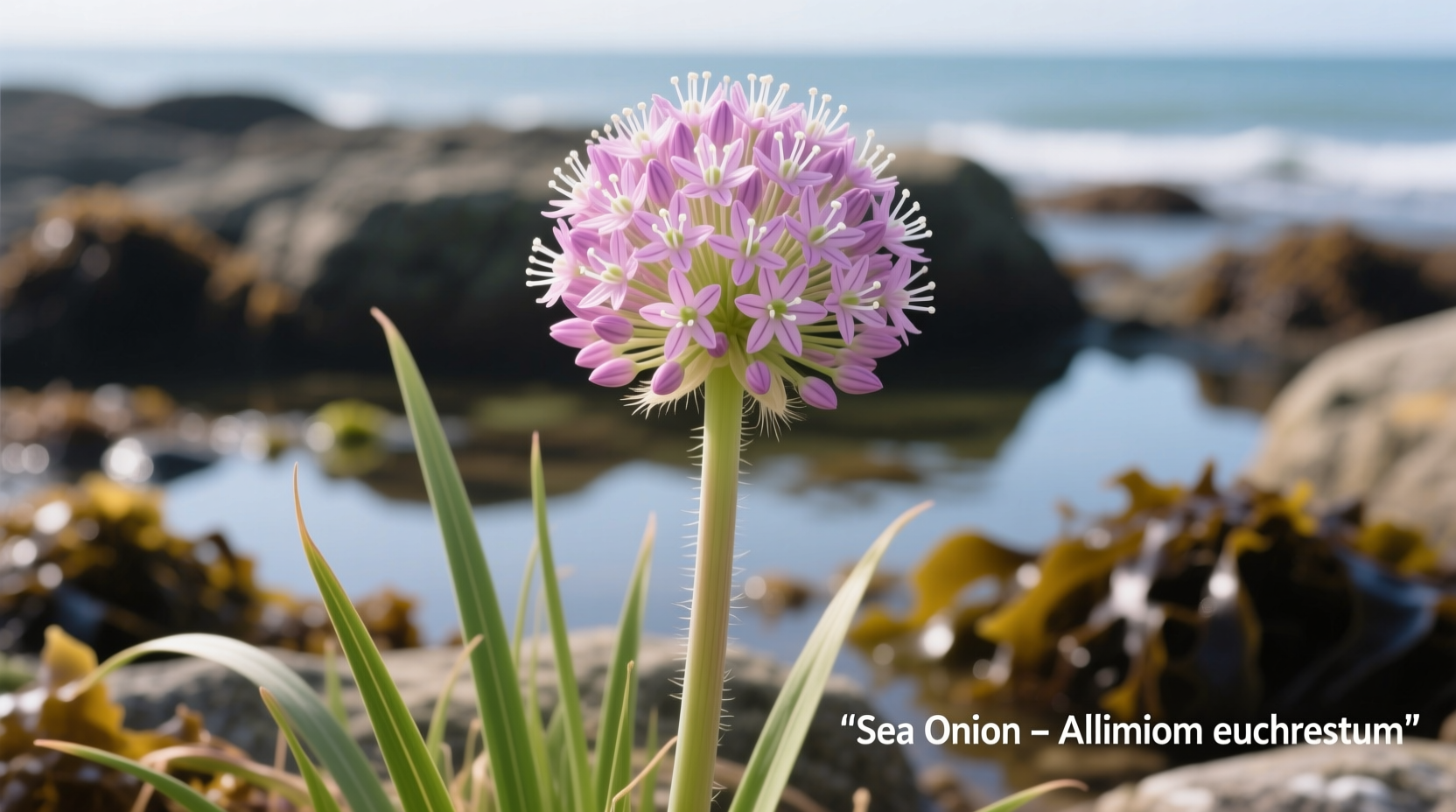
Naturalists and foragers frequently confuse sea onion with edible varieties due to superficial similarities in bulb structure. However, understanding the critical differences is essential for safety. This plant produces a single flower stalk up to 6 feet tall with white or pink flowers, while its leaves emerge separately after flowering—a key identification feature distinguishing it from true onions.
Where Does Sea Onion Grow and When to Be Cautious
Sea onion primarily grows in coastal regions with Mediterranean climates, including:
- Shorelines of the Mediterranean Sea
- Coastal California
- Australia's southern coastlines
- South Africa's western regions
The plant's seasonal growth pattern creates specific danger periods. Its large bulbs (up to 4 pounds) remain dormant during summer, then produce leaves in fall while the distinctive flower stalk emerges in spring. This separation of leaf and flower growth differs from edible onions, which produce both simultaneously.
Critical Identification Guide: Spotting the Dangerous Differences
Accurate identification prevents potentially fatal mistakes. Consider these distinguishing characteristics when evaluating any "onion" you encounter:
| Feature | Sea Onion (Drimia maritima) | Edible Wild Onion (Allium spp.) |
|---|---|---|
| Smell | No onion/garlic odor | Distinctive onion/garlic scent |
| Leaves | Flat, broad, emerge after flowering | Cylindrical, hollow, grow with flowers |
| Bulb Skin | Dark brown, paper-like, layered | Papery but thinner, often white/purple |
| Flower Timing | Flowers before leaves appear | Flowers and leaves present together |
Why Sea Onion Poses Serious Health Risks
The sea onion plant contains cardiac glycosides, particularly scillaren A and B, which affect heart function. According to the American Association of Poison Control Centers, ingestion of even small amounts can cause:
- Nausea and vomiting within 30 minutes
- Severe abdominal pain
- Irregular heartbeat (arrhythmia)
- Low blood pressure
- In extreme cases, cardiac arrest
A documented case from the Centers for Disease Control and Prevention reported hospitalization of three foragers who mistook sea onion for wild garlic. The National Poison Data System recorded 127 sea onion exposure cases between 2018-2022, with 47 requiring intensive care treatment.
Safety Protocols When Encountering Suspect Plants
Follow these evidence-based safety measures when foraging in coastal regions where sea onion grows:
- Never rely solely on visual identification—always perform the smell test (true onions emit characteristic odor when crushed)
- Avoid plants with separate leaf and flower growth cycles, a hallmark of sea onion
- Carry reference photos of both sea onion and local edible varieties
- When in doubt, leave it out—no foraged plant is worth risking severe poisoning
The University of California Cooperative Extension emphasizes that sea onion poisoning cases peak during spring foraging season when the plant's flower stalk resembles certain edible varieties. Their safety guidelines specifically warn against harvesting any "onion" that lacks the characteristic Allium scent.
What to Do If Poisoning Is Suspected
Immediate action saves lives when sea onion ingestion occurs:
- Contact poison control immediately (1-800-222-1222 in the US)
- Do NOT induce vomiting unless instructed by medical professionals
- Preserve a plant sample for identification
- Monitor for cardiac symptoms while awaiting help
Medical treatment typically involves activated charcoal administration and cardiac monitoring. The UpToDate medical resource confirms that prompt treatment results in full recovery for most cases, while delayed intervention increases fatality risk significantly.
Common Misconceptions About Sea Onion
Several dangerous myths persist about this plant:
- Myth: Cooking destroys the toxins
Fact: Cardiac glycosides remain stable through cooking - Myth: Only the bulb is toxic
Fact: All plant parts contain dangerous concentrations - Myth: Small amounts provide medicinal benefits
Fact: Therapeutic use requires precise pharmaceutical preparation under medical supervision
Despite historical use in traditional medicine, modern medical professionals strongly advise against any self-administration due to the narrow therapeutic window between beneficial and toxic doses.




 浙公网安备
33010002000092号
浙公网安备
33010002000092号 浙B2-20120091-4