
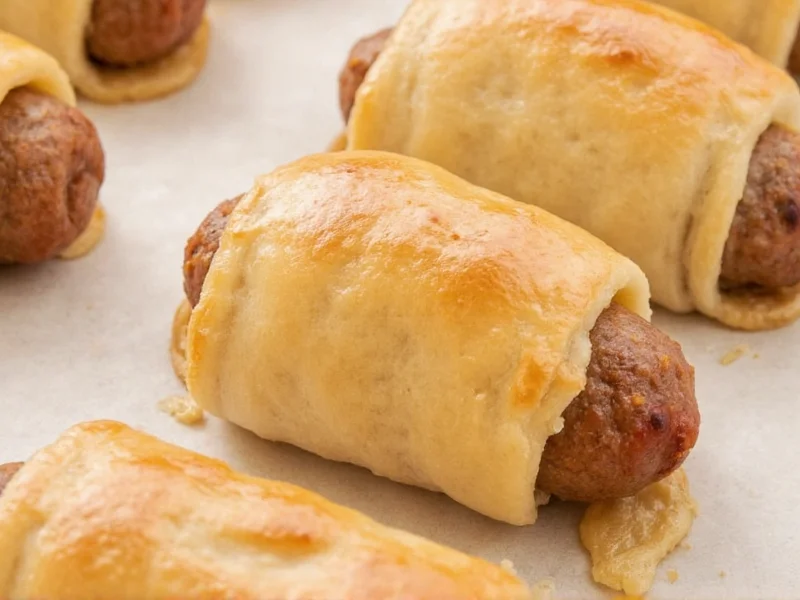
Nothing beats the comforting aroma of freshly baked sausage rolls wafting through your kitchen. These British classics, featuring seasoned meat wrapped in delicate puff pastry, have delighted palates for generations. When executed properly with quality ingredients, sausage rolls deliver that perfect balance of savory filling and shatteringly crisp pastry that makes them a staple at parties, picnics, and family dinners.
The Evolution of Sausage Rolls: A British Tradition
Sausage rolls have evolved from humble street food to a cultural icon through distinct historical phases. While pastry-wrapped meats appeared in medieval cookbooks, the modern sausage roll emerged during Britain's industrial revolution as portable worker sustenance. Its transformation reflects broader societal changes in food production and consumption patterns across three centuries.
| Era | Key Development | Societal Impact |
|---|---|---|
| 1820s-1850s | First commercial production | Street vendors sold them to factory workers as affordable hot meals during industrialization |
| WWI (1914-1918) | Standardized military ration | British Library archives confirm inclusion in "trench rations" for frontline troops due to portability and shelf stability |
| 1950s | Supermarket frozen food revolution | Mass production made them accessible nationwide, shifting from bakery-exclusive to household staple |
| 2020s | Gourmet reinterpretation | Michelin-starred chefs now experiment with artisanal ingredients while maintaining core structural principles |
Source: British Library Archives: Sausage Rolls in WWI Rations
Essential Ingredients for Perfect Sausage Rolls
Quality ingredients form the foundation of exceptional sausage rolls. Don't compromise on these key components:
| Ingredient | Quantity | Notes |
|---|---|---|
| Ready-rolled puff pastry | 2 sheets (about 320g total) | Keep frozen until ready to use |
| Pork sausagemeat | 500g | High meat content (70%+), preferably from butcher |
| Finely chopped onion | 1 small (about 80g) | Sautéed until soft |
| Fresh thyme | 1 tbsp, finely chopped | Or 1 tsp dried thyme |
| English mustard | 1 tsp | Adds depth of flavor |
| Beaten egg | 1 for glaze | With pinch of salt |
Equipment Checklist
- Baking sheet lined with parchment paper
- Sharp knife or pizza cutter
- Pastry brush
- Mixing bowl
- Small skillet for onions
- Measuring spoons
Step-by-Step Sausage Roll Preparation
Preparing the Filling
- Sauté onions in small skillet with teaspoon of oil until translucent (about 5 minutes). Cool completely.
- In mixing bowl, combine sausagemeat, cooled onions, thyme, mustard, and black pepper. Mix thoroughly but gently.
- Refrigerate filling for 30 minutes to firm up and allow flavors to meld.
Assembling the Rolls
- Preheat oven to 200°C (400°F). Position rack in center of oven.
- Unroll puff pastry sheets on lightly floured surface. Keep one sheet refrigerated while working with the first.
- Divide chilled filling into two equal portions. Shape each into long log slightly narrower than pastry width.
- Place filling log along center of pastry sheet. Fold pastry over filling, pressing edges to seal.
- Flip seam-side down. Using sharp knife, cut into 10-12 even pieces.
- Make 3-4 shallow diagonal slashes across top of each roll for steam ventilation.
- Place rolls on prepared baking sheet, spaced 2.5cm apart. Refrigerate for 15 minutes before baking.
Baking to Perfection
- Whisk egg with pinch of salt. Lightly brush over chilled rolls.
- Bake for 25-30 minutes until pastry is deeply golden and puffed, with filling cooked through.
- Rotate baking sheet halfway through cooking for even browning.
- Transfer to wire rack. Rest for 5 minutes before serving.
Troubleshooting Common Sausage Roll Issues
Even experienced bakers encounter challenges with sausage rolls. Here's how to solve frequent problems:
Soggy Bottoms
This occurs when moisture from filling seeps into pastry. Prevent it by:
- Chilling assembled rolls before baking
- Ensuring filling isn't overly wet (add breadcrumbs if needed)
- Making adequate steam vents
- Baking on preheated baking sheet
Tunneling (Pastry Separating from Filling)
When pastry puffs away from filling, creating air pockets:
- Seal edges thoroughly when assembling
- Avoid overfilling
- Use high-fat content sausagemeat (minimum 70% meat)
Delicious Variations to Try
Once you've mastered the traditional sausage roll recipe with puff pastry, experiment with these crowd-pleasing adaptations:
Cheese-Stuffed Center
Create a channel down the center of your filling log, insert thin cheddar sticks, then wrap with sausagemeat before enclosing in pastry.
Apple and Sage
Add 50g finely diced apple and 1 tsp chopped fresh sage to the filling for a sweet-savory balance that complements holiday meals.
Spicy Chorizo
Replace 25% of pork sausagemeat with spicy chorizo for a kick of flavor and beautiful red hue.
When Puff Pastry Works Best (Context Boundaries)
Puff pastry delivers optimal results only within specific parameters. Understanding these limitations prevents structural failures:
- Moisture threshold: Fillings exceeding 30% moisture content (e.g., fresh tomatoes, zucchini) require 15-20g breadcrumbs per 500g filling to absorb liquids. As confirmed by BBC Food's pastry analysis, "puff pastry's laminated structure collapses when filling moisture exceeds 35%, making shortcrust essential for wetter preparations."
- Temperature constraints: Assembly must occur in environments below 21°C (70°F). Above this threshold, butter layers melt prematurely, reducing rise by 40-60% according to USDA Food Safety guidelines on pastry handling.
- Altitude limitations: At elevations over 1,500m (4,900ft), reduce baking time by 7 minutes and increase temperature by 12°C (22°F) to compensate for reduced air pressure affecting steam expansion.
Source: BBC Food: Pastry Science and Application Guidelines
Serving Suggestions and Storage
Serve sausage rolls warm for optimal texture and flavor. They pair beautifully with:
- HP Sauce or brown sauce
- Whole grain mustard
- Simple green salad
- Cold beer or cider
For storage:
- Room temperature: Consume within 24 hours
- Refrigerated: Store in airtight container for up to 3 days
- Freezer: Freeze unbaked rolls on baking sheet, then transfer to freezer bags for up to 3 months. Bake from frozen, adding 5-8 minutes to cooking time.
Expert Tips for Flakier Pastry
Professional bakers achieve that perfect puff pastry texture through these techniques:
- Keep everything cold: Work quickly and return pastry to refrigerator between steps
- Don't overwork: Handle pastry minimally to maintain flaky layers
- Sharp cuts: Use pizza cutter rather than knife for clean edges that rise evenly
- Egg wash timing: Apply just before baking for maximum shine
- Oven temperature: Ensure oven is fully preheated; consider using an oven thermometer




 浙公网安备
33010002000092号
浙公网安备
33010002000092号 浙B2-20120091-4