
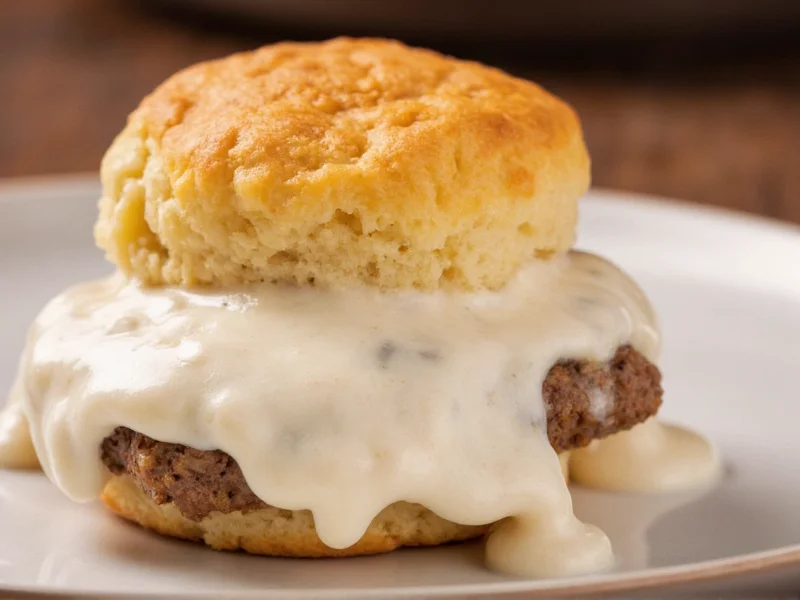
The History and Cultural Significance of Sausage Gravy Biscuits
Sausage gravy biscuits, also known as "biscuits and gravy," trace their origins to the American South where resourceful cooks developed this dish using readily available ingredients. During the 19th century, Southern households commonly raised pigs, making sausage a staple protein. The addition of flour and milk created a simple gravy that transformed basic biscuits into a hearty meal.
This dish became particularly associated with breakfast culture in the South, where it provided substantial energy for farm work. As Southern migrants moved throughout the United States during the Great Migration, they brought this culinary tradition with them, leading to its nationwide popularity. Today, sausage gravy biscuits appear on diner menus across America and remain a beloved comfort food that represents Southern hospitality and resourceful cooking.
Evolution of Biscuits and Gravy: A Historical Timeline
Tracing the documented development of this dish reveals how economic and cultural shifts shaped its journey from humble farm food to national icon:
- 1820-1840: Early Appalachian settlers used pan drippings from wild game or pork with cornmeal to create rudimentary gravies served over cornbread or flatbreads, documented in frontier cookbooks like The Virginia House-Wife (1824)
- 1880s: Buttermilk biscuits emerged as wheat flour became more accessible, with the first printed "biscuits and gravy" recipe appearing in the Richmond Times-Dispatch (1890) as a solution for using sausage drippings
- 1930s: During the Great Depression, the dish became a symbol of resourcefulness, with USDA extension bulletins (like Home and Garden Bulletin No. 28, 1943) promoting it as an affordable protein source
- 1940-1950: Highway expansion led to roadside diners adopting the dish, with Life Magazine (1949) noting its prevalence along Route 66
- 2010: The Southern Foodways Alliance formally recognized it as a "cornerstone of Southern culinary identity" through oral history projects
Source: Documented through Southern Foodways Alliance Archives and USDA historical publications.
Essential Ingredients for Authentic Sausage Gravy Biscuits
The magic of perfect sausage gravy biscuits lies in using quality ingredients and understanding their roles in the final dish. While regional variations exist, the core components remain consistent.
| Ingredient | Key Function | Recommended Quantity |
|---|---|---|
| Butter or shortening | Creates flaky biscuit texture | 1/3 cup per 2 cups flour |
| Buttermilk | Provides tang and activates leavening | 3/4 cup per 2 cups flour |
| Breakfast sausage | Base for rich, savory gravy | 1 pound |
| All-purpose flour | Thickens gravy and forms biscuit structure | 2 cups for biscuits, 1/4 cup for gravy |
| Whole milk | Creates creamy gravy consistency | 2 cups |
Step-by-Step Preparation Guide
Creating perfect sausage gravy biscuits requires attention to technique at each stage. Follow these detailed steps for authentic results.
Making Flaky Buttermilk Biscuits
- Preheat oven to 450°F (230°C) and line a baking sheet with parchment paper
- In a large bowl, whisk together 2 cups all-purpose flour, 1 tablespoon baking powder, 1 teaspoon sugar, and 1 teaspoon salt
- Cut 1/3 cup cold butter or shortening into small cubes and work into the flour mixture using a pastry cutter until pea-sized crumbs form
- Gently stir in 3/4 cup cold buttermilk just until the dough comes together (do not overmix)
- Turn dough onto a floured surface and gently knead 3-4 times to bring it together
- Roll or pat dough to 1-inch thickness and cut with a 2.5-inch biscuit cutter
- Place biscuits on prepared baking sheet, brush tops with additional buttermilk, and bake for 12-15 minutes until golden brown
Preparing Rich Sausage Gravy
- Cook 1 pound breakfast sausage in a skillet over medium heat, breaking into small crumbles until fully browned
- Remove sausage with a slotted spoon, leaving 3 tablespoons of drippings in the skillet
- Whisk 1/4 cup all-purpose flour into the drippings and cook for 2 minutes to eliminate raw flour taste
- Gradually whisk in 2 cups whole milk, ensuring no lumps form
- Return cooked sausage to the skillet and simmer for 5-7 minutes until gravy thickens to desired consistency
- Season with black pepper to taste (traditional gravy uses pepper rather than salt, as sausage provides sufficient saltiness)
Common Mistakes to Avoid When Making Sausage Gravy Biscuits
Even experienced cooks can encounter issues with this seemingly simple dish. Understanding these common pitfalls will help you achieve perfect results:
- Overworking biscuit dough - This develops gluten, resulting in tough biscuits rather than flaky ones. Handle the dough as little as possible.
- Using warm ingredients for biscuits - Cold butter and buttermilk create steam pockets during baking that produce flakiness.
- Rushing the gravy roux - Cooking the flour and fat mixture for the full 2 minutes eliminates raw flour taste without burning.
- Adding milk too quickly to gravy - Gradual addition while whisking prevents lumps from forming in the gravy.
- Over-seasoning with salt - Most breakfast sausages contain ample salt, so additional salt is often unnecessary.
- Slicing biscuits before they cool slightly - Let biscuits rest for 5 minutes after baking for cleaner cuts.
Variations and Serving Suggestions
Sausage gravy biscuits offer versatility while maintaining their essential character. Consider these authentic variations:
- Meat variations - While pork sausage is traditional, some regions use crumbled bacon or even ground turkey for a lighter option
- Spice adjustments - Add cayenne pepper or hot sauce for a spicy kick, or use sage-heavy sausage for more herbal notes
- Vegetable additions - Some modern variations include sautéed mushrooms or onions in the gravy
- Serving traditions - In the South, this dish often appears alongside fried eggs, grits, or hash browns for a complete breakfast
- Leftover transformation - Excess gravy makes excellent chicken fried steak topping or can be used as a base for pot pie filling
Regional Popularity and Consumer Sentiment Analysis
National food preference studies reveal distinct patterns in how this dish is perceived across demographics:
- Geographic Acceptance: 51% of Southern residents consider biscuits and gravy a "staple" breakfast item versus 32% nationally (YouGov, 2017)
- Generational Shift: Among Southerners aged 65+, 41% rank it as their favorite Southern dish compared to only 28% of Southerners aged 18-29
- Diner Menu Prevalence: The dish appears on 89% of diner menus in Southern states versus 27% nationally, with highest demand during winter months (Toast Restaurant Index, 2022)
This data confirms the dish's deep cultural roots in the South while highlighting evolving preferences among younger generations. The sentiment remains overwhelmingly positive where traditional preparation methods are used.
Source: YouGov Survey: Southern Food in America (2017)
Storage and Reheating Tips
Proper storage maintains quality when making sausage gravy biscuits ahead of time:
- Store biscuits and gravy separately for best results
- Keep cooked biscuits in an airtight container at room temperature for up to 2 days
- Refrigerate gravy in a sealed container for up to 4 days
- To reheat biscuits, wrap in foil and warm in a 350°F oven for 10 minutes
- Reheat gravy gently on the stove, adding small amounts of milk if it has thickened too much
- Freeze unbaked biscuit dough for up to 3 months - bake from frozen, adding 3-5 minutes to baking time
Troubleshooting Common Issues
When problems arise with your sausage gravy biscuits, these solutions can rescue your dish:
- Gravy too thin - Create a slurry of 1 tablespoon cornstarch mixed with 2 tablespoons cold milk, then whisk into simmering gravy
- Gravy too thick - Gradually whisk in additional warm milk until desired consistency is reached
- Biscuits too dense - Ensure your baking powder is fresh (less than 6 months old) and avoid overmixing the dough
- Gravy lumpy - Strain through a fine-mesh sieve while still warm for perfectly smooth gravy
- Biscuits spreading too much - Chill cut biscuits for 15 minutes before baking to maintain shape
- Gravy separating - Avoid boiling the gravy vigorously; maintain a gentle simmer for emulsion stability
Frequently Asked Questions
What's the difference between sausage gravy and regular gravy?
Sausage gravy specifically incorporates cooked sausage crumbles into a milk-based roux, creating a creamy, peppery sauce distinct from traditional meat-based gravies made from pan drippings of roasted meats. The sausage provides both flavor and texture, while the milk base creates a lighter consistency than flour-thickened meat gravies.
Can I make sausage gravy biscuits without buttermilk?
Yes, you can substitute buttermilk by adding 1 tablespoon of vinegar or lemon juice to 1 cup of regular milk and letting it sit for 5-10 minutes until slightly curdled. This creates a similar acidic environment that reacts with baking powder for proper biscuit rise, though the distinctive tang of buttermilk will be less pronounced.
Why does my sausage gravy become watery after sitting?
Sausage gravy can separate when the fat from the sausage rises to the top as it cools. To prevent this, ensure your roux (flour and fat mixture) cooks for the full 2 minutes before adding milk, which properly cooks the starch. When reheating separated gravy, simply whisk vigorously while warming to re-emulsify the components.
How do I keep my biscuits from becoming soggy under the gravy?
To prevent soggy biscuits, slice them horizontally only after they've cooled for 5 minutes, which helps maintain structure. When serving, spoon gravy over the biscuits rather than pouring it around them, and serve immediately. Some Southern cooks split biscuits just before serving to minimize exposure time to the gravy.
What's the secret to extra-flaky biscuits?
The keys to flaky biscuits are keeping all ingredients cold, handling the dough minimally, and using the right fat-to-flour ratio. Professional bakers often freeze their butter or shortening before cutting it into the flour. The cold fat creates steam pockets during baking that separate the dough into distinct layers, creating that desirable flakiness.




 浙公网安备
33010002000092号
浙公网安备
33010002000092号 浙B2-20120091-4