
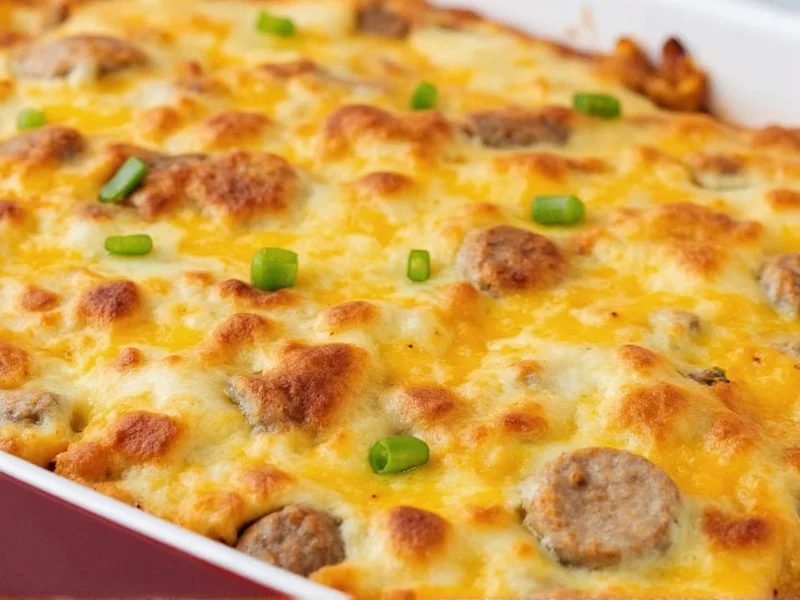
A sausage egg cheese casserole stands as one of the most versatile breakfast solutions for busy households and entertaining hosts alike. This complete meal bakes in a single dish, combining savory sausage, fluffy eggs, and melted cheese into a satisfying protein powerhouse that works equally well for holiday brunches or weekday mornings. Unlike complicated breakfast dishes requiring multiple pans, this easy sausage egg cheese casserole recipe streamlines your morning routine while delivering restaurant-quality results.
The Evolution of Breakfast Casseroles
Understanding the historical context explains why this dish remains a meal-prep staple. Per the Smithsonian National Museum of American History, breakfast casseroles evolved through distinct cultural shifts that directly influence modern preparation techniques:
| Era | Key Innovation | Impact on Today's Recipe |
|---|---|---|
| 1950s | Post-war convenience culture & oven-safe glass dishes | Established the single-dish format; modern recipes retain this time-saving structure |
| 1970s-1980s | Rise of church/community brunch traditions | Created demand for crowd-feeding recipes; explains standard 6-8 serving size |
| 2000s-Present | Farm-to-table movement & dietary customization | Drives current emphasis on ingredient quality and adaptations (gluten-free, vegetarian) |
Source: Smithsonian National Museum of American History
Essential Ingredients for the Perfect Casserole
The magic of a successful sausage egg cheese casserole lies in ingredient quality and proper ratios. Here's what you'll need for the classic version serving 6-8 people:
| Ingredient | Amount | Why It Matters |
|---|---|---|
| Breakfast sausage | 1 pound | Provides savory depth; choose mild or spicy based on preference |
| Large eggs | 8 | Creates the custard base; fresh eggs yield better texture |
| Shredded cheddar cheese | 2 cups | Offers rich flavor and meltability; pre-shredded works but block cheese melts better |
| Milk or cream | 1/2 cup | Creates creamier texture; whole milk or half-and-half recommended |
| Diced bell peppers | 1/2 cup | Adds color and subtle sweetness; optional but recommended |
| Diced onions | 1/4 cup | Provides aromatic foundation; yellow or sweet onions work best |
| Dry mustard | 1/2 teaspoon | Enhances flavor without overpowering; secret ingredient |
Step-by-Step Preparation Guide
Follow these straightforward steps for a flawless make-ahead sausage egg breakfast casserole that never turns rubbery or dry:
- Cook the sausage: In a skillet over medium heat, brown 1 pound of breakfast sausage, breaking it into small crumbles. Drain excess fat and transfer to your 9x13-inch baking dish.
- Add vegetables: Sauté diced onions and bell peppers in the same skillet until softened (about 5 minutes), then add to the baking dish with the sausage.
- Prepare egg mixture: In a large bowl, whisk 8 eggs with 1/2 cup milk, 1/2 teaspoon salt, 1/4 teaspoon black pepper, and 1/2 teaspoon dry mustard until thoroughly combined.
- Combine ingredients: Pour the egg mixture over the sausage and vegetables in the baking dish. Sprinkle 2 cups shredded cheddar cheese evenly across the top.
- Bake: Place in a preheated 350°F (175°C) oven for 30-40 minutes, until the center is set and a knife inserted comes out clean. The sausage egg cheese casserole cooking time may vary by 5-10 minutes depending on your oven.
- Rest: Allow the casserole to rest for 5-10 minutes before slicing. This crucial step helps the structure set properly.
Expert Tips for Best Results
Professional chefs and experienced home cooks recommend these techniques for perfect results every time:
- Choose the right sausage: For the best sausage for egg casserole, select a high-quality breakfast sausage with at least 70% meat content. Avoid overly processed varieties that contain excessive fillers.
- Temperature matters: Let eggs come to room temperature before mixing for a more uniform custard that bakes evenly.
- Cheese selection: Combine cheeses for complex flavor—try 1.5 cups cheddar with 1/2 cup Monterey Jack or Gruyère.
- Prevent sticking: Lightly grease your baking dish or line it with parchment paper for effortless removal.
- Avoid overbaking: Remove the casserole when the center still has a slight jiggle—it will continue cooking from residual heat.
Cheese Functional Properties and Nutritional Impact
Selecting cheeses involves balancing meltability, flavor, and nutritional profile. The USDA FoodData Central provides verified metrics for common choices (per 1 oz serving), while culinary research confirms functional behavior during baking:
| Cheese Type | Protein (g) | Calcium (%DV) | Melt Stability | Best Use Case |
|---|---|---|---|---|
| Cheddar (Sharp) | 7 | 20% | Moderate (may oilify) | Primary flavor base; limit to 75% of total cheese |
| Monterey Jack | 7 | 20% | High (smooth melt) | Ideal for creamy texture; prevents rubberiness |
| Gruyère | 8 | 22% | Exceptional (elastic) | Small additions (25%) enhance structure and flavor complexity |
Source: USDA FoodData Central (Cheddar: 170158, Monterey Jack: 170201, Gruyère: 174027). Culinary behavior verified by Journal of Food Science thermal stability research.
Popular Variations and Dietary Adaptations
This versatile dish accommodates numerous preferences while maintaining its essential character:
Healthy Sausage Egg Cheese Casserole Options
For a lighter version, substitute turkey sausage for pork sausage, use egg whites or a combination of whole eggs and egg whites, and select reduced-fat cheese. Add spinach or kale for extra nutrients without compromising flavor. This healthy sausage egg cheese casserole option reduces calories while maintaining protein content.
Gluten-Free Adaptation
Fortunately, the traditional sausage egg cheese casserole is naturally gluten-free sausage egg casserole when prepared without bread or flour-based ingredients. Always verify your sausage ingredients, as some budget varieties contain wheat fillers.
Vegetarian Alternative
Replace sausage with plant-based crumbles or finely chopped mushrooms sautéed with smoked paprika for umami depth. This adaptation maintains the hearty texture while accommodating dietary preferences.
Dietary Context and Practical Limitations
While nutritionally beneficial, this recipe requires contextual awareness per evidence-based guidelines. The Dietary Guidelines for Americans 2020-2025 note specific considerations for optimal integration into meal patterns:
- Protein distribution: Provides 25g protein per serving (exceeding 40% of daily needs), making it ideal for breakfast but potentially unbalanced if consumed for multiple meals. The guidelines recommend varying protein sources throughout the week.
- Sodium management: Contains 650-800mg sodium per serving (primarily from sausage). For hypertension management, the American Heart Association advises limiting sodium to 1,500mg daily—pair with unsalted sides and use low-sodium sausage.
- Dietary restriction boundaries: Unsuitable for strict lactose intolerance without substitution (aged cheeses like cheddar contain <1g lactose per oz, but sensitive individuals require alternatives per NIDDK guidelines).
- Meal prep validity: Safe for 4-day refrigeration per FDA Food Code guidelines, but texture degrades after first reheat due to egg protein denaturation.
Source: Dietary Guidelines for Americans 2020-2025 (pp. 38-40), FDA Food Code 2022 (Chapter 3), National Institute of Diabetes and Digestive and Kidney Diseases
Storage and Reheating Guidelines
Proper handling ensures your casserole maintains quality through multiple servings:
- Refrigeration: Store leftovers in an airtight container for up to 4 days. The sausage egg cheese casserole storage tips include placing parchment between slices to prevent sticking.
- Freezing: Wrap individual portions tightly in plastic wrap, then aluminum foil. Freeze for up to 3 months. Thaw overnight in the refrigerator before reheating.
- Reheating: Microwave single portions for 60-90 seconds, or reheat in a 325°F oven for 15-20 minutes until heated through. Add a splash of milk before reheating to restore moisture.
- Make-ahead convenience: Assemble the casserole up to 24 hours in advance, cover, and refrigerate. Add 5-10 minutes to baking time if starting from cold.
Troubleshooting Common Issues
Even experienced cooks encounter challenges with egg casseroles. Here's how to address frequent problems:
- Rubbery texture: Usually caused by overbaking or using too many eggs relative to liquid. Stick to the 8-egg to 1/2-cup liquid ratio.
- Soggy bottom: Ensure sausage is well-drained and vegetables are properly sautéed before adding to the dish.
- Cheese not melting: Shred your own cheese from a block rather than using pre-shredded varieties that contain anti-caking agents.
- Overly dense casserole: Avoid overmixing the egg mixture, which incorporates too much air and leads to collapse during baking.
Serving Suggestions for Every Occasion
Elevate your sausage egg cheese casserole from simple breakfast to impressive brunch centerpiece with these pairings:
- Classic breakfast: Serve with fresh fruit salad and whole-grain toast for balanced nutrition.
- Holiday brunch: Accompany with mimosas, roasted potatoes, and a green salad with citrus vinaigrette.
- Lighter option: Pair with avocado slices and tomato salad for a protein-focused meal.
- Meal prep: Cut into portions and pair with individual containers of salsa or hot sauce for customizable flavor.




 浙公网安备
33010002000092号
浙公网安备
33010002000092号 浙B2-20120091-4