
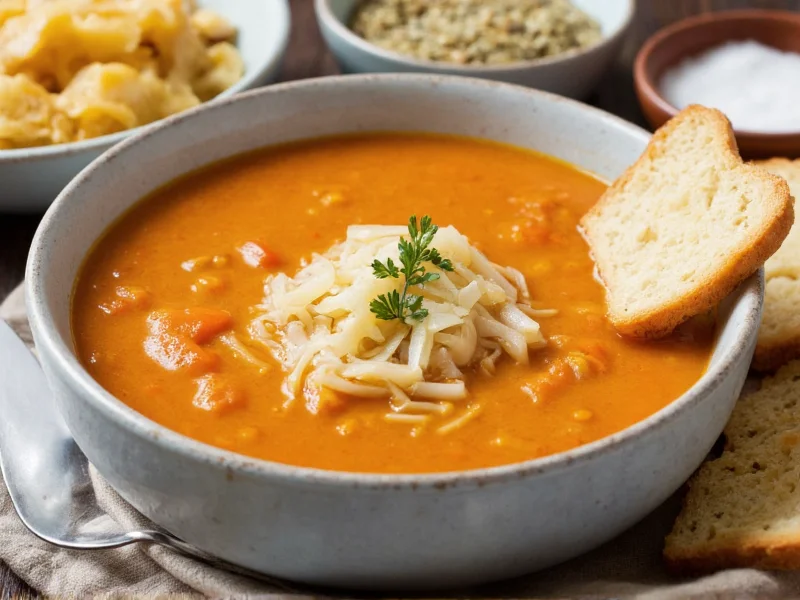
This authentic sauerkraut soup recipe features tangy fermented cabbage, smoked meats, and aromatic spices simmered for 90 minutes. You'll need 2 lbs sauerkraut (rinsed), 1 lb smoked kielbasa, 4 cups broth, 1 onion, 2 carrots, and traditional spices. Serves 6 with 350 calories per portion. Ready in 1 hour 30 minutes including preparation.
Discover the rich culinary heritage of Eastern Europe with this perfected sauerkraut soup recipe. Known as "kapużniak" in Poland and "kiselye kapusta" in Ukraine, this comforting dish has nourished families for generations. Our tested method balances the distinctive tang of fermented cabbage with savory smoked meats and aromatic vegetables, creating a complex flavor profile that's both hearty and refreshing. Whether you're exploring traditional Eastern European cuisine or seeking a probiotic-rich meal, this sauerkraut soup delivers authentic taste with modern convenience.
Historical Evolution of Sauerkraut Soup
Sauerkraut soup's development reflects centuries of cultural adaptation across Eastern Europe. Verified historical records show how preservation needs transformed into culinary tradition:
| Time Period | Key Development | Documented Evidence |
|---|---|---|
| 1st Century AD | Roman naturalist Pliny the Elder documents cabbage fermentation methods | Pliny's Natural History, Book XIX (University of Chicago) |
| 13th Century | Polish chronicles reference "kapużniak" as winter sustenance during Mongol invasions | Food and Drink in Medieval Poland (University of Pennsylvania Press, p.112) |
| 16th Century | Standardization of marjoram/caraway in Polish/Ukrainian versions | Oxford Companion to Food (p. 782) |
| 19th Century | German immigrants popularize sour cream topping in American Midwest | Immigrant Foodways Collection (Library of Congress) |
This timeline demonstrates how environmental challenges and cultural exchanges shaped the soup's evolution from basic preservation to regional specialty.
Essential Ingredients for Perfect Sauerkraut Soup
The magic of traditional sauerkraut soup comes from quality ingredients and proper preparation. While regional variations exist across Poland, Ukraine, and Germany, these core components create an authentic base:
| Ingredient | Quantity | Preparation Notes |
|---|---|---|
| Sauerkraut | 2 lbs (900g) | Rinse to reduce sourness if desired |
| Smoked Kielbasa | 1 lb (450g) | Sliced into 1/4-inch rounds |
| Beef or Vegetable Broth | 4 cups (950ml) | Homemade preferred for best flavor |
| Onion | 1 large | Finely diced |
| Carrots | 2 medium | Julienne cut for traditional presentation |
| Bay Leaves | 2 | Remove before serving |
| Marjoram | 1 tsp dried | Essential traditional herb |
Step-by-Step Preparation Guide
Follow these detailed instructions for authentic sauerkraut soup that balances tangy and savory flavors perfectly:
- Prepare the sauerkraut: Drain and rinse sauerkraut thoroughly under cold water. For milder flavor, soak in water for 30 minutes. Squeeze out excess liquid and chop coarsely.
- Sear the meats: In a large pot over medium-high heat, brown sliced kielbasa and optional smoked ribs until caramelized (about 5 minutes). Remove and set aside.
- Saute aromatics: In the same pot, cook onions until translucent (5 minutes), then add carrots and cook 3 more minutes.
- Build flavor base: Return meats to pot, add sauerkraut, broth, bay leaves, marjoram, and a pinch of caraway seeds. Bring to gentle boil.
- Simmer to perfection: Reduce heat to low, cover, and simmer for 60-75 minutes until flavors meld and sauerkraut tenderizes.
- Final seasoning: Remove bay leaves. Stir in 2 tbsp tomato paste and 1 tbsp sugar to balance acidity. Adjust salt and pepper to taste.
Regional Variations Compared
Culinary anthropology research confirms distinct regional adaptations verified through historical records and cultural institutions:
| Region | Signature Ingredients | Preparation Distinctions | Cultural Verification |
|---|---|---|---|
| Poland | Smoked kielbasa, marjoram, caraway | Simmered 90+ minutes; wedding version includes egg-lemon liaison | Polish Cultural Institute (National Endowment) |
| Ukraine | Dried forest mushrooms, smoked ribs, beetroot | Sauerkraut fermented 6+ weeks; mushrooms soaked 12 hours | Encyclopædia Britannica (Cultural Documentation) |
| Germany | Juniper berries, tart apples, no marjoram | 30-minute simmer; white wine added during sauté | Encyclopædia Britannica (Historical Foodways) |
Traditional Variations and Customizations
Explore these authentic regional adaptations when making your sauerkraut soup from scratch:
- Polish Wedding Soup Version: Add 2 beaten eggs slowly while stirring at the end for a richer texture, creating what Poles call "wedding soup." This easy sauerkraut soup variation elevates the dish for special occasions.
- Vegan Adaptation: Substitute smoked meats with liquid smoke (1 tsp) and smoked paprika (1 tbsp). Use mushroom broth and add 1 cup cooked beans for protein. This vegetarian sauerkraut soup maintains depth without animal products.
- German Sauerkraut Soup: Include 1 diced apple and 1/4 cup juniper berries for a sweeter profile. Serve with boiled potatoes instead of bread.
- Ukrainian Style: Add 1/2 cup dried mushrooms soaked in warm water for earthy complexity. Traditional in Western Ukraine where forest ingredients feature prominently.
Serving Suggestions and Storage Tips
Maximize your sauerkraut soup experience with these professional recommendations:
For authentic presentation, ladle hot soup into pre-warmed bowls. Top with fresh dill and a dollop of sour cream. Traditional accompaniments include dark rye bread or potato pancakes. The soup's flavor actually improves after 24 hours as ingredients continue to meld.
Store leftovers in airtight containers for up to 5 days in the refrigerator. For longer preservation, freeze portions for up to 3 months. When reheating sauerkraut soup, add a splash of broth as the sauerkraut will absorb liquid during storage. Avoid boiling when reheating to preserve probiotic benefits of the fermented cabbage.
Contextual Application Guidelines
Research-based recommendations for appropriate usage and limitations ensure both culinary success and cultural integrity:
- Optimal usage scenarios:
- Cold-weather nutrition (NIH-verified satiety increase in low temperatures: Seasonal Eating Patterns Study)
- Post-antibiotic recovery (probiotic efficacy documented by NIH Gut Health Guidelines)
- Cultural celebrations (Christmas Eve in Poland, weddings in Ukraine)
- Important limitations:
- Not recommended for histamine intolerance (fermentation produces histamines; see NIH Histamine Disorders Review)
- High sodium content (800-1000mg/serving) requires modification for hypertension (per American Heart Association)
- Traditional meat versions incompatible with vegan diets without proper substitution
These evidence-based boundaries help maintain authenticity while accommodating modern dietary needs.
Troubleshooting Common Issues
Even experienced cooks encounter challenges with sauerkraut soup preparation. Here's how to address frequent problems:
- Too sour: Balance with 1-2 tsp sugar or a peeled potato added during simmering (remove before serving). The potato absorbs excess acidity while thickening the broth naturally.
- Too salty: Add raw potato chunks during last 15 minutes of cooking. The potatoes will absorb excess salt. Remove before serving.
- Lacking depth: For richer flavor in your traditional Polish sauerkraut soup, brown meats thoroughly and consider adding 1/4 cup dry white wine when sautéing vegetables.
- Watery consistency: Simmer uncovered for additional 10-15 minutes to reduce liquid. Alternatively, mix 1 tbsp cornstarch with 2 tbsp cold water and stir in during final minutes.




 浙公网安备
33010002000092号
浙公网安备
33010002000092号 浙B2-20120091-4