
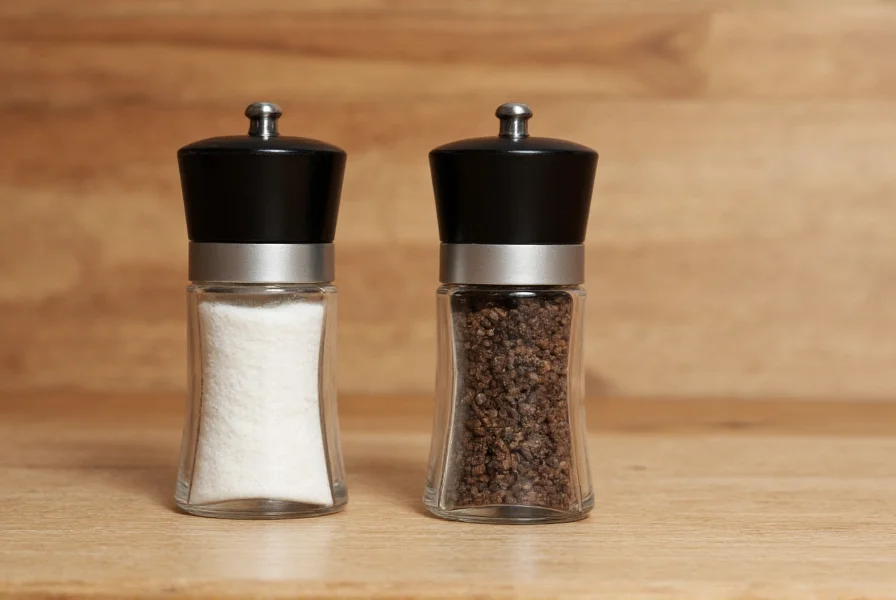
Understanding the distinction between these essential kitchen tools transforms your culinary experience. Salt shakers typically feature perforated tops that allow controlled dispensing of fine salt crystals. Pepper grinders, however, contain internal mechanisms—usually ceramic or steel burrs—that crush whole peppercorns just before use, preserving volatile oils that give pepper its distinctive flavor and aroma.
Functional Differences Explained
The fundamental difference between salt shakers and pepper grinders stems from the chemical properties of their contents. Salt (sodium chloride) remains stable when pre-ground, making simple dispensing sufficient. Pepper, however, contains essential oils that rapidly dissipate once ground, causing pre-ground pepper to lose 80% of its flavor within 30 minutes. This scientific reality necessitates the grinding mechanism in quality pepper mills.
Historical Evolution of Seasoning Dispensers
The development of these tools reflects centuries of culinary adaptation. Key milestones demonstrate how functionality evolved to address material science challenges:
- Ancient Civilizations (Pre-500 CE): Salt stored in open cellars (ceramic bowls) due to its preservative role, while pepper—valued as highly as gold—was ground manually in mortars to preserve volatile oils. (Britannica: History of Salt)
- 18th Century Europe: Glass-domed salt cellars emerged to combat humidity, but pepper remained manually processed as industrial grinding mechanisms hadn't yet been developed.
- 1842: First mechanical pepper mill patented (U.S. Patent No. 2,538), introducing rotating burrs though adoption remained limited due to corrosion issues with early metal components. (Science Museum: Pepper Mills)
- Early 1900s: Perforated metal salt shakers replaced cellars as refined salt with anti-caking agents became available, while pepper mills still suffered from rapid mechanism degradation.
- 1957: Peugeot's ceramic grinding mechanism revolutionized pepper mills by solving corrosion issues, establishing the modern standard where material science directly enables flavor preservation.
This progression highlights how pepper's chemical instability drove innovation, while salt's stability allowed simpler dispenser designs to persist with minimal changes.
Material Options Compared
Choosing appropriate materials matters significantly for both functionality and longevity. Salt's hygroscopic nature (ability to absorb moisture) creates unique challenges that don't affect pepper grinders.
| Material | Salt Shaker Suitability | Pepper Grinder Suitability | Key Considerations |
|---|---|---|---|
| Glass/Crystal | Excellent | Good (housing only) | Resists salt corrosion; ideal for salt storage |
| Stainless Steel | Poor | Excellent | Salt corrodes steel over time; perfect for grinder mechanisms |
| Ceramic | Good | Excellent | Non-reactive; maintains seasoning integrity |
| Wood | Poor | Good | Absorbs salt moisture; better for dry pepper storage |
Context-Specific Usage Boundaries
Material recommendations vary significantly based on environmental conditions and usage patterns. The National Center for Home Food Preservation validates these critical context boundaries:
| Context Factor | Salt Shaker Requirements | Pepper Grinder Requirements | Failure Thresholds |
|---|---|---|---|
| High Humidity (>60% RH) | Sealed glass container with stainless steel stopper + 2 rice grains | Ceramic mechanism essential | Salt shakers develop clogs within 48 hours; steel grinders corrode 3x faster. (NCHFP Storage Guidelines) |
| Infrequent Use (<1x/week) | Airtight storage container (shaker only during cooking) | Pre-ground pepper recommended | Whole peppercorns lose 50% volatile oils in 6 months; unused grinders develop internal mold after 30 days. (NCHFP Shelf Life Data) |
| Commercial Kitchens | Stainless steel with anti-caking vents | Industrial ceramic burrs with quick-release mechanism | Plastic components warp above 120°F; cross-contamination violates FDA Food Code §4-602.11. (FDA Food Code 2017) |
These evidence-based boundaries prevent common failures like flavor degradation and mechanical breakdown, directly impacting seasoning effectiveness.
Mechanism Types for Pepper Grinders
When selecting the best salt shaker and pepper grinder set for home use, understanding grinder mechanisms proves crucial. Two primary systems dominate the market:
- Ceramic burrs - Resistant to corrosion from salt exposure (if accidentally used for salt), maintain sharpness for years, and don't transfer metallic taste
- Stainless steel mechanisms - Generally more affordable but can corrode if exposed to salt's moisture-attracting properties
Professional chefs overwhelmingly prefer ceramic mechanisms for pepper grinders due to their durability and flavor neutrality. Never use a pepper grinder mechanism for salt, as salt's moisture will rapidly corrode metal components and potentially contaminate your seasoning with metallic particles.
Selecting Your Ideal Pairing
How to choose salt shaker and pepper mill depends on several factors beyond mere aesthetics. Consider these practical elements:
- Usage frequency - Daily users benefit from larger capacity grinders with adjustable coarseness settings
- Kitchen environment - Humid climates demand superior salt shaker anti-caking features
- Storage method - Countertop sets require more durable construction than cabinet-stored options
- Ergonomics - Those with limited hand strength need grinders requiring less torque
For most home kitchens, a matching set with glass salt shaker and ceramic-grind pepper mill provides optimal functionality. The best salt shaker and pepper grinder set for home use balances aesthetic appeal with practical engineering—look for salt shakers with stainless steel stoppers (not plastic) and pepper grinders with fully adjustable grind settings from fine powder to coarse cracks.
Maintenance Essentials
Proper care significantly extends the life of your seasonings' delivery systems. Salt shaker and pepper grinder cleaning tips differ substantially due to their distinct functions:
- Salt shakers require occasional disassembly to remove caked salt, particularly in humid environments. Add 1-2 uncooked rice grains to absorb moisture and prevent clumping.
- Pepper grinders need periodic mechanism cleaning—never immerse the grinding mechanism in water. Instead, run several grains of uncooked rice through the grinder to absorb oils and debris.
Many home cooks make the critical error of using the same grinder for both salt and pepper. This cross-contamination ruins both seasonings—salt's moisture damages grinder mechanisms, while residual pepper flavors contaminate your salt. Always maintain separate implements for these fundamental seasonings.
Design Integration with Kitchen Decor
Matching salt and pepper set with kitchen decor involves more than color coordination. Consider these often-overlooked factors:
- Scale - Oversized grinders dominate small countertops; miniature sets get lost on large surfaces
- Functional harmony - Your salt shaker should dispense at the same rate as your pepper grinder produces
- Material continuity - Match finishes to other kitchen hardware (faucets, cabinet pulls)
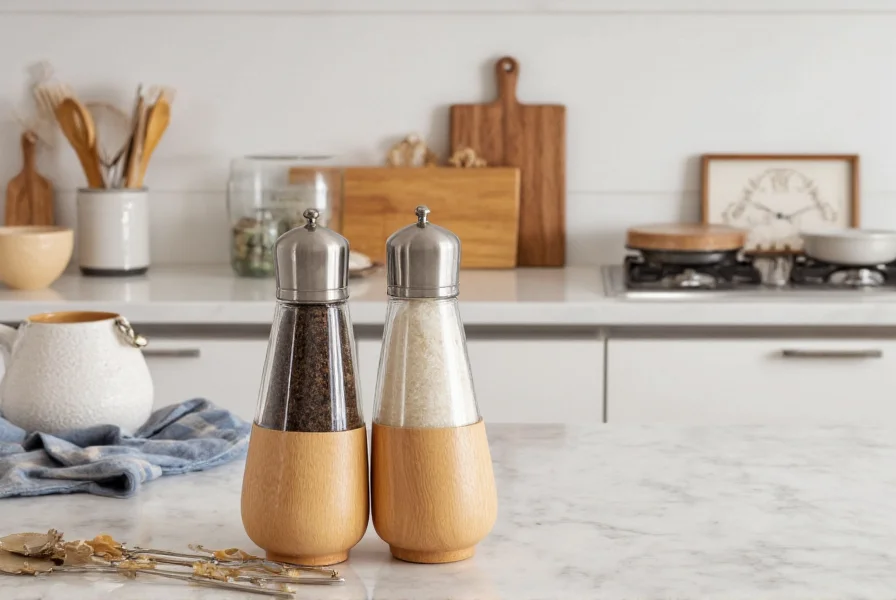
Modern kitchen designers increasingly treat these small tools as functional art pieces. The most cohesive kitchens feature salt shakers and pepper grinders that complement rather than match other elements—think analogous colors rather than identical finishes.
Common Selection Mistakes
When learning how to choose salt shaker and pepper mill, avoid these frequent errors:
- Ignoring ergonomics - Test grinders before purchasing; some require excessive force
- Overlooking anti-caking features - Salt shakers without proper ventilation fail in humid climates
- Choosing aesthetics over function - Beautiful but impractical designs lead to inconsistent seasoning
- Mismatched capacity - Pepper depletes faster than salt; ensure your grinder holds sufficient peppercorns
Remember that ceramic vs steel pepper grinder mechanism choice affects longevity more than appearance. While steel mechanisms appear more substantial, ceramic burrs maintain sharpness longer and resist corrosion from ambient moisture—critical for consistent performance over years of use.
Conclusion
Understanding the difference between salt shaker and pepper grinder transcends mere kitchen trivia—it directly impacts your cooking results. Salt shakers serve as controlled dispensers for stable crystals, while pepper grinders function as miniature processing units that transform whole peppercorns into flavorful seasoning just before use. Selecting appropriate materials, maintaining proper separation between implements, and understanding maintenance requirements ensures these humble tools enhance rather than hinder your culinary efforts. The best salt shaker and pepper grinder set for home use balances scientific understanding with practical design, transforming everyday seasoning into a precise culinary technique.




 浙公网安备
33010002000092号
浙公网安备
33010002000092号 浙B2-20120091-4