
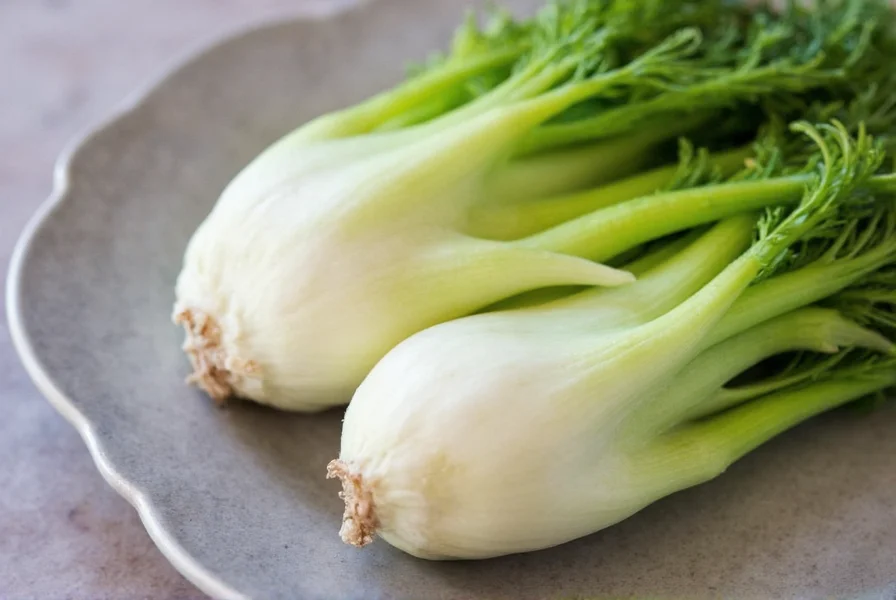
Fennel Bulbs Aren’t Supposed to Be Uniform — And That’s the Point
In many homes, the idea that fennel bulbs must be cut with geometric precision comes from layered sources: glossy food blogs showing halved bulbs laid flat on marble counters; supermarket displays where only plump, round specimens make the shelf; and early exposure to restaurant-style plating, where visual consistency is non-negotiable. None of those contexts reflect how fennel behaves in a real home kitchen — where a 10-minute window between school pickup and dinner prep means uneven slices get tossed into the pan anyway. The real consequence isn’t ruined flavor or failed dishes — it’s delayed meals, unnecessary cleanup, and quiet self-reproach over ‘not doing it right.’ That subtle pressure compounds across weeks, turning a simple vegetable into a low-grade source of friction rather than flexibility.
The core judgment — that fennel bulb shape doesn’t govern outcome — holds only within clear boundaries. It doesn’t matter when roasting whole or grilling thick wedges over medium heat, because thermal mass and surface contact dominate the result. It also doesn’t matter when raw shavings go into salads or slaws: crispness depends more on freshness and slicing thickness than radial symmetry. But it does matter — suddenly and concretely — when thinly slicing for quick sautéing in a crowded skillet with limited surface area. There, irregular edges catch, burn, or steam instead of sear, and no amount of stirring compensates. That shift isn’t about rules — it’s about physics meeting equipment limits.
Two common fixations are functionally irrelevant. First: whether the core is removed before slicing. In most home stovetop applications, leaving it intact adds structural integrity during cooking — and its mild bitterness balances sweetness without needing removal. Second: whether fronds are reserved for garnish. They’re often discarded mid-prep, assumed essential for ‘finishing,’ yet their aromatic contribution is negligible unless used fresh and raw in small amounts — not as a ritualistic final sprinkle. Neither decision changes edibility, safety, or core flavor development. Both persist because they mimic professional gestures, not because they serve home conditions.
The real constraint isn’t technique — it’s storage reality. Fennel bulbs dry out fast in standard crisper drawers, especially once trimmed. Their high water content and exposed cut surfaces mean flavor and crunch degrade within 48 hours if not wrapped tightly in damp paper towel and sealed plastic. This matters more than knife skills: a perfectly uniform slice from a day-old bulb tastes flat and fibrous, while a ragged cut from a freshly harvested one delivers brightness and snap. Budget, time, and fridge space all converge here — not heat control or blade sharpness. When the bulb itself is compromised, no amount of precise cutting rescues it.
Here’s where intuition fails — and context demands reversal. If you’re roasting fennel alongside root vegetables at 400°F (200°C), uneven wedges brown evenly and soften uniformly; symmetry adds zero value. If you’re stir-frying thin ribbons with garlic and chili, inconsistent widths cause some strands to char while others stay raw — so uniformity becomes functional, not aesthetic. If you’re making a raw fennel-and-orange salad, hand-torn shreds work better than machine-thin slices, because they hold dressing without wilting. Each scenario flips the priority: not ‘how to cut,’ but ‘what the heat source and timeline demand.’ There’s no universal rule — only situational alignment.
Stop asking ‘How should I cut fennel?’ and start asking ‘What’s happening to it next?’ That single pivot — from tool-based instruction to outcome-based anticipation — eliminates half the hesitation. In a home kitchen, fennel isn’t a test of knife discipline. It’s a thermal and textural relay: what happens to it in the pan or bowl determines what shape it needs to be in before it gets there. That’s not a compromise — it’s efficiency calibrated to actual use.
| What people fixate on | What it affects | When it matters | When it doesn't |
|---|---|---|---|
| Removing the tough core entirely | Structural integrity during cooking | When braising whole bulbs slowly | When roasting wedges or sautéing thick slices |
| Cutting perfectly symmetrical wedges | Visual consistency on plate | When serving raw, chilled fennel as centerpiece | When roasting, grilling, or blending into soups |
| Using only the pale inner layers | Bitterness level and fiber density | When eating raw in delicate vinaigrettes | When roasting or caramelizing — outer layers sweeten deeply |
| Reserving fronds for garnish only | Aromatic lift in final dish | When sprinkling over finished fish or yogurt dips | When simmering in broths or grinding into dry rubs |
Quick verdicts for home cooks
- If roasting fennel with potatoes and onions, keep cores intact and cut wedges by eye — size variation won’t affect doneness.
- If sautéing thin ribbons for pasta, slice with a mandoline or sharp knife to avoid burnt tips and raw centers.
- If adding raw fennel to a grain bowl, tear or shave by hand — machine-thin slices turn limp too fast.
- If your fridge crisper is dry, wrap uncut bulbs in damp paper towel first — that matters more than any prep step.
- If cooking for picky eaters, include outer layers — their deeper sweetness masks bitterness better than inner parts alone.
- If using fennel in soup stock, toss in stalks and cores — they add savory depth without needing prep.
Frequently asked questions
Why do people think fennel bulbs must be peeled before cooking?
Because older recipes treat them like celery or artichokes — but fennel skin softens fully when roasted or braised, and peeling removes flavorful outer fibers.
Is it actually necessary to soak sliced fennel in acidulated water?
No — unlike apples or avocados, fennel doesn’t oxidize visibly or taste off when exposed to air, even for 20 minutes.
What happens if you ignore the ‘core removal’ step in a stir-fry?
Nothing adverse — the core stays tender and adds subtle anise warmth; removing it just creates more waste and less structural stability.
Lately, home cooks have stopped photographing fennel prep — and started tasting it earlier in the process. You’ll see more notes like ‘still crunchy at 18 minutes’ or ‘core held up better than expected’ in comment sections, not ‘how to get clean cuts.’ That shift isn’t about skill — it’s about attention moving from appearance to behavior. In a home kitchen, fennel isn’t judged by how it looks before heat — but how it responds to it.




 浙公网安备
33010002000092号
 浙B2-20120091-4